

The Mystery of the Little Red Dots
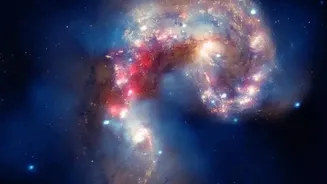
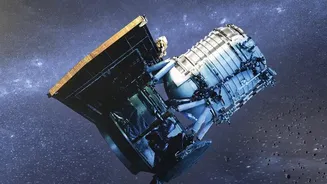
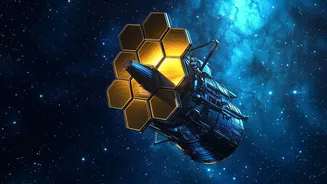
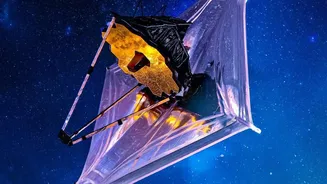
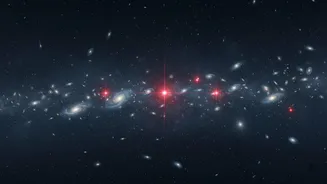
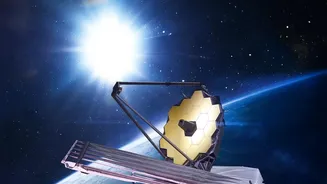
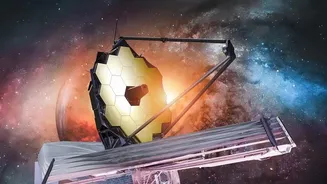
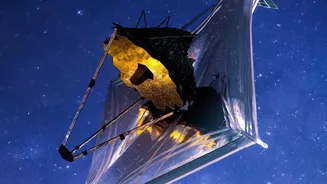
Since it began operations in 2022, the James Webb Space Telescope (JWST) has been rewriting our cosmic photo album. Among its most tantalizing finds are the “little red dots.” These are compact, ruddy objects spotted in the deepest corners of the universe,
appearing to exist in the first billion years after the Big Bang. Their discovery sparked immense excitement and a flurry of theories. Some early interpretations suggested these could be shockingly massive galaxies that formed far faster than any existing model of cosmology could explain, leading to headlines about the JWST “breaking the universe.” The primary question became: what are these enigmatic dots? Are they a new type of galaxy, or something else entirely? Answering that requires more than just a pretty picture; it requires a rigorous process of verification.
An Astronomical Case of Mistaken Identity
The scientific process of confirming these discoveries was perfectly illustrated by the story of a candidate galaxy known as CEERS-93316. When first spotted in the data, initial analysis suggested it was at a jaw-dropping distance, potentially existing just 250 million years after the Big Bang. This would have made it the most distant galaxy ever seen. The finding was based on photometry, which involves measuring the object's brightness through different colored filters. However, this method can sometimes be fooled. A subsequent, more detailed analysis using spectroscopy—which breaks down the light into a full spectrum like a prism—revealed the truth. CEERS-93316 was an “impostor.” It was not a record-breaking ancient galaxy, but a much closer one from about 1 billion years after the Big Bang whose hot gas emissions happened to mimic the color profile of a more distant object.
Spectroscopy: The Ultimate Fact-Checker
This is where the “current update” in the headline becomes critical. The update isn't necessarily a new record, but the application of a more powerful tool. Spectroscopy is the gold standard for confirming cosmic distances. It analyzes the light from an object to measure its “redshift”—the stretching of light as it travels across the expanding universe. A higher redshift means a greater distance and an earlier moment in cosmic history. While photometric estimates are crucial for identifying potential candidates from the vast amount of data JWST collects, only a spectroscopic follow-up can provide definitive confirmation. This process separates the true record-breakers from the cosmic look-alikes, ensuring that our map of the early universe is built on a foundation of certainty, not just exciting speculation.
So, What Are the Red Dots?
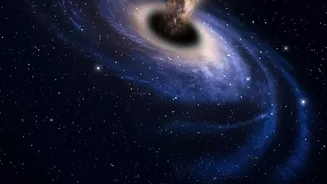
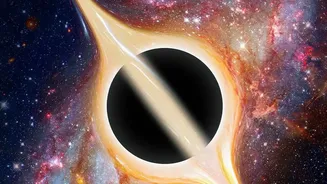
With some of the most extreme distance claims being refined, the question remains: what are the little red dots? The leading theory, bolstered by recent spectroscopic studies of other dots, is that many are not oversized galaxies at all. Instead, they are believed to be the ravenous, growing hearts of early galaxies—supermassive black holes actively pulling in immense amounts of gas and dust. These active galactic nuclei are so bright and shrouded in gas that they can outshine their entire host galaxy, appearing as a compact, red point of light. A June 2026 study of one such object, GLIMPSE-17775, found strong evidence supporting this “black hole star” model, helping to solve the puzzle of why these objects seemed to have “broken” cosmology. They weren't impossibly large galaxies; they were incredibly active black holes, a different but equally fascinating phenomenon.