


Meet NASA's Next Great Observatory
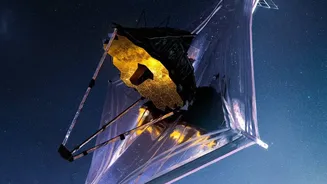
The Nancy Grace Roman Space Telescope is NASA's next flagship mission in astrophysics, set to join the ranks of Hubble and Webb as a revolutionary eye on the universe. Named after Dr. Nancy Grace Roman, NASA's first chief of astronomy and the 'mother
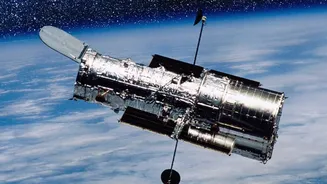
of Hubble', this observatory has a unique and powerful purpose. Scheduled to launch aboard a SpaceX Falcon Heavy rocket on August 30, 2026, Roman will journey to an orbit 1.5 million kilometers from Earth. Its primary mission is slated for five years, but like its predecessors, it could operate for a decade or more. Built around a 2.4-meter primary mirror—the same size as Hubble's—the telescope was designed not to replace its famous siblings, but to complement them with a powerful new capability: a panoramic field of view.
A Panoramic View of the Cosmos
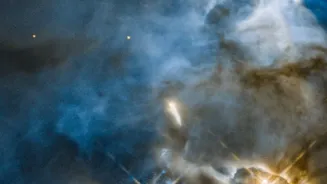
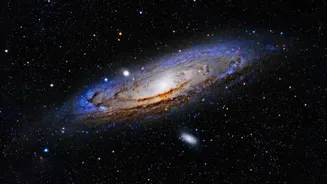
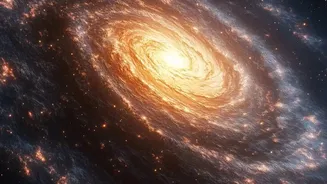
Roman's greatest strength is its incredible survey speed, enabled by its Wide Field Instrument (WFI). This instrument provides a field of view at least 100 times larger than Hubble's infrared camera. To put that in perspective, where Hubble might capture a stunning close-up of a single celestial feature like the Pillars of Creation, Roman could capture the entire surrounding nebula in a single shot. This vast reach will allow it to map huge swathes of the sky with the same high resolution as Hubble, but up to 1,000 times faster. Over its mission, Roman will photograph over a billion galaxies, creating the first wide-field, high-resolution maps of the universe. This treasure trove of data will fuel astronomical research for decades, providing context for the deep-dive discoveries of telescopes like Webb.
Illuminating the Dark Universe
One of Roman’s primary science objectives is to tackle one of the biggest mysteries in physics: dark energy. This enigmatic force is believed to be responsible for the accelerating expansion of the universe, but its nature remains unknown. Roman will investigate dark energy using three distinct methods: studying distant supernovae, mapping the distribution of galaxies through baryon acoustic oscillations, and analyzing how matter clumps together via weak gravitational lensing. By surveying millions of galaxies and thousands of supernovae, the telescope will measure how the universe's expansion has changed over cosmic time. These measurements will help scientists determine if dark energy is a constant force or if it has evolved, providing critical clues to its fundamental properties and helping to refine Einstein's theory of gravity.
Taking a Census of Alien Worlds
While missions like Kepler have found thousands of planets, they have primarily found large planets orbiting very close to their stars. Roman will conduct a massive survey for exoplanets using a different technique called gravitational microlensing. This method can detect planets with much larger orbits, from the habitable zone outwards, and even rogue planets that don't orbit a star at all. A microlensing event occurs when a star with a planet passes in front of a more distant background star. The foreground star's gravity acts as a lens, momentarily magnifying the background star's light. A dip or spike in that magnification can reveal the presence of a planet. Roman's survey of 200 million stars is expected to discover thousands of new exoplanets, including worlds as small as Mars, creating a statistical census of planetary systems throughout our galaxy.
Directly Imaging Distant Planets
In addition to finding planets, Roman carries a groundbreaking technology demonstrator: the Coronagraph Instrument. A coronagraph is designed to block the overwhelming glare of a star, making it possible to directly see the faint light reflected by an orbiting planet. Roman's coronagraph will be at least 100 times more powerful than any before it, capable of detecting a planet that is a billion times dimmer than its star. While its primary goal is to test and prove the technology for future missions, the instrument will be able to directly image and analyze the atmospheres of giant, Jupiter-sized planets. This is a critical stepping stone toward the ultimate goal of directly imaging Earth-like planets around other stars with a future mission like the Habitable Worlds Observatory.