



Makhan Mishri: A Divine Favourite
No Janmashtami bhog is complete without Makhan Mishri. This dish is considered Lord Krishna's absolute favourite, reminiscent of his childhood antics as the beloved 'Makhanchor' or butter thief. Its beauty lies in its simplicity: fresh, unsalted white
butter is gently mixed with the sweet crunch of rock sugar (mishri). To prepare it, you can churn fresh cream with ice cubes until the butter separates. Once collected, the butter is mixed with crushed mishri right before offering it to preserve the texture. This simple, pure offering symbolizes innocence and is believed to bring happiness and prosperity.
Dhaniya Panjiri: The Traditional Prasad
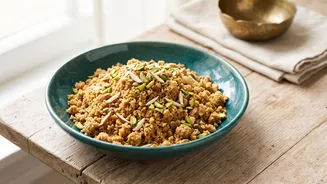
Dhaniya Panjiri is a unique and nutritious prasad specifically prepared for Janmashtami, often used to break the day's fast. It is an aromatic mixture made by roasting coriander seed powder in ghee until it becomes fragrant. To this, generous amounts of chopped nuts like almonds and cashews, melon seeds, and grated dry coconut are added and roasted further. The mixture is then sweetened with powdered sugar or jaggery powder and sometimes enhanced with cardamom. This wholesome preparation is not just a flavourful offering but also provides energy after a day of fasting.
Panchamrit: The Nectar of Five Ingredients
Panchamrit, which translates to 'five nectars', is a sacred concoction essential for pujas. It is made from five pure ingredients: raw milk, curd (yogurt), honey, ghee (clarified butter), and sugar or jaggery. Each ingredient holds symbolic meaning, representing purity, prosperity, unity, strength, and bliss respectively. To prepare it, smooth curd is gently blended with milk, followed by the addition of honey, sugar, and ghee. Many recipes also include a few leaves of Tulsi (holy basil) and a splash of Ganga Jal (holy water) to complete the sacred offering. This uncooked, nourishing drink is first offered to the deity and then distributed as prasad.
Makhana Kheer: A Creamy, Fast-Friendly Dessert
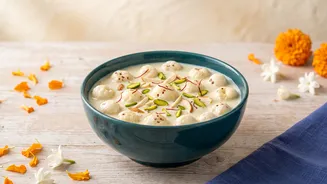
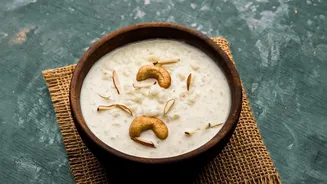
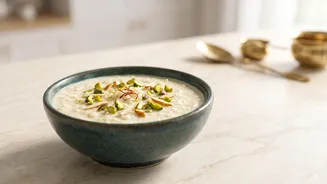
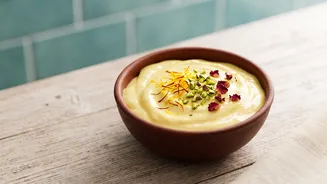
A festive spread feels incomplete without a kheer, and Makhana Kheer is a perfect choice for Janmashtami as it is suitable for those who are fasting. This creamy dessert is made with phool makhana (fox nuts), which are first roasted in a little ghee until they become crisp. These roasted nuts are then simmered in milk until they soften and the milk thickens. The kheer is sweetened with sugar or jaggery and often flavoured with cardamom powder and saffron strands. The addition of chopped nuts like almonds and pistachios provides a delightful crunch, making it a rich and satisfying offering.
Gopalkala: A Savoury Homage
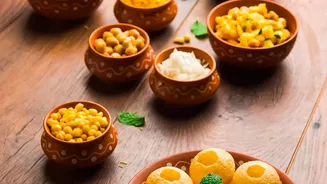
Also known as Dahi Poha, Gopalkala is a savoury dish that pays homage to Lord Krishna's childhood in Vrindavan, where he would share meals with his friends. This simple, no-cook recipe brings together flattened rice (poha), creamy curd, and a mix of fresh ingredients. The poha is rinsed and softened before being mixed with yogurt, finely chopped cucumber, pomegranate seeds, grated coconut, and a pinch of salt and sugar. The dish is then tempered with ghee, cumin seeds, green chillies, and ginger, which adds a beautiful aroma and flavour. It’s a refreshing and wholesome dish that represents community and sharing.
Mewa Ladoo: A Bite of Festive Sweetness
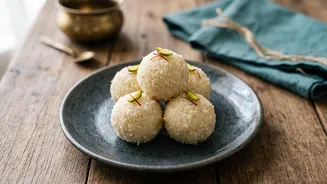
Ladoos are a quintessential Indian festive sweet, and Mewa Ladoo (dry fruit ladoo) is a rich and healthy option for bhog. These ladoos are packed with the goodness of various nuts and dried fruits. The preparation often involves roasting mawa (khoya or milk solids) in a pan until it turns golden, then sweetening it with sugar. A mixture of finely chopped almonds, walnuts, and sometimes figs is prepared as a filling. Small portions of the mawa mixture are then filled with the dry fruit mix and rolled into round ladoos. They are a delightful, energy-giving sweet that can be prepared in advance.