
The Challenge of Dining in Space
Eating in orbit isn't as simple as packing a lunchbox. Food for astronauts must meet incredibly strict criteria. It needs to have a long shelf life without refrigeration, be nutritious enough to counteract the physiological effects of space travel like
bone density loss, and be easy to consume in microgravity. One of the biggest rules is that food cannot produce crumbs, which could float away and damage sensitive equipment. Furthermore, the psychological comfort of familiar, tasty food is crucial for the well-being of astronauts on long and stressful missions. For decades, space food has been a blend of freeze-dried powders, thermostabilized pouches, and bite-sized cubes, but the taste and texture have often left much to be desired.
Hyderabad's Scientific Contribution
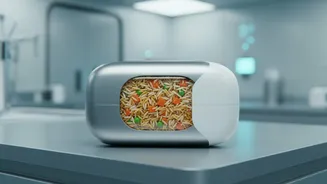
Hyderabad has emerged as a key player in this national endeavour. The ICMR-National Institute of Nutrition (NIN), based in the city, has taken on the vital task of developing and tailoring space food for the Gaganyaan programme. Scientists at NIN are focusing on creating formulations that are not only nutritionally balanced but also appealing to the Indian palate. Their work involves more than just cooking; it's a deep dive into food science to ensure meals are rich in micronutrients, antioxidants, and Vitamin D, with carefully managed sodium levels. This initiative is supported by a broader ecosystem, including another Hyderabad-based firm, Ananth Technologies, which is developing a smart 'tiffin box'—a sensor-equipped container to monitor the food's condition in real-time, ensuring astronaut safety.
A Taste of Home in Orbit
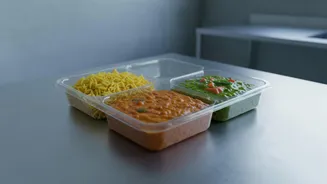
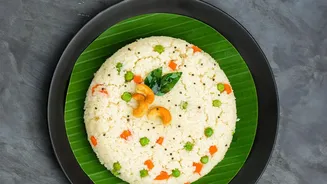
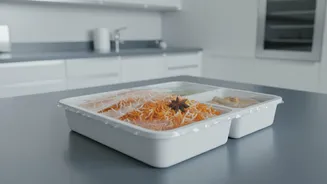
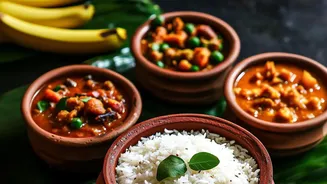
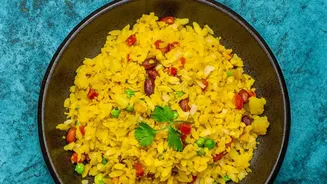
The menu being crafted for India's astronauts reads like a comforting list of home favourites, specially adapted for the rigours of space. The Defence Food Research Laboratory (DFRL) in Mysuru, a long-time pioneer in this field, has developed around 60 ready-to-eat items. The Hyderabad-based NIN is contributing its expertise to a menu that includes dishes like khichdi, mutton rolls, and chicken nuggets. Other items developed by DFRL for Indian astronauts include idli with sambar, vegetable biryani, suji halwa, and various parottas. These meals are prepared in semi-solid, dehydrated, or ready-to-eat forms that can be easily reconstituted with water. The goal is to provide a diverse and flavourful menu that reminds the crew of home, a crucial psychological boost when they are thousands of kilometres away from Earth.
The Science Behind Space Biryani
Adapting a complex dish like biryani or khichdi for space is a significant scientific achievement. The process involves carefully controlling spices and oils, which can behave differently in microgravity and affect astronaut health. Foods are made with low fragmentation to avoid floating crumbs. To test these creations, NIN scientists are participating in microgravity simulation studies, where healthy volunteers stay in a head-down, bed-rest position for weeks to mimic the effects of space on the body. During these studies, every aspect of food consumption and its physiological impact is monitored. This rigorous testing ensures that when an Indian astronaut opens a pouch of vegetable pulav in orbit, it is not only delicious but also perfectly safe and suited for the unique environment of space.
Fuelling India's Space Ambitions
This homegrown expertise in space food is a cornerstone of the Aatmanirbhar (self-reliant) vision for India's space programme. The Gaganyaan mission, scheduled to be India's first indigenous human spaceflight, depends on mastering countless such complex technologies. The ability to develop our own specialised food gives ISRO greater flexibility and control over its long-duration missions. The lessons learned from developing the menu for Gaganyaan will be invaluable for future, more ambitious undertakings, including potential missions to the Moon and beyond. Recent experiences from astronaut Shubhanshu Shukla's mission to the ISS, where only a few Indian dishes could be certified in time, have highlighted the complexities and provided crucial feedback for refining the process for Gaganyaan. These efforts ensure that as India reaches for the stars, its astronauts will be well-fed with nutritious, safe, and familiar food.