
The Monsoon Watering Paradox
During the Indian monsoon, the air is heavy with humidity, sunlight is often scarce, and natural rainfall is frequent. These conditions dramatically change your garden's needs. The soil stays moist for much longer because evaporation is significantly
reduced. Continuing with a summer watering schedule is one of the quickest ways to cause problems. The primary danger is not dehydration but suffocation. When soil is constantly waterlogged, it prevents roots from accessing the oxygen they need to survive, leading to the dreaded root rot.
The Golden Rule: Check the Soil First
Forget a fixed schedule. The single most important habit to adopt during the monsoon is to check the soil before you even think about picking up a watering can. The “finger test” is your most reliable tool: insert your finger about two inches into the topsoil. If it feels dry at that depth, it's time to water. If it feels cool or moist, wait another day or two and check again. This simple, observation-based approach prevents overwatering and allows you to respond to your plant's actual needs, rather than a rigid routine.
Drainage Is Everything
Good drainage is non-negotiable during the rainy season. Ensure every pot has clear, unobstructed drainage holes at the bottom. Compacted soil or debris can easily block these outlets, trapping water inside. Using a light, well-draining potting mix is crucial. Avoid using heavy garden soil alone, as it tends to compact and retain too much water. A good mix often includes coco peat, compost, and coarse sand or perlite to improve aeration and water flow. For an extra layer of protection, consider elevating your pots on bricks or pot feet. This small gap allows excess water to escape freely and improves air circulation around the base.
Know the Signs of Distress
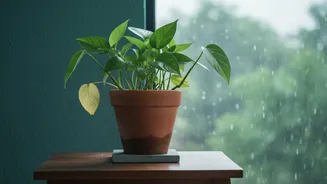
Plants will tell you when they are unhappy. One of the most confusing signs of overwatering is wilting. A plant can look droopy and thirsty even when its soil is saturated. This happens because the rotting roots can no longer absorb water, effectively causing the plant to dehydrate. Other tell-tale signs include the yellowing of lower leaves, a musty or sour smell from the pot, and the appearance of green algae on the soil surface. If you see these symptoms, stop watering immediately and focus on improving drainage and aeration.
Adjusting for Different Plants and Conditions
Not all plants are the same. Succulents and cacti, which are adapted to dry conditions, will need significantly less water during the monsoon than they do in summer. Conversely, moisture-loving tropical plants might still need regular watering, but only after you've checked the soil. For outdoor plants, assess how much rain they've received. A brief shower might only wet the surface, but a prolonged downpour could saturate the soil for days. If possible, move smaller pots to a covered balcony or patio during periods of extremely heavy rain to give you more control over their moisture levels. Regular pruning can also help improve airflow around the plant, which helps prevent the fungal diseases that thrive in damp, humid conditions.