


A Constantly Shifting Timeline
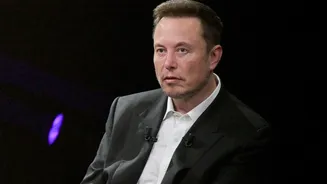
For those who placed an order for a Tesla Cybertruck, the wait has become a defining feature of the experience. Recently, CEO Elon Musk announced that production will now continue through the end of summer 2027. This news came just days after he had stated
production would wind down around the middle of the year to make way for the company's next big project, the Cybercab robotaxi. The extension is a direct response to an order book that, according to Musk, far exceeds the company's manufacturing capacity. Even with an extra production shift, Tesla anticipates it may have to return deposits to customers whose orders simply can't be fulfilled before the line is dismantled. This series of announcements highlights the central tension of the Cybertruck: massive hype and demand clashing with the immense difficulty of building such an unconventional vehicle at scale.
Victim of Its Own Radical Design
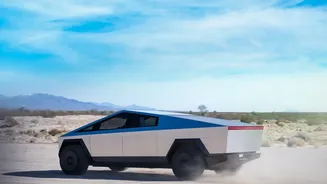
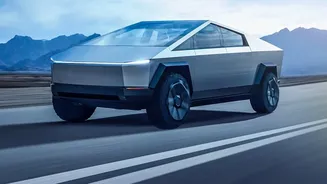
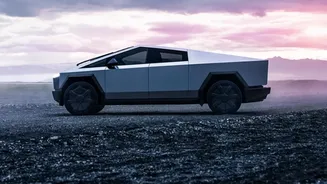
The core reason for the extended production schedule and massive backlog is the Cybertruck's own revolutionary design. Its sharp-angled exoskeleton, made of difficult-to-form stainless steel, required Tesla to invent entirely new manufacturing processes. Unlike traditional auto manufacturing, where body panels are stamped and attached to a frame, the Cybertruck's body is structural. This innovation, while key to its unique look and durability, has created persistent production headaches since the first deliveries began in late 2023. Early quality control issues, including misaligned panels and trim problems, further slowed the ramp-up. Musk himself has acknowledged the truck's manufacturing 'complexity' as a primary reason for its eventual discontinuation. The production rate has never come close to the initial ambitious target of 250,000 units per year, with sales in 2025 falling significantly short of that goal.
From Hype to 'Sentimentality'
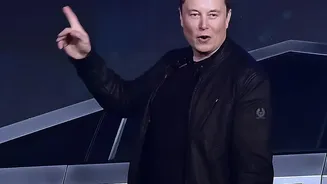
The decision to extend production, even by a few months, is an unusual one in the automotive world, where production end-dates are typically firm. Musk framed the extension not as a financial masterstroke but as a move driven by feeling. 'This is not the smartest move from a profit-maximizing standpoint btw, but there must be some room in this world for sentimentality or what's the point?' he posted on X (formerly Twitter). This reflects the dual nature of the Cybertruck project. On one hand, it has been a commercial disappointment, with sales numbers that pale in comparison to its initial hype. On the other, it remains a powerful symbol of Tesla's ambition and a cult favourite. The initial price, once advertised as starting under $40,000, ballooned to over $60,000 at launch for the base model, with high-end versions exceeding $100,000, which also tempered some of the initial excitement.
What's Next for Buyers and Tesla
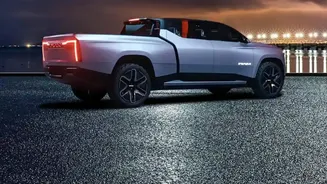
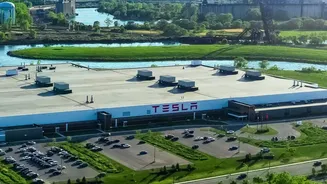
For prospective buyers, the picture is murky. Tesla's own website now shows delivery estimates for new orders of the top-tier 'Cyberbeast' model stretching from March to June 2027. The company has even stopped taking orders for the more affordable all-wheel-drive versions to manage the backlog. Anyone placing an order today faces the very real possibility of having their deposit refunded if their truck isn't built before the final shutdown. For Tesla, the focus is clearly shifting. The company is pivoting precious factory space at its Texas Gigafactory to the Cybercab, a purpose-built autonomous vehicle that Musk sees as central to Tesla's future as an AI and robotics company. The Cybertruck, a vehicle that once represented the future, is now making way for what Tesla believes is the next one.