
More Than Just a Six-Pack
Before we dive into the exercises, it is important to understand what 'real abdominal strength' means. It is not just about the visible 'six-pack' muscles (the rectus abdominis). A truly strong core involves a complex system of deep muscles, including
the transverse abdominis, which acts like a natural corset, and the obliques, which control rotation and side-bending. A strong core provides stability for your entire body, improves posture, enhances balance, and reduces the risk of back pain and injury. These exercises are designed to target this entire system, building functional strength from the inside out.
The Plank: Your Foundation for Stability
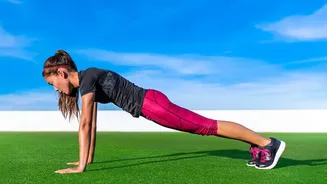
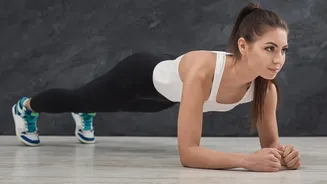
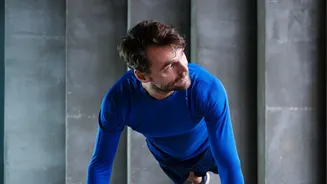
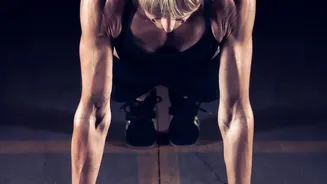
The plank is a classic for a reason. It is an isometric exercise, meaning you hold a position under tension, which is incredibly effective for building deep core stability. It primarily targets the transverse abdominis, the deepest layer of your abdominal muscles, which is crucial for supporting your spine. To perform a plank, get into a push-up position, but rest your weight on your forearms instead of your hands. Your elbows should be directly under your shoulders. Engage your core and glutes to keep your body in a perfectly straight line from your head to your heels. Avoid letting your hips sag or rise too high. Hold this position for 30-60 seconds, focusing on maintaining tension and breathing steadily.
Bicycle Crunches: Target Everything at Once
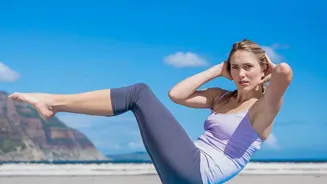
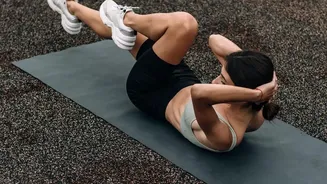
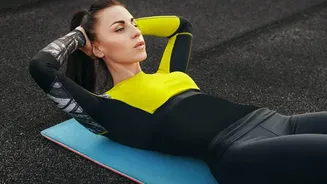
Considered one of the most effective abdominal exercises, the bicycle crunch is a dynamic movement that hits multiple core muscles simultaneously. It targets the rectus abdominis and places a significant emphasis on the obliques. Lie on your back with your hands gently behind your head, being careful not to pull on your neck. Lift your knees to a 90-degree angle and raise your shoulders off the floor. Begin a pedalling motion, bringing your right elbow towards your left knee while extending your right leg straight. Then, switch sides, bringing your left elbow to your right knee. The key is to perform the movement in a slow, controlled manner rather than rushing through it.
Leg Raises: Focus on the Lower Abs
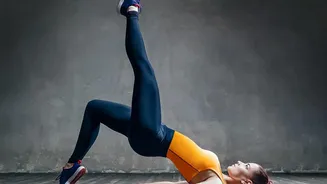
Many traditional ab exercises neglect the lower portion of the rectus abdominis. Leg raises are the perfect antidote. Lie flat on your back with your legs straight and together. You can place your hands under your lower back for support if needed. Keeping your legs as straight as possible, slowly raise them towards the ceiling until they are perpendicular to the floor. Then, slowly lower them back down, stopping just before they touch the ground to maintain tension in your core. The slower and more controlled the movement, the more you will challenge your abdominal muscles and minimise the involvement of your hip flexors.
Hollow Body Hold: The Gymnastics Staple
Borrowed from the world of gymnastics, the hollow body hold is an advanced but incredibly potent exercise for building total core tension and strength. Lie on your back and press your lower back firmly into the floor. Extend your arms and legs out, then slowly lift them a few inches off the ground, along with your head and shoulders. Your body should form a shallow 'banana' shape. The goal is to keep your lower back glued to the floor throughout the hold; if it starts to arch, raise your arms and legs higher. This position creates immense abdominal compression, building a rock-solid core that provides stability for all other movements.
Bodyweight Russian Twists: Power Up Your Obliques
Rotational strength is a key component of a functional core, and Russian twists are excellent for developing it. Sit on the floor, lean your torso back to about a 45-degree angle, and lift your feet off the ground, balancing on your glutes. Clasp your hands together in front of your chest. From this position, twist your torso from side to side. Move your arms and shoulders as one unit, focusing the rotation in your midsection. This exercise directly targets the internal and external obliques, the muscles responsible for twisting motions and stabilizing your sides. For a greater challenge, extend your arms further from your body.