





The Foundation: Why Form Comes First
Proper form is the bedrock of any effective strength training routine. It ensures that you are activating the intended muscles, which is crucial for building strength and achieving your desired results. When your technique is correct, you place tension
on the muscles you want to grow—like your quads, hamstrings, and glutes—rather than placing unnecessary stress on your joints, ligaments, and tendons. Poor form not only leads to less effective workouts but significantly increases the risk of injury, from minor strains to more serious issues like herniated discs or joint damage. By focusing on quality of movement over quantity of reps, you build a strong, sustainable foundation for long-term progress and health.
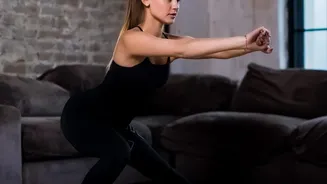
Mastering the Bodyweight Squat
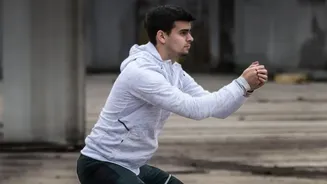
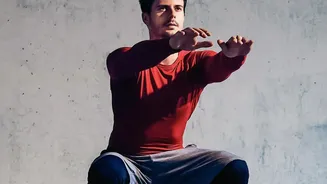
The squat is a foundational exercise for lower-body strength, targeting multiple muscle groups at once. To perform a basic squat correctly, stand with your feet shoulder-width apart and your toes pointed slightly outward. Initiate the movement by pushing your hips back as if you're about to sit in a chair, keeping your chest up and your spine neutral. Lower your body until your thighs are parallel to the ground, or as low as you can comfortably go, ensuring your knees track in line with your toes and do not collapse inward. A common mistake is letting the knees travel too far past the toes, which places excess pressure on the knee joints. Drive through your heels to return to the starting position, engaging your glutes at the top.
Perfecting the Lunge
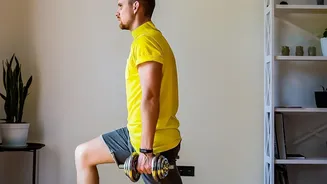
Lunges are excellent for improving balance, stability, and strengthening each leg independently. To start, stand tall with your feet hip-width apart. Step forward with one foot, lowering your hips until both knees are bent at approximately a 90-degree angle. Your front knee should be directly above your ankle, not pushed out over your toes, and your back knee should hover just above the floor. A frequent error is placing the feet in a straight line, like on a tightrope, which creates instability. Instead, imagine your feet are on separate train tracks. Keep your core engaged and your torso upright throughout the movement. Push off the front foot to return to the start and repeat on the other side.
Common Mistakes and How to Fix Them
Two of the most common errors in lower-body exercises are rounding the back and allowing the knees to cave inward (known as knee valgus). Rounding your back, especially during squats, shifts the load to your spine instead of your legs, increasing injury risk. To fix this, keep your chest lifted and your gaze forward. Knee valgus is often caused by weak glute muscles. Focus on actively pushing your knees outward so they stay aligned with your feet. Another frequent issue is performing reps too quickly. Slow, controlled movements are far more effective for muscle building and safer than relying on momentum. If you're struggling with form, it's always better to reduce the range of motion or perform the exercise without weights until you feel confident and stable.
Listen to Your Body
One of the most important aspects of training, especially without supervision, is learning to listen to your body. There is a distinct difference between the burn of muscle fatigue and the sharp signal of pain. Muscle soreness is a normal part of getting stronger, but sharp, stabbing, or persistent joint pain is a warning sign that something is wrong. If you feel pain, stop the exercise immediately. Filming yourself with your phone can be a great way to check your form against examples from credible sources. By paying attention to how your body feels, you can make smarter decisions, prevent overuse injuries, and ensure your fitness journey is both productive and pain-free.