

Why Planning Is Your Secret Weapon
Every amateur astronomer knows the feeling: you set up your telescope or lay out a blanket, only for clouds to roll in or for the sky to be a hazy, washed-out orange. These two culprits—weather and light pollution—are the biggest obstacles to a great
night of stargazing. While you can't control them, you can plan around them. A few minutes of checking specialized forecasts can be the difference between a memorable cosmic show and a disappointing evening. Modern apps and websites now give you the power to know exactly when and where to look up, ensuring your efforts are rewarded with clear, dark skies.
Mapping the Darkness: Escaping City Lights
The first step to seeing more stars is finding a dark location. Light pollution from cities and towns can obscure all but the brightest objects like the Moon and a few planets. To find a truly dark site, use a light pollution map. Websites like LightPollutionMap.info provide an interactive world map showing the intensity of artificial skyglow. For stargazers in India, the goal is to find areas on the map that are green, blue, or grey, indicating lower levels of light pollution. Even driving 30 to 40 kilometres from a major city centre can make a significant difference. These maps help you identify nearby parks, rural areas, or elevated spots that offer a much clearer window to the universe. Some astronomy apps also have this feature built-in, using what is called the Bortle Scale to classify sky darkness from Class 1 (excellent) to Class 9 (inner-city sky).
Forecasting the View: Checking Cloud Cover
A standard weather forecast that just says 'clear' isn't enough for astronomy. You need specifics on cloud cover. Specialised weather apps built for astronomers, such as Astrospheric and Clear Outside, are invaluable tools. These apps provide hourly breakdowns of total cloud cover, as well as separate forecasts for low, medium, and high-altitude clouds. For the best viewing, you want a total cloud cover forecast of 10% or less. These apps also provide other crucial data like 'transparency' (how clear the air is) and 'seeing' (how steady the atmosphere is), which affects how much planetary detail you can see. Using a combination of a general weather app and an astronomy-specific one gives you the most reliable picture of the night ahead.
October's Celestial Lineup: What to Look For
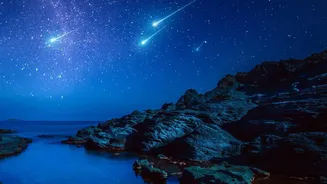
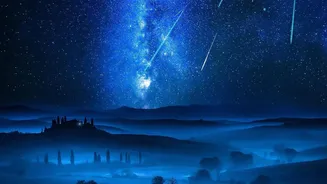
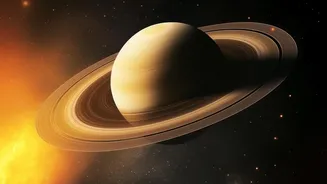
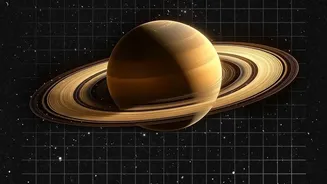
October 2026 is a fantastic month for skywatchers in India. The main event is Saturn, which reached opposition on October 4. This means it rises around sunset, is visible all night, and is at its brightest and largest for the year. While its famous rings require a telescope, the planet itself is easily visible to the naked eye as a bright, steady light. Early risers can catch Mars and Jupiter in the pre-dawn sky; on October 5 and 6, the Moon will pass close to both planets. The month also features two meteor showers. The Draconids peak on October 8-9 under a nearly new moon, offering excellent viewing conditions right after dusk. Later, the Orionid meteor shower, born from the debris of Halley's Comet, peaks on October 21-22, promising fast, bright meteors after midnight.
Tips for a Perfect Night Under the Stars
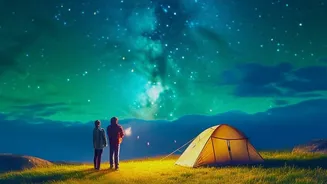
Once you've used the tools to pick the perfect time and place, a few extra tips can enhance your experience. First, give your eyes at least 20 minutes to adapt to the darkness; avoid looking at your bright phone screen. If you need light, use a red flashlight, as it affects your night vision less. Dress in warm layers, as temperatures can drop significantly even on a clear night. Finally, get comfortable. A reclining chair or a blanket on the ground is far more enjoyable for long viewing sessions than craning your neck. Whether you're using a telescope, binoculars, or just your eyes, a little preparation ensures you can simply relax and enjoy the magnificent cosmic display above.