



A Bigger Bucket for Light
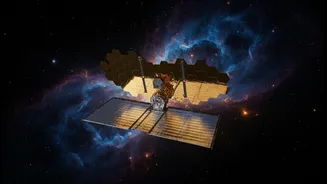
The most visible difference between Webb and its famous predecessor, the Hubble Space Telescope, is its enormous primary mirror. Hubble’s mirror is 2.4 metres in diameter, which was revolutionary for its time. Webb’s, however, is a colossal 6.5 metres across.
This isn't just for show; a larger mirror acts like a bigger bucket for collecting faint light from distant cosmic objects. In fact, Webb's mirror, composed of 18 gold-plated beryllium segments, has over six times the light-collecting area of Hubble's. This immense size means it can gather more light in a shorter amount of time, allowing it to detect objects up to 100 times fainter than what Hubble can see. This sensitivity is crucial for peering into the deepest, darkest corners of the universe.
Seeing the Universe in Infrared
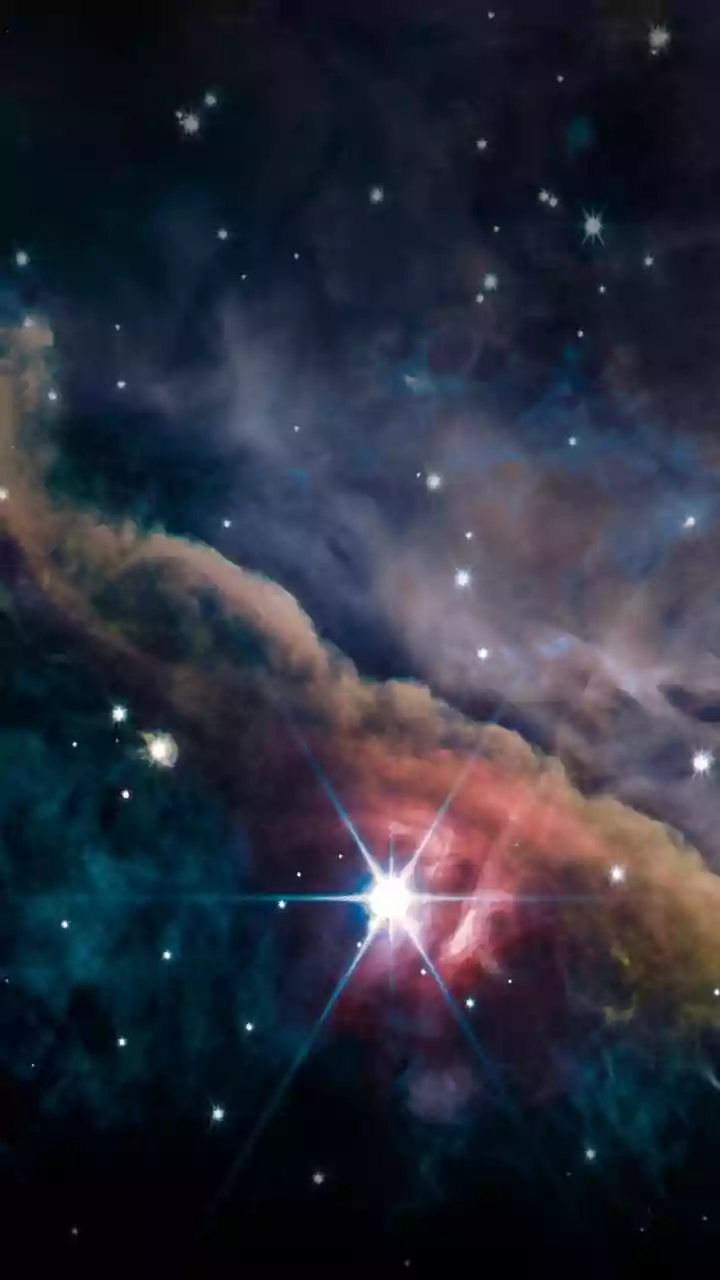
Perhaps the most fundamental difference is the kind of light Webb is designed to see. While Hubble primarily observes in visible and ultraviolet light, Webb is optimized to see the universe in infrared. Think of it as having cosmic night-vision goggles. This is a game-changer for two main reasons. First, infrared light can pass through the dense clouds of cosmic gas and dust that obscure many fascinating celestial events. This allows Webb to see the birth of stars and planetary systems, processes that are hidden from visible-light telescopes. Second, infrared vision is essential for looking back in time. As the universe expands, light from the most distant (and therefore, earliest) galaxies gets stretched out during its long journey to us. This phenomenon, called 'redshift', shifts the light from the visible spectrum into the infrared. Webb is specifically built to capture this faint, ancient light, allowing scientists to study the first galaxies that formed over 13.5 billion years ago.
A Cold and Lonely Outpost
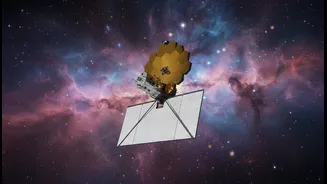
To detect faint infrared signals, which are essentially heat radiation, the telescope itself must be incredibly cold. Any heat from the telescope's own instruments would blind it, like trying to take a picture of a candle with the lens cap on. This is why Webb can’t orbit the Earth like Hubble. The heat from the Sun, Earth, and even the Moon would interfere with its observations. Instead, Webb is stationed at a unique spot 1.5 million kilometres from Earth called the second Lagrange point, or L2. At this gravitationally stable point, the Sun, Earth, and Moon are always on the same side, allowing Webb to block their heat and light with a single, tennis-court-sized sunshield. This five-layer shield keeps the telescope's instruments at a frigid -225 degrees Celsius, ensuring it can detect the faint heat signatures from the edge of the universe.
A New Era of Discovery
So, is Webb simply a replacement for Hubble? Not at all. Scientists see it as a successor and a complementary partner. Hubble continues to provide invaluable data in the visible and UV spectrum, while Webb opens up a new window into the infrared universe. Its larger mirror, infrared sensitivity, and strategic location are not just incremental improvements; they are purpose-built features designed to answer new questions that Hubble's own discoveries raised. By seeing through dust and looking back to the dawn of time, Webb is not just seeing more—it is seeing differently, uncovering a part of the cosmos that has, until now, remained hidden from view.