



From Curation to Creation
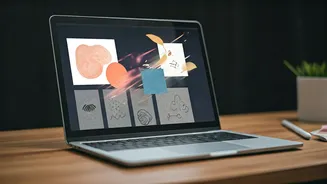
For decades, creating a mood board was an act of digital collage. A freelance designer, photographer, or art director would spend hours hunting across stock photo sites, Pinterest, and design blogs for existing images that, when pieced together, approximated
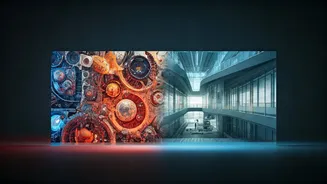
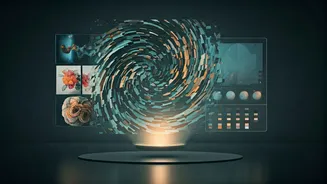
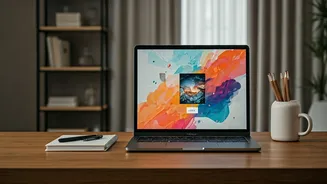
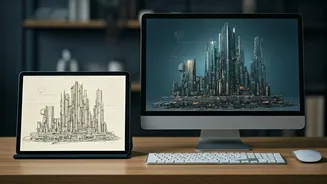
a client's desired aesthetic. It was a process of finding, not making. Generative AI has completely inverted this workflow. Instead of searching for images that someone else created, freelancers are now generating bespoke visuals from scratch. Tools like Midjourney, DALL-E 3, and Stable Diffusion allow them to type a descriptive prompt and receive a unique, highly specific image in seconds. This fundamental shift moves the mood board from a collection of found objects to a gallery of custom-commissioned concepts, all created before a single real-world element is sourced.
The Power of Hyper-Specificity
The headline's claim of “high quality” isn’t just about visual fidelity; it’s about precision. Previously, a creative might search for “moody, minimalist living room” and sift through hundreds of near-misses. Now, they can prompt an AI with: “An editorial photograph of a minimalist living room in a Japanese wabi-sabi style, with a low-slung linen sofa, a single ikebana flower arrangement, and soft, diffused morning light coming from a large window.” The AI returns an image that isn't just close—it *is* the vision. This allows for a much richer, more accurate conversation with a client. Instead of saying, “Imagine this, but with a different chair,” a freelancer can present a board that perfectly captures the nuanced feeling, color palette, and composition they intend to deliver. It eliminates ambiguity and helps secure client buy-in with unprecedented clarity.
Shrinking Timelines, Expanding Creativity
The most tangible benefit for any freelancer is time. What once took a full day of searching and assembling can now be accomplished in under an hour. This radical acceleration allows freelancers to take on more projects, iterate on ideas faster, and dedicate more time to the actual execution of the final product. For a brand consultant pitching a new packaging concept, generating ten distinct visual directions is now a quick brainstorming session, not a week-long design sprint. This speed doesn't just improve efficiency; it fosters creativity. By lowering the effort required to visualize an idea, AI encourages experimentation. A freelancer can explore a wild, left-field concept without committing hours of work, often leading to more innovative and unexpected final results.
Best Practices in the New Workflow
While powerful, these tools are not magic wands. Their effective use requires a new set of skills. First, “prompt engineering”—the art of writing descriptive text to get the desired output—is crucial. Learning to specify camera angles, lighting, artistic styles, and emotional tone is key. Second, freelancers are discovering the importance of iteration. The first generated image is rarely the last; it’s a starting point to be refined with adjusted prompts. Many creatives generate a dozen variations to curate into a final, cohesive board. Finally, transparency is essential. Most freelancers are open with clients that the mood board contains AI-generated concepts for directional purposes. It sets expectations correctly, clarifying that these are not final deliverables but visual signposts. It also helps navigate the complex and evolving conversation around the ethics and copyright of AI-generated art, ensuring the tool is used for ideation, not final production without consent.