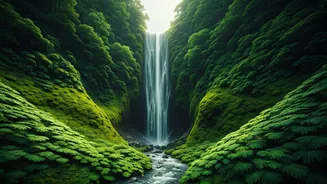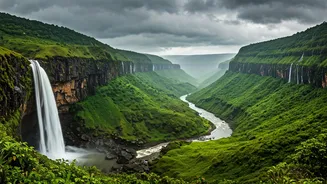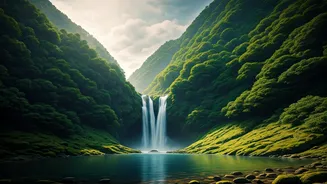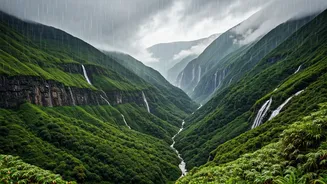





The Waterfall That Defies Gravity
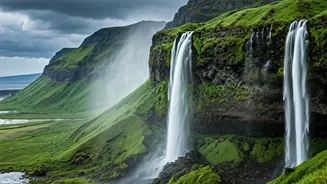
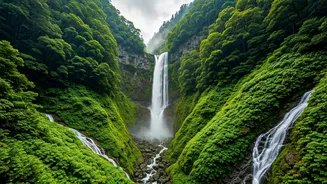
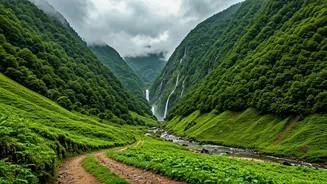
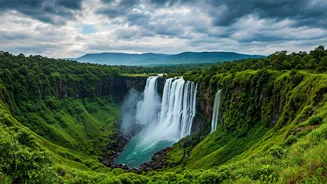
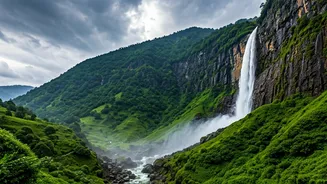
Imagine standing at the edge of a cliff in the Western Ghats, shrouded in mist. A waterfall cascades over the edge, but instead of plunging into the valley below, the water sprays upwards, drenching you in a reverse shower. This isn't a scene from a fantasy
film; it's a real phenomenon known as a 'reverse waterfall,' and it's the monsoon's most spectacular illusion. During the peak monsoon months, places like Naneghat, near Pune, and Samrad village in Maharashtra become pilgrimage sites for trekkers and nature lovers who come to witness this marvel. The water, pushed by furious winds, seems to fight a battle with gravity and win, creating a mesmerising, almost hypnotic spectacle that leaves onlookers speechless. It’s a powerful reminder that the familiar rules don't always apply when nature is at its most dramatic.
The Simple Science Behind the Spectacle
So, how does this magic trick work? The secret lies in a combination of geography and meteorology. The Western Ghats are a massive wall of mountains running parallel to India's west coast. When the moisture-laden monsoon winds arrive from the Arabian Sea, they have nowhere to go but up. This upward push of air, known as orographic lift, is incredibly powerful. During the peak of the monsoon, wind speeds in these ghats can easily exceed 60-80 kilometres per hour. When this high-velocity wind barrels into a waterfall cascading down a cliff, it physically overpowers the downward flow of the water. The immense pressure from below atomises the water into a fine spray and launches it back up into the air. It’s less about defying gravity and more about being overwhelmed by a stronger force. Think of it like blowing hard across the top of a cup of tea—the liquid on the surface ripples and lifts. Now, imagine that on the scale of a mountain and a wind system that travels thousands of kilometres.
More Than Just One Trick
The reverse waterfall may be the showstopper, but the monsoon's repertoire of magic is vast. Further north, in the high-altitude meadows of Uttarakhand, the arrival of the rains triggers another incredible transformation. The Valley of Flowers National Park, a UNESCO World Heritage Site, lies dormant under snow for most of the year. But as the monsoon showers begin in July, the entire valley explodes into a carpet of over 300 species of alpine flowers. It’s a breathtaking bloom that lasts only a few months, a fleeting paradise painted by the monsoon. Along the Konkan coast of Maharashtra and Karnataka, the monsoon brings another kind of magic after dark. The combination of rainwater runoff and specific salinity levels in the sea can trigger blooms of bioluminescent phytoplankton. This phenomenon, known as 'sea sparkle' or 'blue tears,' causes the waves to glow with an ethereal blue light, turning the shoreline into a starlit ocean.
Chasing the Monsoon's Magic
Witnessing these events requires a bit of timing and a spirit of adventure. The reverse waterfalls of the Western Ghats are most active from late June to early September, when the monsoon is at its fiercest. Treks to places like Naneghat are popular, but they demand caution due to slippery paths and low visibility. The Valley of Flowers is accessible from July to September, requiring a multi-day trek that rewards the determined with unparalleled beauty. The bioluminescence is more unpredictable but tends to occur during the monsoon and post-monsoon months, often after a good spell of rain. These phenomena aren't just tourist attractions; they are vibrant displays of the intricate ecological dance choreographed by the monsoon. They show us that this season is not just about water, but about wind, temperature, and the perfect alignment of natural forces.