
A New Era of Cosmic Weather Reports
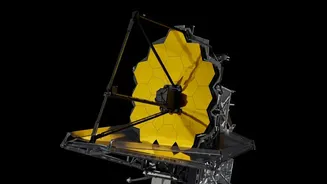
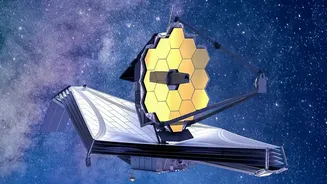
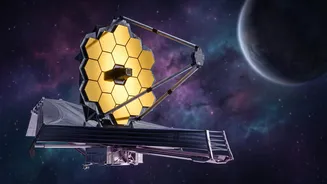
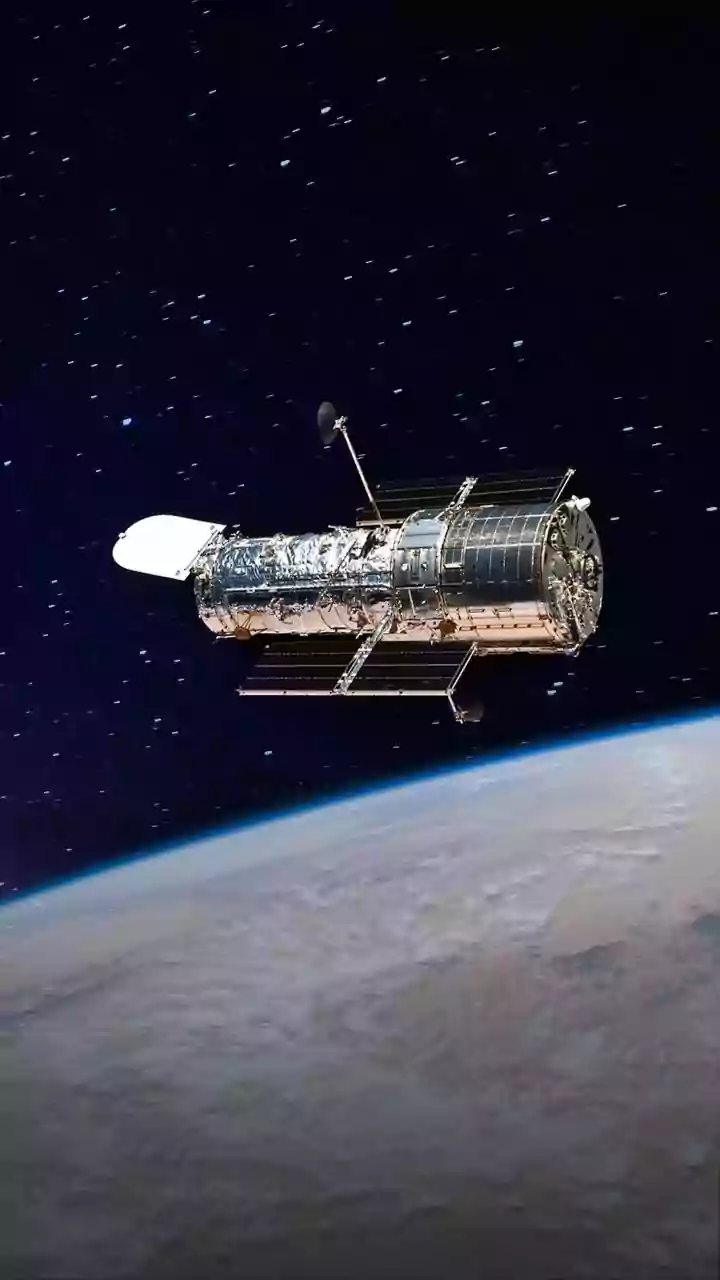
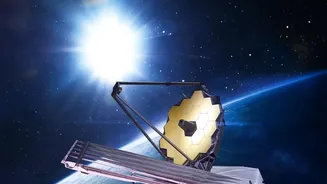
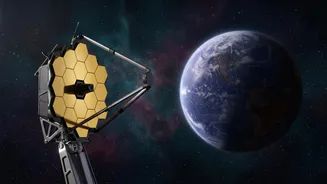
For years, astronomers have found hints of moisture on distant worlds, but the signals were often faint, leaving room for doubt. Now, that ambiguity is fading. Recent findings from the James Webb Space Telescope (JWST) have provided what scientists are
calling undeniable evidence of water vapour in the atmospheres of rocky exoplanets known as Super-Earths. While water has been detected before on massive gas giants, finding it on smaller, potentially rocky worlds is a watershed moment. The telescope's powerful infrared instruments are delivering atmospheric data with what experts describe as 'jaw-dropping precision', turning the stuff of science fiction into hard observational fact. This leap in technology moves the search for life from a theoretical exercise to an active investigation of specific, distant worlds.
What Exactly Are 'Super-Earths'?
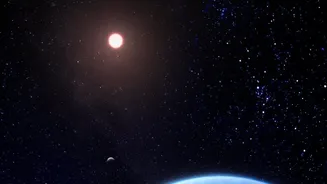
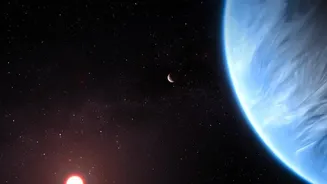
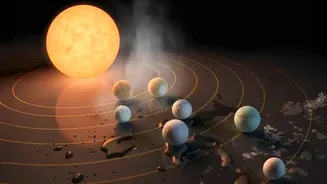
The term 'Super-Earth' might sound like a bigger, better version of our own planet, but the reality is more mysterious. These are a class of exoplanets with a mass higher than Earth's but substantially lower than that of ice giants like Neptune or Uranus. They are one of the most common types of planet in our Milky Way galaxy, yet our own solar system curiously lacks one. This abundance makes them a prime target for astronomers. Are they giant, barren rocks, or could they be 'water worlds' with deep oceans? One such example that JWST has recently studied is GJ 1214 b, a world previously shrouded in a thick haze that older telescopes couldn't penetrate. JWST pierced that veil, revealing an atmosphere rich in water vapour. These planets represent a critical missing link in our understanding of planetary formation.
How Webb Reads an Alien Sky
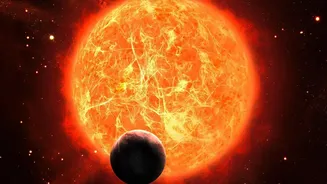
Detecting elements light-years away sounds impossible, but the method JWST uses, called transmission spectroscopy, is ingeniously simple in concept. When an exoplanet passes in front of its host star from our perspective, a tiny fraction of the starlight filters through the planet's atmosphere. Different molecules in that atmosphere absorb specific wavelengths, or colours, of light. Water, methane, and carbon dioxide each leave a unique chemical fingerprint on the light that reaches the telescope. By analysing this filtered starlight, JWST can effectively read the chemical recipe of an alien atmosphere. What makes Webb's recent discoveries so groundbreaking is the clarity of these fingerprints. The telescope's precision allows it to resolve trace gases down to parts per million, ruling out noise or other interferences that made past detections less certain.
Not Earth 2.0, But Still a Game-Changer
It's crucial to manage expectations: the presence of water vapour does not automatically mean a planet is habitable. Many of these Super-Earths orbit their stars so closely that surface conditions are extreme. For instance, the planet TOI-561 b, which shows strong evidence of an atmosphere, is a scorching 'lava world' where temperatures are high enough to melt rock. Scientists have described it as behaving like a 'wet lava ball'. Similarly, while GJ 1214 b is suspected to have an atmosphere made mostly of water vapour, its high temperature and crushing pressure make liquid oceans as we know them highly unlikely. Many of these planets orbit volatile M-dwarf stars, which are known for unleashing powerful flares that could strip an atmosphere away and bathe a planet in deadly radiation. The fact that these planets have retained their atmospheres at all is a fascinating puzzle.