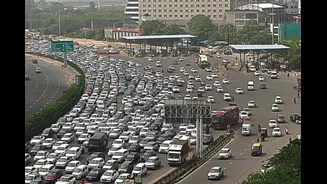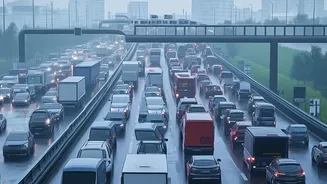


Starting November 1, Delhi is implementing strict vehicle entry rules to combat winter pollution. For the lakhs of daily commuters from Gurugram, Noida, Ghaziabad, and Faridabad, this means significant travel disruption.
The New Rules Explained
As part of its Winter Action Plan
to curb severe air pollution, the Delhi government will bar the entry of vehicles registered outside the capital that do not meet Bharat Stage VI (BS-VI) emission standards. This ban is scheduled to be in effect from November 1, 2026, to January 31, 2027. The measure targets a significant source of pollution, as vehicular emissions are a major contributor to Delhi's poor winter air quality. According to transport department estimates, over 10 lakh vehicles from neighbouring NCR cities could be impacted by this decision.
Who is Primarily Affected?
The restrictions directly impact daily commuters and commercial transporters travelling into Delhi from NCR cities. This includes private car owners from Gurugram, Faridabad, Noida, Greater Noida, and Ghaziabad who use older vehicles for work, school runs, or other essential travel. Specifically, vehicles with BS-III and BS-IV norms, which form a large chunk of the cars in these satellite towns, will be prohibited from entering Delhi. For instance, Gurugram and Faridabad have nearly two lakh such vehicles, while Noida and Greater Noida have over four lakh. Many commuters have expressed anxiety over the financial burden of switching to cabs or other alternatives on short notice.
Are There Any Exemptions?
Yes, the ban is not absolute. Several categories of vehicles are exempt from the restriction. The most significant exemptions are for vehicles running on cleaner fuels. All electric vehicles (EVs) and cars that run on Compressed Natural Gas (CNG) will be allowed to enter Delhi regardless of their emission norm. Furthermore, vehicles that are compliant with BS-VI norms can enter without any hindrance. The ban also does not apply to vehicles providing essential services, such as ambulances and fire tenders. Vehicles adapted for use by persons with disabilities are also exempt. However, all vehicles entering the city must have a valid Pollution Under Control (PUC) certificate.
Your Commuting Alternatives
With personal vehicles restricted, commuters are encouraged to use public transport. The Delhi government has indicated that measures will be taken to handle the extra passenger load. This typically includes increasing the frequency of Delhi Metro trains and deploying additional DTC buses on major routes connecting NCR towns. Carpooling in a BS-VI compliant vehicle is another viable option. Some residents have suggested that the government should arrange for special shuttle services from border points. To discourage private vehicle use further, parking fees at many locations in Delhi will be doubled during this period. Officials will be deployed at major border points to enforce the ban, using methods including AI-powered Automatic Number Plate Recognition (ANPR) cameras.
Why Is This Happening Now?
These measures are part of the Graded Response Action Plan (GRAP), a set of emergency protocols that activate as air quality worsens. Winter is a period of peak pollution in Delhi-NCR, caused by a combination of factors including stubble burning in neighbouring states, low wind speeds, and dropping temperatures that trap pollutants close to the ground. Vehicular emissions are a consistent and significant contributor to this pollution cocktail. The ban on older, more polluting vehicles is a direct attempt to reduce the local emission load and prevent the Air Quality Index (AQI) from reaching 'Severe' or 'Severe+' levels for prolonged periods. The restrictions are a public health measure aimed at ensuring breathable air for the city's residents.