




Assess, Don't Guess
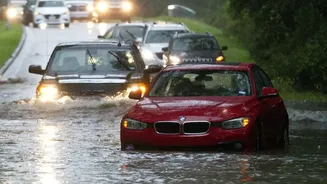
The single most important decision is made before you even enter the water: Is it safe to cross? Rushing into a waterlogged patch is a gamble you don’t want to take. As a rule, if you cannot see the road markings or the kerb, the water is likely too deep.
Most experts advise against driving through standing water more than six inches deep, as this can be enough to stall many passenger cars and cause a loss of control. For moving water, the limit is even lower—as little as four inches can be risky. A foot of water is enough to float many vehicles, effectively turning your car into an uncontrollable boat. If other cars are crossing, watch them closely. Observe where the water reaches on their tyres. If it’s approaching the centre of their wheels, it's a clear sign to turn back. The best and safest option is always to find an alternate route, even if it adds time to your journey.
Master the Slow Crawl
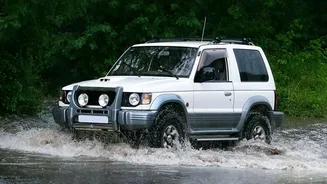
If you've determined the water is shallow enough to cross safely, the technique is counterintuitive. Your instinct might be to speed through to get it over with, but this is one of the worst things you can do. Speeding can create a large wave that washes over your bonnet and into the engine's air intake, which can cause catastrophic damage known as hydrolock. Instead, engage a low gear (first or second) and maintain a slow, steady speed of just a few kilometres per hour. Keeping the engine revs consistently high, but the speed low, helps prevent water from entering your exhaust pipe. This steady momentum is key. Don't stop or accelerate suddenly. Try to stick to the centre of the road where it is often highest and the water is shallowest. This deliberate, controlled crawl minimises splashing and gives you the best chance of emerging on the other side without a stalled engine.
Use a Bow Wave to Your Advantage
At a slow and steady speed, your car will create a small 'bow wave' in front of it. This is a wave that pushes water away from the front of your vehicle. By maintaining a constant speed, you create a small depression in the water level directly behind this wave, right around your engine bay. This effectively makes the water you’re driving through slightly shallower than the surrounding floodwater. The trick is to keep your speed perfectly matched to this wave. If you go too fast, you'll drive over your own wave and into deeper water. If you slow down too much, the water will rush back in around the engine. It’s a delicate balance, but getting it right helps protect your car’s most vulnerable components, like the air intake and critical electronics, from getting drenched.
Know When to Abandon Ship
Despite your best efforts, things can still go wrong. If your engine stalls in the middle of a waterlogged patch, do not try to restart it. Attempting to crank a flooded engine is the quickest way to cause severe and often irreparable internal damage. Your immediate priority shifts from saving your car to ensuring your own safety. If the water level is high or rising, you must exit the vehicle as quickly and safely as possible. It’s often easier to open a door when the water pressure inside and outside the car is still unequal. If the doors are stuck, try to roll down a window to escape. Once out, move to higher ground immediately and stay away from the water, which could be contaminated or hide other dangers. A car can be replaced; you cannot.
Perform a Post-Flood Check-Up
Once you're safely through the water and on dry ground, your job isn't quite done. First, gently tap your brakes a few times while driving slowly. This helps to squeeze water out and dry the brake pads and discs, ensuring they function correctly. Water can compromise your braking ability, so this is an essential safety step. As soon as possible, it's wise to have a professional mechanic inspect your vehicle. Water can contaminate essential fluids like your engine oil and transmission fluid, which may appear milky if compromised. Electrical systems are also extremely vulnerable, and problems may not surface for days or even weeks after the incident. A mechanic can check for water in the engine, flush contaminated fluids, and inspect electrical connectors and other hidden components for moisture and corrosion before they become major, expensive problems.