






The Legal Foundation for Residence
The entire framework for voter registration in India is built upon the Representation of the People Act, 1950. Section 19 of this Act mandates that to be included in a constituency's electoral roll, a person must be 'ordinarily resident' in that area.
The law is careful to define what this means. Merely owning property in an area does not automatically make you a resident for voting purposes. The concept focuses on where a person normally lives as a matter of fact. A temporary absence, such as for work or education, does not disqualify someone from being considered ordinarily resident in their home constituency. This legal distinction is crucial for maintaining the link between a voter and their community, which underpins the principle of representative accountability.
The On-Ground Verifier: The Booth Level Officer
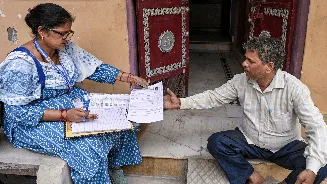
The most critical link in the verification chain is the Booth Level Officer, or BLO. These are typically local government or semi-government officials—like teachers or anganwadi workers—who are familiar with the community within a specific polling booth area. Appointed as a representative of the Election Commission at the grassroots level, the BLO's main job is to ensure the electoral roll is accurate. When a new voter applies for registration by filling out Form 6, or an existing voter requests a change of address, the application is forwarded to the BLO for physical verification. This involves a house-to-house visit to confirm the applicant actually resides at the given address.
The Verification Process in Action
The verification process is multi-layered. After an application is submitted, either online through the National Voters' Service Portal or offline, the first step is a check of the submitted documents. Following this, the BLO conducts a field visit. During this visit, the officer may speak with the applicant, their family members, or even neighbors to confirm the residency claim. The BLO's findings are then submitted in a report to the Electoral Registration Officer (ERO), who makes the final decision on including the name in the voter list. This system is also used to remove names, such as those who have shifted permanently or are deceased, ensuring the electoral roll remains clean and up-to-date.
What Counts as Proof of Residence?
Applicants are required to submit documentary proof of their residence. The Election Commission accepts a wide range of documents for this purpose. Commonly accepted proofs include recent utility bills (electricity, water, or gas), the current passbook of a bank or post office, a rental agreement, or an Indian passport. An Aadhaar card can also be submitted. The goal is to provide a variety of options so that genuine residents can successfully register. In some specific cases, such as for newly married individuals shifting their residence, documents like a marriage certificate can also be considered as supporting proof.
Navigating Updates and Intensive Revisions
Electoral rolls are not static; they are dynamic documents that require constant updating. From time to time, the Election Commission undertakes a 'Special Intensive Revision' (SIR) to verify the entire electoral roll of a region. This is often done to remove duplicate entries and ensure maximum accuracy, especially in states with upcoming elections. Recent news indicates that such exercises have been conducted across multiple states and union territories. During an SIR, voters might receive notices to re-verify their details, often through a combination of document submission and physical checks by BLOs. These updates, while intensive, are vital for addressing challenges like duplicate entries and maintaining the integrity of the electoral process in a vast and mobile democracy.