








A Historic Touchdown, A Tense Silence
The mission was a landmark before it even landed. In early 2024, the Odysseus lander, built by private firm Intuitive Machines, was poised to become the first American spacecraft to soft-land on the Moon in over 50 years, and the first commercial one
ever. Backed by NASA's Commercial Lunar Payload Services (CLPS) initiative, the goal was to deliver a suite of scientific instruments to the lunar south pole, a region brimming with mystery and potential resources. The descent was nail-biting. After a last-minute software patch to fix a navigation issue, the lander began its final approach. Then, after confirmation of touchdown, a tense silence followed. Initial signals were faint, and for several agonizing minutes, mission control fought to establish a clear link. The triumph of the landing was immediately clouded by uncertainty and the fear of a mission lost at the final second.
From Tipped Over to Transmitting Data
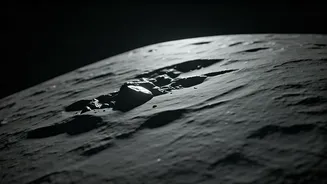
When a stable connection was finally achieved, the news was mixed. Odysseus had made it to the surface, but it hadn't stuck the landing perfectly. The spacecraft had tipped over, coming to rest at a 30-degree angle on the gray lunar dust. For a craft powered by solar panels and designed to operate upright, this was a critical, potentially mission-ending failure. Yet, in a testament to engineering resilience, Odysseus was not dead. Engineers at Intuitive Machines quickly determined that despite its awkward orientation, the lander was alive and its vital systems were functioning. More importantly, NASA confirmed that its six payloads aboard the craft were still capable of collecting and transmitting data, even from their slanted perspective. The mission, though compromised, was far from over. The team had a week before the long lunar night would freeze the lander for good.
A Harvest of Unexpected Knowledge
For the next seven days, Odysseus diligently worked from its side, beaming back information. NASA’s instruments, which were intended to operate in ideal conditions, were now providing a unique look at the lunar environment from an unplanned angle. The payloads successfully measured the local radio environment, gathered data on how rocket plume interacts with lunar soil during landing, and tested new navigation technologies. This information is vital for planning future Artemis missions, which aim to establish a sustainable human presence in the same region. While the tipped lander couldn't complete every planned objective, the data it did provide was invaluable. It proved that commercial partners could successfully deliver and operate scientific instruments on the Moon, a cornerstone of NASA’s modern exploration strategy. It was a partial failure that yielded a major success.
The Strategic Value of ‘Failing Forward’
The story of Odysseus is a perfect microcosm of a philosophy deeply embedded in the DNA of space exploration: learning from failure. NASA has a long history of turning near-disasters into legendary tales of ingenuity, with Apollo 13 being the most famous example. This ethos isn't just about recovering from mistakes; it's a core business strategy in an industry where the challenges are immense and the territory is often unknown. The agency maintains extensive 'lessons learned' databases to ensure that every setback, from the catastrophic to the minor, informs future missions. By embracing experimentation and adaptation, NASA and its partners treat failure not as an endpoint, but as a crucial data point. This mindset is essential as missions become more ambitious, pushing into deeper space and relying on complex commercial partnerships. Success is the goal, but learning is the constant.