








An Ayurvedic Prescription in a Bowl
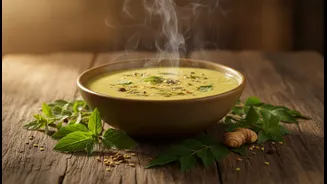
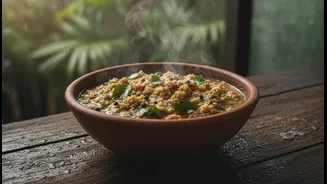
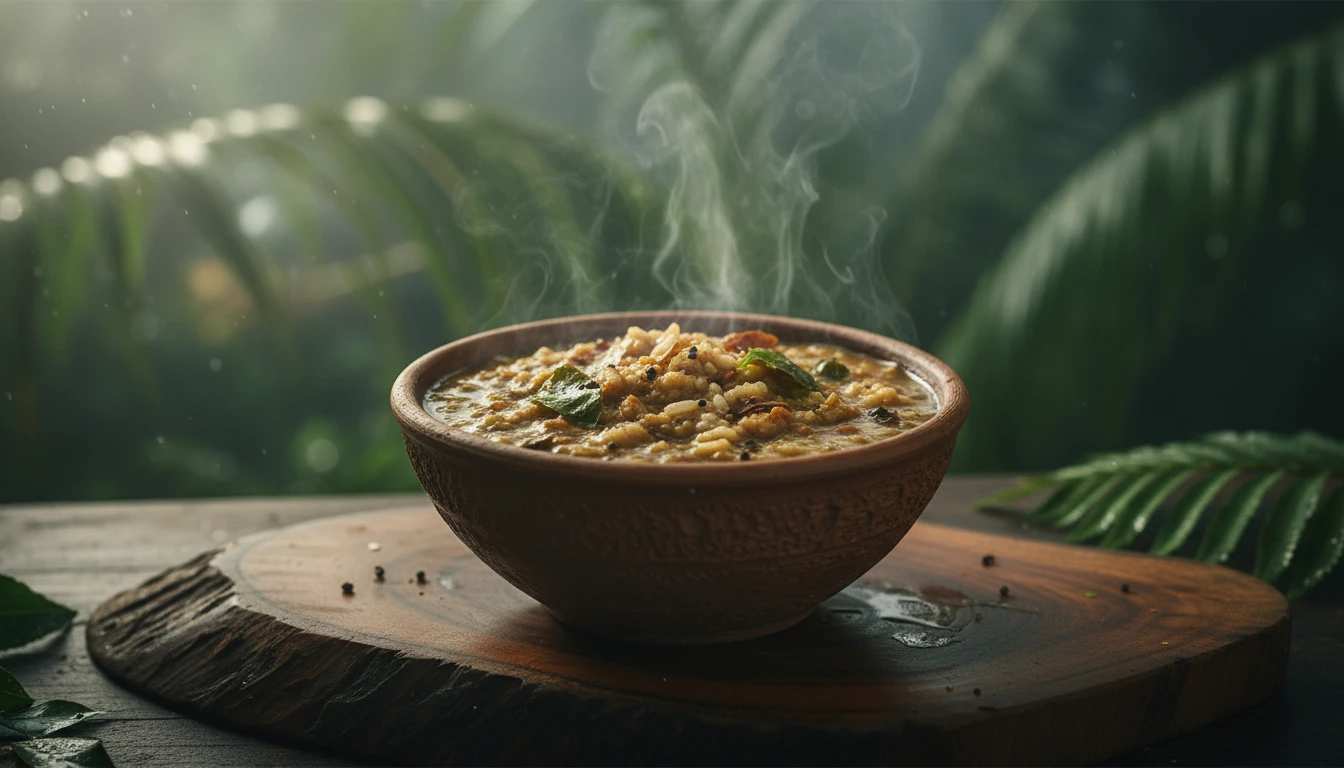
Karkidaka Kanji, also known as Oushadha Kanji (medicated porridge), is a cornerstone of Kerala's monsoon wellness rituals. It is traditionally consumed during the Malayalam month of Karkidakam (mid-July to mid-August), a period when, according to Ayurveda,
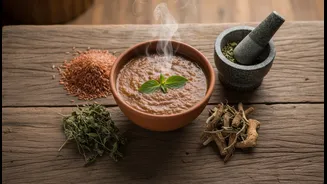
the body's digestive fire (Agni) is weak and immunity is low, making it susceptible to illness. This special gruel is designed to counteract these effects. Prepared with a base of Navara rice, a unique local grain known for its nourishing properties, the porridge is infused with coconut milk, jaggery, and a potent blend of herbs and spices like dry ginger, cumin, and fenugreek. Each ingredient is chosen for its specific medicinal value—to boost digestion, reduce inflammation, and strengthen the body’s defences against common monsoon ailments.
The Wisdom of the 'Dashapushpam'
The true magic of Karkidaka Kanji lies in its complex herbal formulations. Often, this includes the 'Dashapushpam' or 'ten sacred flowers', a group of humble, local herbs foraged for their potent healing properties. This isn't about exotic superfoods, but about deep-rooted knowledge of the local landscape. These herbs, combined with other medicinal roots and spices, work synergistically to detoxify the body, balance the doshas (Vata, Pitta, Kapha), and provide gentle nourishment when the digestive system is most vulnerable. This practice embodies the Ayurvedic principle of 'Ahara as Aushadha'—food as medicine. It’s a form of pantry wisdom passed down through generations, where the kitchen cabinet doubles as a medicine chest.
From Local Ritual to National Interest
For generations, Karkidaka Kanji was a tradition largely confined to households and Ayurvedic centres in Kerala. Today, however, it is becoming a bigger story. A renewed interest in wellness, natural foods, and traditional knowledge systems has pushed this regional delicacy into the national spotlight. Food bloggers and wellness influencers now share recipes and extol its benefits, while restaurants in metropolitan cities are featuring it on their monsoon menus. Ayurvedic brands and e-commerce platforms have made it even more accessible, offering ready-to-make 'Karkidaka Kanji kits' that allow home cooks across the country to participate in this seasonal ritual without the need to forage for specific herbs. This revival is driven less by nostalgia and more by a modern-day appreciation for its time-tested wisdom.
A Pan-Indian Porridge Tradition
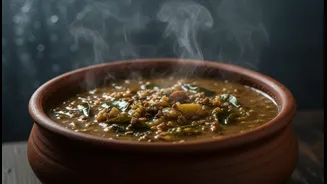
While Karkidaka Kanji is unique to Kerala, it belongs to a larger family of Indian monsoon porridges. Across the country, different cultures have their own versions of warm, nourishing gruels designed for the rainy season. In Goa, the sweet, ragi-based 'Tizaan' is a monsoon staple, offering earthy comfort with palm jaggery and coconut milk. In Maharashtra, 'Pithla'—a savoury porridge made from gram flour—is paired with jowar or bajra bhakri for a hearty meal. Even the ubiquitous Khichdi, in its countless regional variations, serves a similar purpose: a simple, digestible, and restorative meal perfect for a time when the body craves warmth and comfort. These dishes all point to a shared ancestral understanding of seasonal eating, where food is carefully chosen to support the body through the challenges of a specific time of year.