
A Hero's Unforgettable Stand
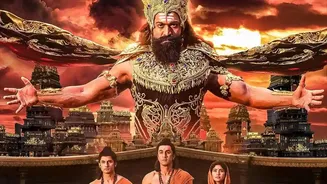
Jatayu, a demigod in the form of a vulture, was an old friend of King Dasharatha, Lord Rama's father. According to the Ramayana, when the demon king Ravana abducted Sita and was escaping to Lanka in his flying chariot, Jatayu was the first to intervene.
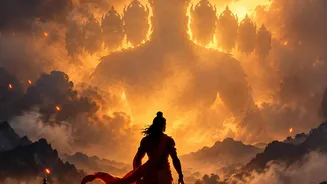
Despite his age, he fought ferociously to rescue her. The battle was fierce, but Ravana, with his powerful sword, ultimately clipped Jatayu's wings, causing him to fall mortally wounded to the earth. His sacrifice was not in vain; with his last breath, he was able to inform Rama and Lakshmana of Sita's abduction and the direction of Ravana's escape, playing a crucial role in their quest.
The Grand Memorial at Chadayamangalam
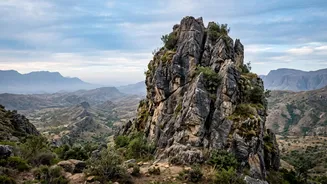
Perhaps the most magnificent tribute to Jatayu is the Jatayu Earth's Center in Chadayamangalam, Kerala. Local tradition holds that this rocky hill, known as Jatayupara, is where the great bird fell. Dominating the landscape is the world's largest bird sculpture, a colossal concrete figure of Jatayu lying on his back, measuring 200 feet long, 150 feet wide, and 70 feet high. This ambitious project, designed by filmmaker and sculptor Rajiv Anchal, is more than just a statue; it's a monument dedicated to women's safety and honour. Visitors can take a cable car to the top and even explore a museum and a 6D theatre housed inside the sculpture, which narrates the epic battle. The park also offers adventure activities, making it a blend of mythology, art, and eco-tourism.
Lepakshi: Where a Hero was Asked to Rise
Another prominent site linked to the legend is Lepakshi in Andhra Pradesh. According to this region's folklore, when a grief-stricken Rama found the dying Jatayu, he compassionately commanded him, 'Le Pakshi'—which translates to 'Rise, bird' in Telugu. This phrase is believed to have given the village its name. While the famous Veerabhadra temple with its hanging pillar is the main attraction, Lepakshi also has a hilltop park dedicated to Jatayu. Unlike the sculpture in Kerala that depicts a fallen hero, the statue here shows Jatayu standing tall. A large footprint carved in the rock nearby is also revered by locals, with some believing it belongs to Sita.
A Trail of Final Rites
The story of Jatayu doesn't end with his fall. Several places are associated with the final rites that Lord Rama performed for him, honouring him as he would his own father. In Tamil Nadu, the Vijayaraghava Perumal temple in Thiruputkuli, near Kanchipuram, is believed to be the spot where Rama performed the cremation. The name itself is said to mean the 'sacred pit of the bird'. The temple's sacred water body is named Jatayu Theertham. Another temple near Kumbakonam, at Thirupullabhoothangudi, also holds the distinction of being a 'Jatayu Moksha Sthalam', the place where Jatayu attained salvation. These sites offer a quieter, more devotional experience for pilgrims following the Ramayana trail.
The Homeland in Maharashtra
While sites in Kerala, Andhra Pradesh, and Tamil Nadu are linked to Jatayu's fall and death, a place in Maharashtra is considered his home. The area of Janasthana, near modern-day Nashik, is where many believe Jatayu lived. This proximity explains how he was able to quickly intercept Ravana as he flew south. A temple in Taked, near Nashik, also claims to be where Jatayu fell, with a sacred water tank that Lord Rama is said to have created with an arrow to quench the dying bird's thirst. The presence of these multiple sites across different states highlights the deep and widespread cultural impact of the Ramayana, as each region has woven the epic into its own local identity and geography.