





The Art of Disappearing Furniture
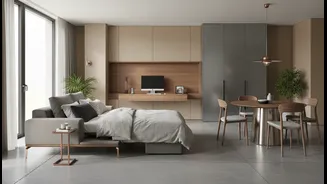
The most effective way to create a boundary between work and life is to make your office vanish. This is where convertible and multi-functional furniture becomes your greatest ally. Consider a wall-mounted desk that folds up to become a sleek cabinet
or a piece of art. Brands in India are increasingly offering compact desks designed for smaller urban homes. Another clever option is a lift-top coffee table that rises to become a comfortable work surface during the day and returns to a simple coffee table at night. For those with truly limited space, a 'cloffice' — a small office built into a closet or an armoire — can be a game-changer. Open the doors to work, and simply close them to signal the end of the day. This isn’t just about saving space; it's about creating a powerful psychological cue that helps your brain switch off.
Choose a Chair That Does Double Duty
Nothing screams 'corporate office' like a bulky, black mesh ergonomic chair. While comfort and posture are non-negotiable, aesthetics don't have to be sacrificed. The market for stylish ergonomic chairs has exploded, offering options that blend seamlessly into home decor. Look for chairs with upholstered finishes in colours that match your living room palette, or designs with clean lines and materials like wood or polished metal. Some chairs are designed to look more like accent armchairs but still offer adjustable features and lumbar support. Alternatively, a high-quality dining chair or a stylish guest chair can often be comfortable enough for work, provided you take regular breaks to stretch. The goal is to choose seating that feels like furniture, not equipment.
Master the Art of Concealment
If replacing your furniture isn't an option, focus on hiding your work setup in plain sight. A decorative folding screen is a simple yet elegant way to partition your workspace from the rest of the room. When the workday is done, you can fold the screen away or use it to hide your desk and chair. Another strategy is to use clever storage. Instead of leaving papers and supplies out, invest in storage ottomans, decorative boxes, or a small, wheeled cabinet that can be tucked away under a console table. Even placing your desk behind a sofa in an open-plan room can make it less visually dominant. The principle is simple: if you can't see your work, you're less likely to think about it.
Create Zones with Light and Colour
Creating distinct 'zones' for work and leisure can also establish powerful mental boundaries. You don't need walls to do this. A simple rug placed under your desk can visually define your workspace. When you step off the rug, you're symbolically leaving the office. Lighting also plays a crucial role. Use a bright, focused task lamp for work. When your day is done, turn it off and switch to warmer, ambient lighting in the rest of the room, like floor lamps or table lamps. This shift in lighting signals to your brain that it's time to relax. Some people even paint the wall or alcove where their desk is located a different colour to create a visual separation. These subtle cues reinforce the division between your professional and personal life.
The End-of-Day Ritual
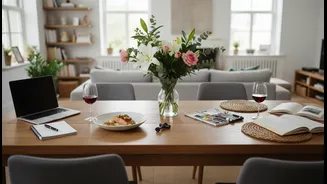
Finally, the most important step is creating an end-of-day ritual. This is a consistent series of actions that signals your workday is officially over. It could be as simple as shutting down your laptop, tidying your desk, and putting all your work items into a designated basket or drawer. Follow this by physically changing the space. Swap your laptop on the desk for a vase of flowers or a stack of books. Change out of your 'work clothes' into something more comfortable. This ritual is more than just cleaning up; it's a deliberate act of transitioning from your work self to your home self, allowing you to fully reclaim your space and your peace of mind.