

The Spirit of 'Bijoya'
Bijoya, meaning 'victory', celebrates the triumph of Goddess Durga over the demon Mahishasur. Following the immersion of the idols, the festive spirit continues for about two weeks. This period, known as Bijoya Sammilani, is dedicated to visiting friends
and family to exchange greetings. Younger members touch the feet of their elders to seek blessings, and friends embrace in a heartfelt 'kolakuli' (hug). At the heart of this tradition is hospitality, and no visit is complete without 'mishti-mukh'—offering guests something sweet and savoury to eat, a gesture considered essential and auspicious.
Savoury Start: Nimki
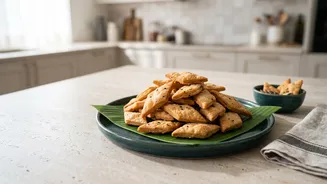
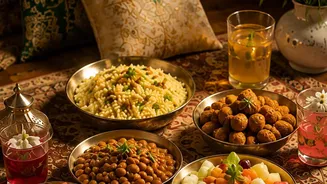
Almost every Bengali household will have a dabba (tin) full of these diamond-shaped, flaky, fried crackers ready for visitors. Nimki is the quintessential savoury snack. Made from a simple dough of flour, salt, and nigella seeds (kalo jeere), it's the perfect crunchy accompaniment to a cup of hot tea. Whether you're served the tiny, bite-sized 'kucho nimki' or the larger, triangular 'trikona nimki', their salty, addictive crunch is the perfect icebreaker as conversations begin to flow. It’s a simple, timeless snack that embodies the comforting and familiar feeling of a Bijoya get-together.
The Hearty Bowl: Ghugni
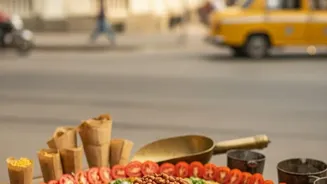
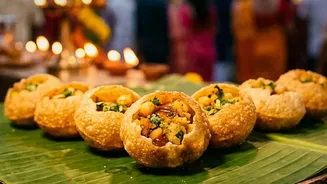
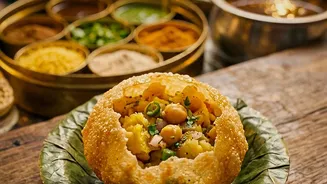
For a more substantial offering, many hosts prepare a large pot of Ghugni. This beloved street food classic is also a festive home-cooked staple. It is a slow-cooked curry made from dried yellow or white peas, simmered with spices until the peas are tender but still hold their shape. Often made without onion or garlic for festive purity ('niramish'), it is garnished with chopped onions, green chillies, a sprinkle of 'bhaja masla' (roasted spice powder), and sometimes a few slivers of coconut. Served warm in small bowls, Ghugni is a filling and soulful dish that provides a delicious counterpoint to the array of sweets.
Sweet Beginnings: Narkel Naru
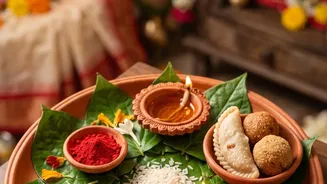
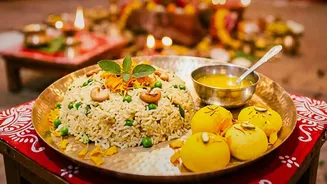
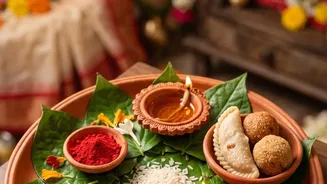
No Bijoya is complete without sweets, and Narkel Naru holds a special place in the Bengali heart. These are traditional coconut ladoos and come in two main varieties. One is made with grated coconut and jaggery ('gurer naru'), which gives it a rich, dark colour and an earthy sweetness. The other is made with sugar ('chinir naru'), resulting in a pristine white, sweet confection. Rolling these little spheres of joy is a family activity in many homes. Offering a Narkel Naru is offering a bite of pure, unadulterated tradition, a sweet that has been made for generations.
The Iconic Mishti: Sandesh and Rasgulla
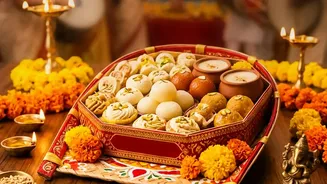
While homemade specialties are cherished, the Bijoya spread is often supplemented with iconic sweets from the local 'mishtir dokan' (sweet shop). Sandesh, a delicate sweet made from fresh cottage cheese (chhena), is a must-have. It can be soft and crumbly ('norom paak') or firm and chewy ('kora paak'), often pressed into beautiful shapes. Alongside it is the globally recognised Rasgulla, the spongy white ball of chhena soaked in a light sugar syrup. These sweets are more than just dessert; they are symbols of celebration and good fortune, and exchanging a box of them is a core part of the Bijoya ritual.
Fluffy and Fried: Luchi and Aloor Dom
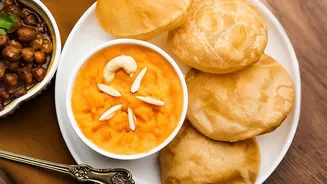
For guests who arrive around meal times, or for closer relatives, the hospitality often extends to a more elaborate snack. This is where the classic combination of Luchi and Aloor Dom comes in. Luchi are deep-fried, fluffy white bread made from refined flour, puffing up like little balloons. They are served hot, straight from the wok, alongside Aloor Dom, a slow-cooked potato curry that is mildly spicy and rich with flavour. It's a combination that spells pure indulgence and is considered a treat, making visitors feel truly special and cared for during their festive stopover.