







A Resume Built for the Future
To understand the new significance of Anil Menon’s upcoming eight-month mission, you first have to look at his unparalleled resume. Born to Indian and Ukrainian immigrants, Menon is not just a US Space Force colonel and emergency physician. He has a background
that seems tailor-made for this exact moment in space history. He previously served as a NASA flight surgeon, supporting crews on the ISS from the ground. Then, he made a pivotal move to the private sector, becoming the very first flight surgeon at SpaceX. In that role, he was instrumental in building the company’s medical program from the ground up, helping launch the first humans on the Crew Dragon and supporting the world’s first all-civilian orbital mission. His expertise spans three distinct spaceflight cultures: the legacy systems of NASA, the veteran Russian Soyuz program, and the disruptive commercial model of SpaceX.
More Than a Personal Milestone
When Menon was selected for NASA's 2021 astronaut class, the narrative was clear: it was the pinnacle of a brilliant career and a powerful symbol of Indian-origin talent reaching the highest echelons of human exploration. The takeaway was one of individual achievement and representation. The focus was on the man who had ‘made it.’ However, this perspective, while true, misses the larger, more strategic importance of his flight. His mission is not just the culmination of his own journey; it represents a critical turning point for the entire ecosystem of low-Earth orbit (LEO). Menon is not just a passenger in this new era of space—he is one of its chief architects, now tasked with bringing his unique insights back into the government-led framework to manage its next phase.
The Real Mission: Building a Commercial Bridge
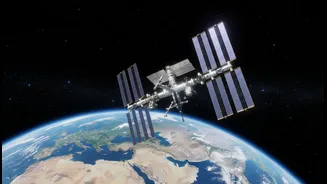
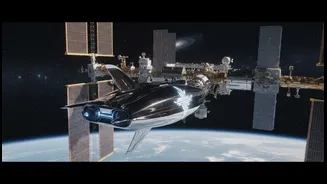
The “fresh context” surrounding Menon’s mission is the accelerating transition of the ISS itself. For over two decades, it has been the sole domain of government space agencies. Now, with its planned retirement around 2030, NASA is aggressively fostering a transition to commercial space stations. The goal is for NASA to become just one customer among many in a bustling LEO marketplace. This is where Menon’s role becomes so crucial. His experience at SpaceX makes him a human bridge between the old and new ways of operating in space. His mission is a key part of de-risking this transition, proving out the technologies and operational know-how needed for future private stations—like those planned by Axiom Space and Blue Origin—to succeed. His work is less about this one station and more about setting the stage for all the stations that will follow.
Science for a New Space Economy
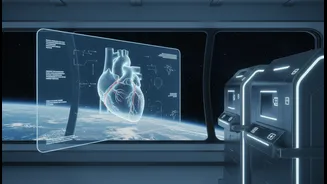
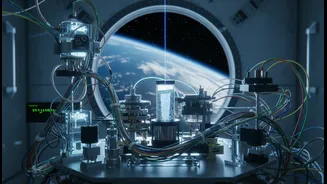
The experiments Menon will conduct aboard the ISS underscore this commercial focus. He will be researching the in-space production of semiconductor crystals, a project aimed at manufacturing components for high-performance computing and AI. This has obvious and massive commercial implications. Furthermore, he will test technologies to make future missions more self-sufficient, such as producing IV fluids from the station’s water supply and using AI-assisted ultrasound that could eliminate the need for real-time medical support from Earth. This research is not just for science's sake; it’s foundational work to make long-duration commercial spaceflight safer, cheaper, and more sustainable for a wider range of future private astronauts.
The New Takeaway for India
This updated understanding of Menon's mission changes what it means for India. He is no longer just a figure of national pride, but a forerunner in a new space economy that is wide open for participation. As India’s own space program, ISRO, continues to expand its ambitions with projects like the Gaganyaan human spaceflight mission and the proposed Bharatiya Antariksh Station, the commercialisation of LEO presents enormous opportunities. Menon's mission serves as a real-time case study in the public-private partnerships that will define the future of space. His work helps create the very ecosystem where Indian startups, scientists, and the national space agency itself can one day become key players, selling services and conducting research on commercial platforms.