






The Journey Home is Just the Beginning
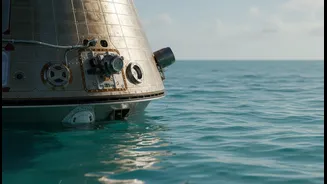
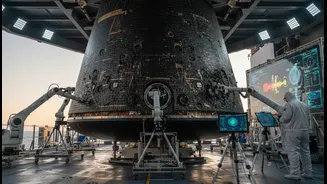
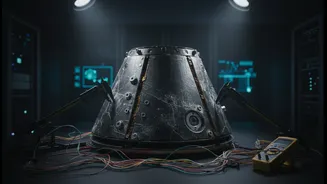
Once the Orion capsule is safely recovered from the Pacific Ocean and aboard a naval ship, it begins a second, equally critical journey. The spacecraft is transported back to NASA's Kennedy Space Center in Florida for a comprehensive teardown and analysis.
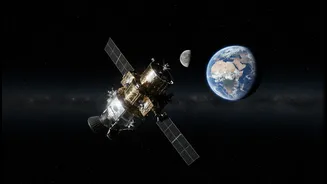
This process is far more than just a routine inspection; it is a deep-dive investigation into how the vehicle performed during every phase of its nearly 10-day journey around the Moon. Every piece of data, every scorch mark, and every component tells a story that is vital for the safety and success of Artemis III, the mission slated to land humans back on the lunar surface. For the engineers, this is where theory meets reality, and every finding shapes the future of human deep-space exploration.
A Deep Dive into the Heat Shield
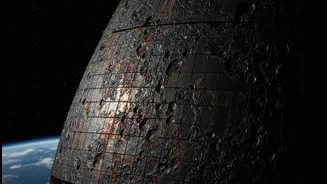
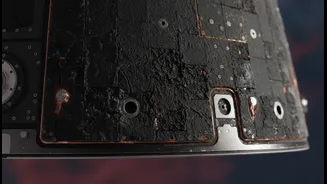
The single most scrutinised component of the Orion spacecraft is its massive heat shield. This shield protected the crew from temperatures reaching nearly 2,760 degrees Celsius during its fiery reentry into Earth's atmosphere at speeds of 40,000 km/h. After the uncrewed Artemis I mission, engineers discovered unexpected erosion and char loss on the heat shield. A major priority for Artemis II's post-flight analysis is to verify that modifications made to the reentry trajectory and an improved understanding of the material have solved this issue. Teams will meticulously inspect the shield, taking samples and comparing the real-world results with computer models to ensure it can be trusted for the even more demanding missions to come. The performance of this single component is a make-or-break issue for the entire Artemis program.
Data, Data, and More Data
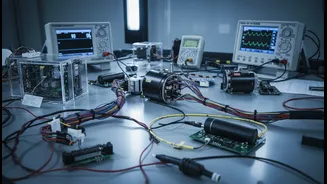
Beyond the physical hardware, the Orion spacecraft is a treasure trove of digital information. The flight generated terabytes of data from thousands of sensors monitoring everything from life support systems and power consumption to navigation and avionics. Engineers will pour over this telemetry to understand how systems performed in the harsh deep-space environment. This includes analysing the performance of the European-built service module, which provides propulsion and power, and checking for any in-flight anomalies, like a faulty smoke detector alarm that the Artemis II crew had to manage. Furthermore, extensive data on the crew's health was collected, tracking everything from heart rate to the effects of radiation, providing crucial insights for keeping astronauts safe on longer missions to Mars.
Inspecting the Crew's Home
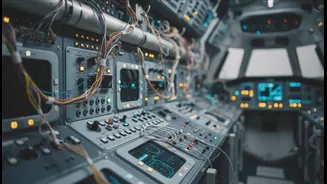
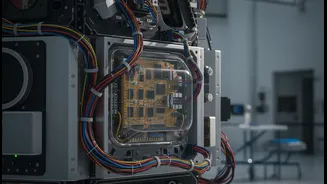
The interior of the crew module, the astronauts' home for the duration of the mission, also undergoes rigorous inspection. Technicians will check for any signs of damage from micrometeoroid impacts, though these are expected to be tiny. They will also verify the performance of all internal systems, from the control panels and displays to the waste management system, which had some issues on the flight. Some components from the Artemis II capsule, such as flight computers and navigation units, are designed to be reusable. These parts will be carefully removed, tested, and certified to be flown again on Artemis III, saving costs and build time. Even the crew's seats are examined to understand the stresses of launch and landing. This process ensures that the crew's habitat is not just functional, but fundamentally safe.
From Analysis to Action for Artemis III
Ultimately, every verification check has one primary purpose: to greenlight and inform the next mission. The data gathered from Artemis II directly feeds into the final planning and hardware preparations for Artemis III. Any anomalies discovered, whether with the heat shield, a sensor, or a life support component, must be fully understood and resolved before NASA commits to putting astronauts on a trajectory to land on the Moon. The analysis will confirm if the spacecraft is ready for its next, more complex assignment or if further modifications are needed. This meticulous, evidence-based approach is how space exploration moves forward — not by hoping things work, but by verifying that they do. The lessons learned from a successful flyby are the foundation for a safe and successful landing.