








A Radical Idea to Cool the Planet
Marine cloud brightening (MCB) is a form of solar geoengineering. The concept is to spray tiny sea salt particles into low-lying clouds over the ocean. These particles act as cloud condensation nuclei, helping to form more, smaller water droplets. This
process makes the clouds whiter and more reflective, causing them to bounce more of the sun's energy back into space. Originally proposed as a way to counteract global warming on a large scale, scientists are now exploring whether this technique could be used more tactically to influence specific climate phenomena.
The Climate Pattern We Know and Fear
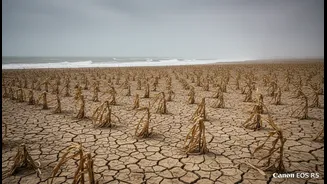
El Niño is the warm phase of the El Niño-Southern Oscillation (ENSO), a natural climate cycle in the tropical Pacific Ocean. Though natural, its effects are felt worldwide, often bringing devastating heatwaves, droughts, and floods that can disrupt ecosystems, agriculture, and economies. For instance, past strong El Niño events have been linked to torrential rains in some parts of the world while baking others in severe drought. The economic toll of a single major El Niño can run into the trillions of dollars.
An Accidental Experiment Inspires Research
The inspiration for the new study came from an unlikely source: Australian bushfires. Researchers observed that smoke particles from the massive 2019-2020 fires wafted over the Pacific Ocean. These particles acted similarly to the sea salt in MCB, brightening the clouds and contributing to a subsequent multi-year La Niña—El Niño's cooler counterpart. This 'natural experiment' led scientists to wonder if a similar effect could be intentionally created to weaken an emerging El Niño.
What the New Study Found
Using computer simulations, a team led by researchers from the Scripps Institution of Oceanography and the University of Chicago modeled what would happen if MCB was used during two past super El Niño events (1997-98 and 2015-16). The results, published in Science Advances, showed that injecting aerosols into clouds over a specific patch of the Pacific could dramatically weaken the El Niño. In some simulations, the intervention was so effective it turned a potential super El Niño into a neutral event, essentially preventing it from forming. The study found that the timing was crucial, with the best results coming from interventions that started early as an El Niño was developing.
A Tool Fraught with Unknowns
While the prospect of taming El Niño is enticing, the researchers and other experts stress that this is far from a ready-to-deploy solution. Geoengineering is a controversial field, primarily due to the risk of unintended consequences. Manipulating one part of the complex climate system could have unforeseen and potentially negative effects elsewhere. For example, some models suggest that cooling one region could lead to warming in another, like Europe. Weakening El Niño could also accelerate the onset of La Niña, which comes with its own set of weather impacts. Scientists agree that much more research is needed to understand the full scope of benefits and risks.