




Beyond the Sugar Rush
Indian sweets are deeply woven into the fabric of daily life and celebration, marking everything from festivals to personal milestones. Traditionally, these confections—from the creamy peda to the syrupy gulab jamun—have been defined by their intense
sweetness, derived from milk, sugar, and ghee. However, the modern Indian palate is evolving. Increased global travel, exposure to international culinary trends, and a growing health consciousness have created a demand for more complex and less saccharine flavour profiles. Consumers today, especially younger generations, want the nostalgia of traditional mithai but with the sophistication they've come to appreciate in things like gourmet chocolate or specialty coffee. This has paved the way for a new wave of innovation where the goal is no longer just sweetness, but balance.
The Delicious Science of Balance
The use of contrasting flavours isn't random; it's a principle well-understood in culinary arts. Salt, for instance, is a powerful flavour enhancer. A pinch of salt doesn't just make something salty; it actually amplifies sweetness, making it taste richer and more satisfying while suppressing bitterness. This is the magic behind the global salted caramel phenomenon, a trend that has found a firm footing in modern mithai. Sourness, from ingredients like lemon, yuzu, or amchur (dried mango powder), provides a bright, acidic kick that cuts through richness and fat. It adds a refreshing quality that prevents a sweet from feeling too heavy or cloying. Bitterness, often seen as a challenging flavour, adds a sophisticated, adult dimension. Think of the role of dark chocolate, coffee, or even certain spices. When used judiciously, bitterness provides a complex counterpoint to sweetness, creating a more layered and memorable tasting experience.
A Taste of the New Mithai
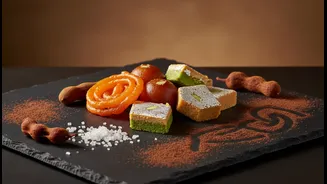
This new philosophy is leading to an exciting array of contemporary Indian sweets. Brands like The Bombay Sweet Shop have become famous for their playful and inventive creations, such as chocolate barfi bark and rasgulla tiramisu. Arq, another innovator, offers delicacies like caramel pedha and besan truffles, focusing on high-quality natural ingredients. The fusion isn't just about flavour but also form. We're seeing ladoos infused with mojito flavours, barfis layered with hazelnut praline or Biscoff, and kaju katlis reimagined with the bright, citrusy notes of yuzu. Even traditional Indian flavour combinations, like the spicy-sour notes in chaat, are inspiring pastry chefs. New York-based chef Surbhi Sahni has long incorporated savoury elements like curry leaves and black pepper into her desserts, arguing that sugar should be a supporting element, not the star.
Meet the Modern Mithaiwai
This evolution is being driven by a new generation of chefs and entrepreneurs who see mithai not as a static tradition, but as a canvas for creativity. They are blending Indian heritage with global pastry techniques, treating mithai with the same reverence as French patisserie or Belgian chocolate. Brands like Khoya in Delhi focus on artisanal, elegant creations, with offerings like a White Chocolate Aam Papad Barfi that expertly balances sweet, sour, and tangy notes. These modern mithaiwais are also focused on presentation, using designer packaging and creating an entire lifestyle experience around their products. The shift is turning mithai from a simple festive commodity into a premium, year-round indulgence, competing with luxury chocolates and other gourmet gifts.