

The Batter is Everything
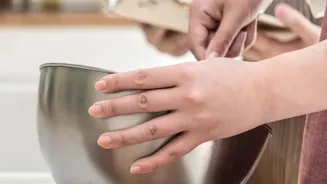
The foundation of a great bread pakora is its besan (gram flour) batter. The goal is a consistency that is neither too thick nor too thin. A batter that's too thick will result in a dense, heavy coating, while a runny batter won't adhere to the bread properly,
leading to an oily and sad pakora. The ideal texture is similar to that of a pancake batter, smooth and just thick enough to coat the back of a spoon. To achieve this, add water gradually while whisking continuously to break up any lumps. Some experts even suggest letting the batter rest for about 15 minutes. This allows the besan to hydrate and swell, which contributes to a crispier final product.
Unlock Crunch with Flour Blends
While besan provides the characteristic nutty flavour, the secret to an extra-crispy shell often lies in what you add to it. Many street vendors and home cooks swear by adding a small quantity of rice flour or cornflour to their besan batter. These starches fry up lighter and absorb less oil than gram flour alone, creating a superior crunch. The general rule is to use besan as the primary flour, with rice flour or cornflour acting as a supporting crisping agent. A common ratio is about two tablespoons of rice flour for every cup of besan. For an even lighter texture, a pinch of baking soda can be added to the batter just before frying, which helps the coating puff up slightly.
Master Your Oil Temperature
Frying is a science, and temperature is the most critical variable. Oil that is not hot enough is the main culprit behind greasy, soggy pakoras. The bread will simply soak up oil before the batter has a chance to cook and form a protective crust. Conversely, if the oil is scorching hot, the outside will burn before the batter and the potato filling inside can cook through. The ideal frying temperature is between 180°C and 190°C (360°F to 375°F). If you don't have a thermometer, you can test the oil by dropping a tiny bit of batter into it. If it sizzles and rises to the surface steadily, the oil is ready. If it browns instantly, the oil is too hot; if it sinks and stays at the bottom, the oil is too cold.
Don't Crowd the Pan
It can be tempting to fry as many pakoras as possible in one go, but this is a common mistake. Overcrowding the kadhai or pan causes a significant drop in the oil's temperature. As the temperature falls, the pakoras begin to boil in the oil rather than fry, absorbing excess grease and turning out limp. For the best results, fry in small batches, ensuring there is enough space for the pakoras to float freely without touching. This allows the oil to maintain its heat and cook each piece evenly, resulting in a uniformly golden and crisp exterior. Allow the oil to come back up to the proper temperature between batches.
Consider the Double-Fry Method
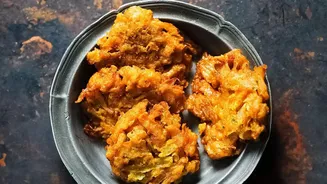
For the ultimate street-style crunch that lasts, consider the double-fry technique. This professional method involves frying the pakoras twice. The first fry is done at a medium heat until the pakoras are cooked through but still pale, not yet golden brown. They are then removed and allowed to cool slightly. The second fry happens just before serving, in hotter oil, for a short period (around 30-60 seconds). This second flash-fry drives off any surface moisture that may have accumulated, creating an incredibly crisp and durable crust that stays crunchy for longer. It’s an extra step, but it’s the definitive technique for achieving that signature street-food texture.