




The Great Aerial Highways
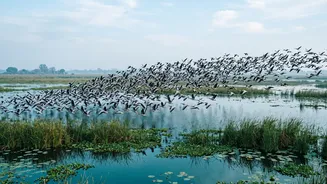
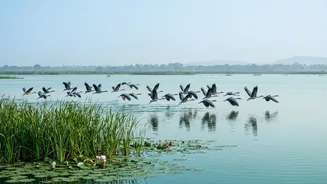
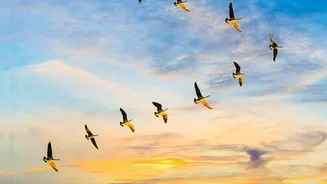
Birds travel along specific global routes known as flyways, which act like superhighways in the sky, connecting their breeding grounds in colder regions with wintering areas in the south. India plays a crucial role as it falls on the Central Asian Flyway
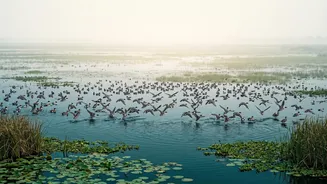
(CAF), a route stretching from the Arctic and Central Asia down to the Indian Ocean. This isn't a minor role; India's wetlands provide essential stopover or wintering habitats for over 90% of the bird species using this entire route, making the country an indispensable anchor for this incredible natural phenomenon. Millions of birds, from bar-headed geese that fly over the Himalayas to flamingos that colour our salt pans pink, depend on India for their survival.
India’s Vital Pit Stops
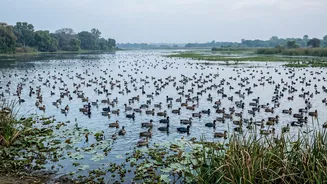
For a bird on a multi-thousand-kilometre journey, a wetland is not just a patch of water; it's a vital pit stop. Migrants need these sites to rest, rehydrate, and refuel before continuing their arduous flight. India is dotted with these critical stopovers, from Chilika Lake in Odisha, which hosts over a million waterbirds each winter, to Keoladeo National Park in Rajasthan and Pong Dam in Himachal Pradesh. These wetlands provide the food and shelter necessary for birds to build up fat reserves, which can be up to 50% of their body weight, to power the next leg of their journey. Without these safe harbours, the entire migration cycle is jeopardised.
An Ecosystem Under Threat
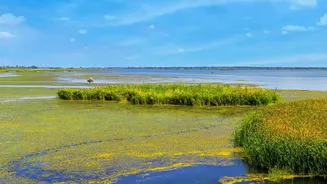
Despite their importance, India's wetlands are among its most threatened ecosystems. Rapid and often unplanned urbanisation is a primary culprit, with wetlands being drained or filled for construction. Pollution from untreated sewage, industrial effluents, and agricultural runoff degrades water quality, causing events like algal blooms that starve the water of oxygen. Added to this are threats from the introduction of invasive species like water hyacinth, which can choke waterways, and the overarching pressures of climate change, which alters rainfall patterns and temperatures, disrupting the delicate balance these habitats depend on.
More Than Just Bird Sanctuaries
The value of wetlands extends far beyond their role in bird migration. Often called 'nature's kidneys', they act as natural filters, purifying our water. They are also crucial buffers against climate change, acting as sponges that absorb heavy rainfall to mitigate floods and recharging groundwater to combat droughts. Coastal wetlands, like mangrove forests, can sequester carbon up to 55 times faster than tropical rainforests and protect coastlines from storm surges. For local communities, healthy wetlands support livelihoods through fishing, agriculture, and the growing sector of bird-watching tourism. Their preservation is an investment in our own water, food, and climate security.
When a Local Link Breaks
The connection between local action and global impact is starkly clear here. The loss or degradation of a single stopover site in India can have catastrophic ripple effects across the globe. Birds that arrive to find their refuelling station gone may not have the energy to continue, leading to starvation and increased mortality. Those that do survive and reach their breeding grounds often arrive late or in poor condition, reducing their chances of successfully raising young. This is how the destruction of a local wetland can contribute to the decline of an entire species, demonstrating that the chain of migration is only as strong as its weakest link. Protecting our local wetlands is, therefore, a global responsibility that begins at home.