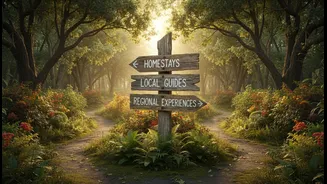









A Shift in Tourism Philosophy
For decades, Indian tourism often revolved around a few well-trodden circuits connecting major monuments and cities. While successful, this model concentrated economic benefits in limited pockets. The new national strategy represents a deliberate shift
towards a more distributed and community-centric approach. The core idea is to move beyond just counting tourist numbers and focus instead on how tourism spending can directly support local economies, especially in rural and semi-urban areas that have historically been left off the tourist map. This vision views every traveller, domestic or international, as a potential contributor to sustainable livelihoods, framing tourism as a key driver for regional development.
Empowering Homestays as a Cornerstone
At the heart of this new push are homestays. The government is actively promoting homestays as a way to provide authentic cultural experiences for travellers while ensuring that tourism revenue flows directly to local families. To facilitate this, financial assistance is being made more accessible through schemes like the Pradhan Mantri Mudra Yojana (PMMY), which now includes a dedicated category for homestay development. Various state governments are also offering their own capital subsidies and incentives to encourage residents, particularly in rural and tribal areas, to convert their homes into registered accommodation. This not only helps bridge the accommodation gap in remote destinations but also empowers local communities, especially women, to become entrepreneurs.
Upskilling Guides as Cultural Ambassadors
A tourist's experience is often shaped by their guide. Recognizing this, a major component of the new strategy is the professional development and upskilling of tourist guides. The Union Budget 2026 announced a pilot scheme to train 10,000 guides across 20 iconic sites through a structured 12-week course in collaboration with prestigious institutions like the Indian Institutes of Management (IIMs). The goal is to transform guides from simple narrators of history into skilled storytellers and cultural ambassadors who can offer deep, engaging, and authentic experiences. This professionalisation aims to create a new cadre of guides proficient in communication, safety procedures, and sustainable tourism practices, enhancing India's competitiveness on the global stage.
Supporting Regional Operators to Go Local
Small and regional tour operators are the crucial link connecting travellers to these emerging destinations and local providers. The government's focus includes strengthening these operators, who are vital for creating curated, off-the-beaten-path itineraries. The strategy acknowledges that for tourism to be a true jobs engine, it must support the entire ecosystem. Initiatives are being rolled out to simplify regulations and improve the ease of doing business for tour operators and other tourism-related enterprises. By improving last-mile connectivity and developing infrastructure under schemes like Swadesh Darshan, the government aims to help these operators unlock the potential of lesser-known destinations, from trekking trails in the Himalayas to tribal villages in the Northeast.
The Road Ahead: Challenges and Opportunities
Despite the clear vision, the path ahead has its challenges. Inconsistent regulations across states, inadequate infrastructure in remote areas, and a lack of digital literacy among some rural populations are significant hurdles. Ensuring quality control and standardization across thousands of small, independent homestays and operators will be a massive undertaking. Moreover, as more fragile ecosystems are opened to tourism, it is crucial to ensure that development is sustainable and does not come at an environmental or cultural cost. The success of this ambitious plan will depend on coordinated action between central, state, and local governments, alongside active participation from the private sector and local communities.