





Often called 'woven air', Chanderi fabric is a testament to centuries of Indian craftsmanship. Its gossamer-fine texture and feather-light feel have draped royalty and captured the imagination of designers for generations.
A Legacy Woven in Time
The story of Chanderi fabric
begins in the town of Chanderi in Madhya Pradesh, a place with a weaving history that stretches back to the 11th century, and some legends say even to the Vedic period. Situated on key trade routes, the town became a flourishing centre for textiles. The craft gained immense popularity under the patronage of royal courts, including the Malwa Sultanate and later the Mughals, who prized the fabric for its unparalleled transparency and softness. In the early 20th century, the Scindia royal family of Gwalior were significant patrons, helping to introduce the golden zari thread that transformed the fine muslin into the shimmering textile we recognise today. This rich history is now protected; in 2005, Chanderi fabric was granted a Geographical Indication (GI) tag, ensuring that only textiles woven in the town of Chanderi using traditional methods can carry the name.
The Art of Sheerness
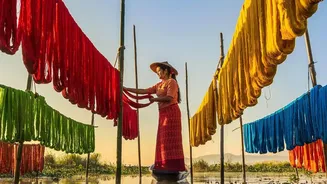
The defining characteristic of Chanderi is its beautiful sheerness, a quality achieved through meticulous craftsmanship. The magic lies in the fine, high-quality yarn and the specific weaving technique. Traditionally, weavers used a silk warp (lengthwise threads) and a cotton weft (crosswise threads). The silk provides strength and a subtle sheen, while the cotton lends structure and breathability. The yarn is used without degumming (removing the natural gum), which contributes to the finished fabric's signature shine and transparency. Woven on traditional pit looms, the threads are set in a way that creates a delicate, open weave, resulting in a fabric that is almost translucent yet remarkably durable. This unique blend and process result in a textile that is incredibly lightweight, with some sarees weighing less than 200 grams.
Designs Inspired by Nature and Royalty
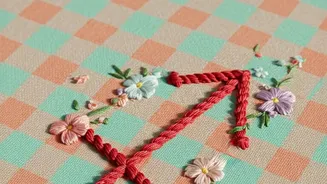
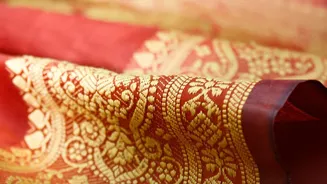
Beyond its texture, Chanderi is famous for its elegant woven motifs, known as 'buttis'. These designs are not printed but painstakingly hand-woven into the fabric with needles by the artisan, often using metallic zari threads. Traditional motifs are drawn from the natural and cultural world around the weavers. The 'Asharfi' butti, resembling a gold coin, is one of the most iconic and is a nod to the fabric's royal past. Other popular designs include stylised peacocks, lotuses, swans, and geometric patterns. The borders and the 'pallu' (the decorative end piece of a saree) are often the most ornate sections, featuring rich zari work that contrasts with the lighter body of the fabric. This balance of a sheer field with delicate, light-catching motifs gives Chanderi its distinctive and graceful appearance.
Chanderi in the Modern Wardrobe
While the Chanderi saree remains a timeless classic for festive and formal wear, the fabric has found new life in contemporary fashion. Designers are increasingly using this versatile textile to create a wide range of garments that blend tradition with modern style. Its lightweight and breathable nature make it perfect for elegant kurtas, flowy dresses, palazzo pants, and stylish co-ord sets. The fabric's inherent grace lends itself to both minimalist designs in soft pastels and bold Indo-Western fusion wear. Contemporary designers are experimenting with geometric patterns, modern colour palettes, and innovative silhouettes like jackets and crop tops, proving that this heritage weave is anything but dated. This modern renaissance has introduced Chanderi to a new generation, solidifying its place as a fabric that is both a piece of history and a staple of modern Indian style.