




The Old Orbit: An ISRO-Led Universe
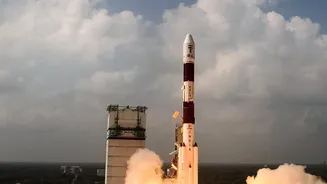
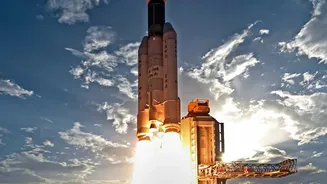
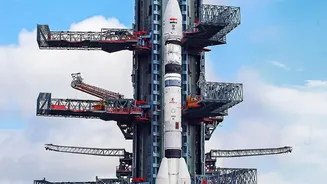
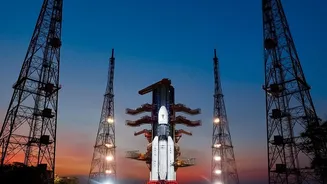
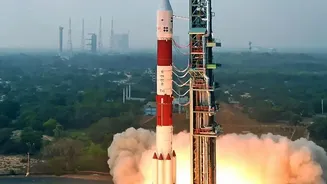
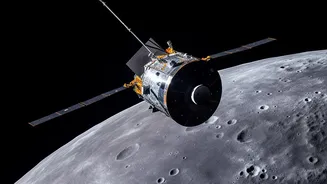
For over half a century, the Indian Space Research Organisation (ISRO) was the beginning, middle, and end of India's space story. From launching its first rocket from a church in Thumba to planting a flag on the Moon, ISRO did it all. It built the rockets,
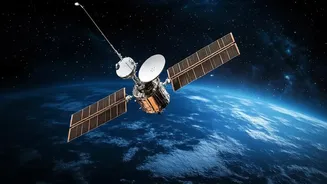
the satellites, and the ground systems, creating a world-class space program on a famously frugal budget. This government-led model was essential for building national capability and ensuring that space technology served public needs, from weather forecasting to telecommunications. Private companies were involved, but mostly as vendors and suppliers, manufacturing components for ISRO's grand projects. They were part of the mission, but ISRO was always the commander.
A Policy Big Bang: Opening the Sector
The real game-changer arrived with a series of sweeping government reforms, culminating in the Indian Space Policy 2023. This policy officially ended the government's monopoly and redefined the roles of all players. ISRO's new mandate is to focus on what it does best: advanced research and development, and deep space exploration. To manage the transition, two new bodies were created. NewSpace India Limited (NSIL) acts as the commercial arm, tasked with transferring ISRO's mature technologies to the private sector and marketing its services globally. Meanwhile, the Indian National Space Promotion and Authorisation Centre (IN-SPACe) was established as a single-window agency to regulate, promote, and authorise the activities of private space companies, ensuring they have access to ISRO's facilities and expertise.
Meet the New Players
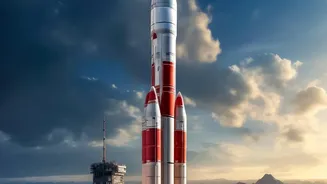
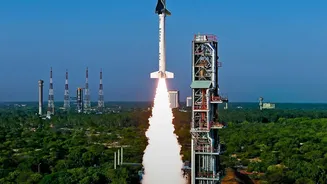
This policy shift has ignited a vibrant startup ecosystem. From just one space startup in 2014, India now has over 400. These companies are not just making parts; they are building and launching their own rockets and satellite constellations. Hyderabad-based Skyroot Aerospace made history by launching Vikram-1, India's first privately developed orbital rocket, demonstrating a capability that puts it in an elite global club. Chennai's Agnikul Cosmos is pioneering with the world's first single-piece 3D-printed rocket engine, radically simplifying manufacturing. And then there's Pixxel, which is building a constellation of hyperspectral imaging satellites to provide incredibly detailed data for agriculture, mining, and environmental monitoring.
More Than Just Rockets
The commercialisation extends far beyond launch vehicles. The real economic boom is expected in the 'downstream' market, which involves using satellite data to create services. Private companies are developing applications for everything from financial services and urban planning to disaster management and logistics. This includes satellite communications, Earth observation data analytics, and navigation services. According to a recent report by EY and CII, this expanding ecosystem is projected to grow India's space economy from about USD 8.4 billion today to USD 44 billion by 2033. The goal is to move from simply having space capabilities to embedding them into the wider economy.
The Path to a USD 44 Billion Economy
This new phase is about building a self-sustaining commercial industry. The government has further encouraged this by liberalising Foreign Direct Investment (FDI) norms, allowing up to 74% FDI in satellite manufacturing and operations. The challenge now is to scale up. Companies need to move from successful prototypes to high-volume manufacturing and frequent launch schedules to compete globally. This requires significant capital, a robust domestic supply chain, and a steady stream of customers. By fostering collaboration between government, startups, and established industrial giants, India aims to capture a larger share of the global space market, which is projected to be worth over a trillion dollars in the coming years.