






The AI Co-Pilot for Your Resume
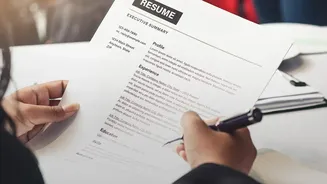
Think of AI not as the author of your resume, but as a very efficient editor. After you've written down your experiences, skills, and achievements, AI can help you polish them. Tools like ChatGPT or Claude can rephrase your bullet points to be more impactful,
turning simple responsibilities into achievement-based statements. For instance, you can feed it a job description and your master resume, and ask it to highlight keywords or suggest ways to tailor your experience for that specific role. This saves time and helps you get past the initial screening by Applicant Tracking Systems (ATS), which many companies use. The key is to start with your own authentic experiences. AI's job is to refine your language, not invent your qualifications.
Keeping It Real: The Authenticity Test
Hiring managers are becoming adept at spotting the generic, soulless prose of unedited AI. In fact, some surveys show that a majority of recruiters can identify AI-generated cover letters and view them negatively. They complain about applications that use the same buzzwords, like "results-driven professional" or "passionate about innovative solutions," which read as inauthentic and low-effort. To avoid this trap, you must inject your own personality. Use AI to create a first draft or an outline, then heavily edit it to reflect your genuine voice. Add specific, personal anecdotes. Swap formal AI transitions like "Furthermore" for more natural connectors. Your goal is to use AI to enhance your story, not to tell a generic one that could belong to anyone.
Smarter Research, Not Just Faster
One of AI's most underrated strengths in a job search is its ability to act as a powerful research assistant. Before an interview, you can ask an AI tool to summarize a company's recent news, quarterly reports, mission, and culture. This allows you to walk into the conversation with a deeper understanding of the business and its challenges. You can also use it to research your interviewer's professional background on LinkedIn to find common ground. This level of preparation demonstrates genuine interest and helps you formulate more intelligent questions to ask at the end of the interview, moving you beyond the standard, "What's the company culture like?"
Your Personal Interview Coach
Practicing for interviews is crucial, and AI offers a way to do it on demand. Tools like Google's Interview Warmup and other platforms can generate common interview questions for a specific role and provide a space to practice your answers. You can ask AI to generate behavioural questions based on the STAR method (Situation, Task, Action, Result) and then help you structure your own experiences into that format. This isn't about memorizing a script. It's about refining your talking points so you can deliver them confidently and naturally. Remember, the person interviewing you is human; AI is just the sparring partner that gets you ready for the main event.
Red Flags: What Not to Do
The line between using AI and misusing it can be thin. Submitting a resume or cover letter completely generated by AI without personal edits is a major red flag for recruiters. Never use AI to invent or misrepresent your skills or experiences. Another critical mistake is using real-time AI assistants during a live video interview to feed you answers. Many companies explicitly forbid this, and getting caught can lead to immediate disqualification. Finally, always fact-check any information AI provides, as these tools can "hallucinate" or generate plausible-sounding but incorrect data. You are ultimately responsible for every word in your application.