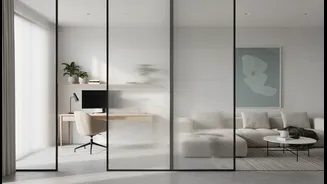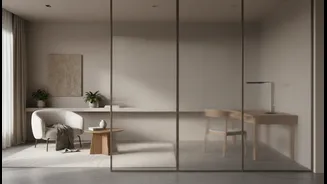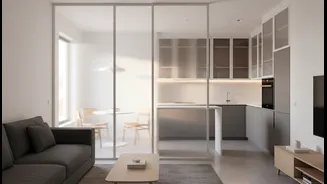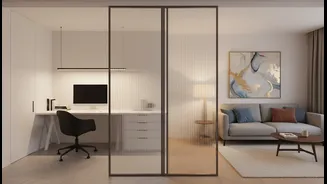




What Exactly is Fluted Glass?
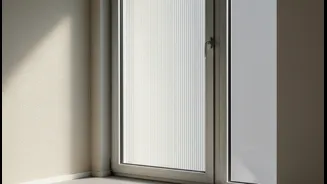
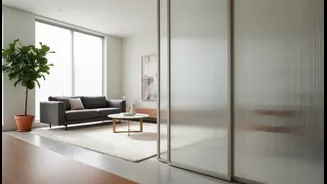
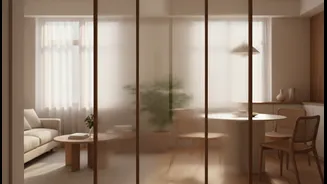
Fluted glass, also known as reeded or ribbed glass, is a type of textured glass with vertical grooves. These decorative grooves are pressed into the molten glass during manufacturing, creating a translucent panel. Unlike clear glass, it distorts the view,
and unlike fully frosted glass, it allows a significant amount of light to pass through, creating a soft, diffused glow. The terms fluted and reeded are often used interchangeably, but technically, fluted glass has concave (inward) grooves, while reeded glass has convex (outward) ridges. In practice, the visual effect is nearly identical.
The Perfect Balance of Privacy and Light
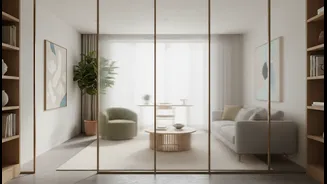
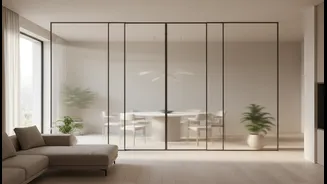
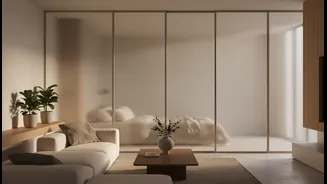
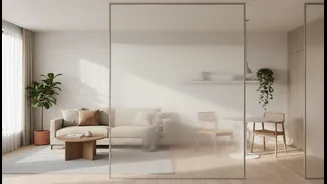
The primary superpower of fluted glass is its ability to offer privacy without creating dark, enclosed areas. The textured surface blurs shapes and movement, obscuring a clear view into a room while still allowing light to flow freely between spaces. This makes it an ideal choice for urban homes where maximizing natural light is crucial. You can create distinct zones for a home office, a kitchen, or a bathroom, maintaining a sense of separation and privacy without building solid walls that would make the home feel smaller and darker.
Creating the Illusion of More Space
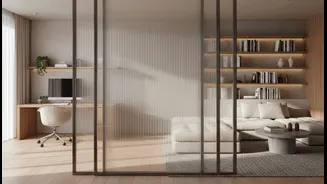
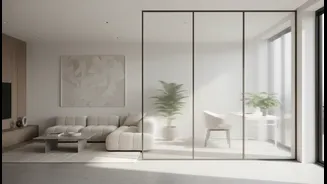
In compact apartments, creating a sense of spaciousness is a common goal. Fluted glass is a clever tool for this. The strong vertical lines of the glass draw the eye upward, which can make ceilings feel higher. Furthermore, by allowing a visual connection between partitioned areas, it prevents a space from feeling boxed in. For instance, a fluted glass partition between a living area and a small study nook can define the workspace without visually shrinking the main room. This semi-transparency helps maintain an open, airy feel that is essential in smaller interiors.
Practical Applications for Indian Homes
The versatility of fluted glass lends itself to numerous applications. In kitchens, it can be used for cabinet doors to hide clutter while keeping the space feeling light. It's also an excellent choice for partitions between the kitchen and dining area, containing cooking smells without full isolation. For bathrooms, fluted glass shower screens provide privacy while allowing light to fill the room, making a small bathroom feel more spacious. It's also increasingly used for internal doors, especially for home offices or pantries, adding a design element while enhancing light flow.
A Touch of Timeless Elegance
Beyond its practical benefits, fluted glass adds a layer of texture and sophistication to any interior. With roots in the Art Deco movement, it has a timeless quality that works with both modern and classic design styles. When paired with sleek metal frames, it creates a contemporary, industrial-chic look. The way it plays with light, creating shifting patterns and a soft glow, turns a simple partition or door into a dynamic architectural feature. It adds visual interest and a sense of refined taste without overwhelming the space.
What to Consider Before You Install
While fluted glass has many advantages, there are a few practical points to consider. Cost is a significant factor; real fluted glass is typically two to three times more expensive than standard clear glass. Cleaning can also be more challenging, as the grooves can trap dust, soap scum, or mineral deposits from water, especially in a bathroom. Regular cleaning with a soft brush or microfibre cloth, following the direction of the grooves, is recommended to keep it looking its best. Mild, non-abrasive cleaners like a vinegar-water solution are effective.