





The Silent Strain of a Desk Job
The human body is designed for movement. When you spend most of your day sitting, your body pays a price. Prolonged sitting, especially with the tendency to slouch or lean forward, places immense strain on your muscles and spine. This leads to what is known
as postural stress. Key muscle groups, like your hip flexors, shorten and tighten, while others, like your glutes, weaken from inactivity. This imbalance pulls your spine out of its natural alignment, causing compression on the discs and chronic tension in the neck, shoulders, and lower back. Over time, this doesn't just feel uncomfortable; it can lead to muscle atrophy, joint stiffness, and an increased risk of injury.
Your Body's Reset Button
The antidote to this static strain is surprisingly simple: regular, short movement breaks. Think of these as a reset button for your posture and physiology. When you stand up and move, even for just a couple of minutes, several positive things happen. Blood circulation improves, delivering fresh oxygen to your brain and muscles that were becoming stagnant. This can instantly boost energy and focus. These 'movement snacks' or 'microbreaks' interrupt the process of muscle tightening and weakening, reminding your body of its natural, upright alignment. Studies show that interrupting sitting every 30 to 60 minutes with light activity is a powerful way to reduce musculoskeletal discomfort and mental fatigue without hurting productivity.
Simple Moves for Big Relief
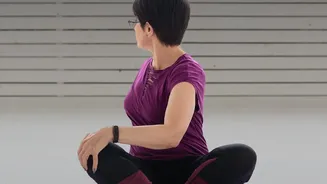
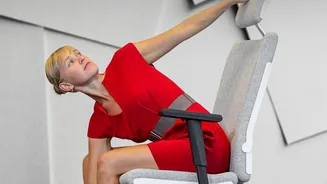
A movement break doesn't need to be a full workout. The goal is simply to break the seated posture and activate idle muscles. You can do these right at your desk or in a small office space. Try incorporating a few of these throughout your day: Shoulder Blade Squeezes: Sit or stand tall. Squeeze your shoulder blades together as if holding a pencil between them. Hold for five seconds and release. This counteracts slouching. Chin Tucks: Sit straight and gently pull your chin backward, creating a 'double chin'. This aligns your head over your shoulders, relieving neck strain from looking at a screen. Trunk Rotations: While seated, cross your arms over your chest and gently twist your upper body from side to side to loosen up your spine. Seated Marches: Sit at the edge of your chair and march your knees up and down for 60 seconds to get your blood flowing. Stand Up: The simplest break of all is to just stand up, stretch your arms overhead, and take a deep breath. The act of standing itself engages your leg and core muscles.
Building Breaks into Your Day
Knowing you should take breaks is one thing; actually doing it is another. The key is to make it a non-negotiable habit. Start small. Set a timer on your phone or computer to go off every hour as a reminder to stand up. Another effective strategy is habit stacking: link your movement break to an existing routine. For example, decide that after every call you finish, you will stand up and do a quick stretch. Or, when you get up to refill your water bottle, take a short walk around the office. Using technology like fitness apps can also help by providing reminders and tracking your activity. The goal is consistency, not intensity. Two minutes of movement every hour is more beneficial than one longer, infrequent break.