



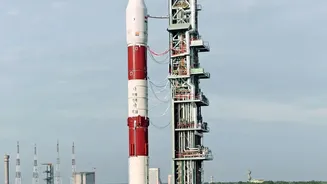
A Policy Shift That Launched a New Era
The catalyst for this transformation was a series of government policy shifts, most notably the establishment of the Indian National Space Promotion and Authorisation Centre (IN-SPACe) in 2020. This move was designed to open the sector to private companies,
allowing them to build everything from rockets to satellites and use ISRO's world-class facilities. The Indian Space Policy of 2023 further streamlined this process, creating a single-window framework for approvals and encouraging private enterprise. The result has been a Cambrian explosion of private innovation, with the number of registered space startups soaring from just one in 2014 to over 400 by 2026. This policy overhaul effectively changed the landscape from a government monopoly to a collaborative ecosystem, setting the stage for a massive expansion of the job market.
Meet the New Constellation of Employers
The new space economy isn't a monolithic entity. It’s a diverse ecosystem of companies tackling different parts of the value chain. On one end are launch vehicle startups like Skyroot Aerospace and Agnikul Cosmos, which are building India’s first private rockets. Skyroot successfully launched its Vikram-S rocket, while Agnikul has test-fired the world's first rocket with a fully 3D-printed engine. Then there are satellite manufacturers like Dhruva Space and Bellatrix Aerospace, creating everything from satellite platforms to innovative propulsion systems. A third, and rapidly growing, category is downstream data companies. Firms like Pixxel, with its constellation of hyperspectral imaging satellites, and SatSure are turning satellite data into actionable insights for agriculture, climate monitoring, and urban planning. These aren't just science projects; they are funded businesses with global clients, hiring aggressively across the board.
More Than Just Rocket Science
The popular image of a space career is often limited to rocket scientists and astronauts, but the reality in India's private sector is far broader. The roles in highest demand are often in engineering, but they are incredibly varied. They include aerospace engineers for design, propulsion engineers specializing in engines, and avionics specialists who work on the electronic systems of spacecraft. However, the boom extends far beyond traditional hardware. Software engineers are critical for flight systems and ground control. One of the fastest-growing fields is for satellite data analysts, remote sensing specialists, and GIS experts who can interpret the vast amounts of data beamed down from orbit. As these startups scale, they are also hiring for roles in product management, marketing, legal and policy analysis, and business development, creating opportunities for professionals from non-technical backgrounds to enter the space industry.
The Skills Powering the Ascent
To land a job in this burgeoning industry, a new blend of skills is required. While foundational knowledge in physics, mathematics, and core engineering disciplines remains essential, private companies are increasingly looking for interdisciplinary talent. Expertise in software, particularly AI and machine learning, is highly sought after for everything from data analysis to autonomous navigation systems. Experience with robotics, computational simulations, and advanced materials is also a significant advantage. Beyond technical skills, these fast-paced startups value professionals who can learn quickly and work across different functions. Unlike the structured environment of a large government agency, startup roles often require engineers to wear multiple hats, contributing to design, testing, and operations simultaneously. This has led to a high demand for mid-career professionals with 4-10 years of experience who can execute projects from day one.
An Economy Reaching for the Stars
The growth projections are ambitious. India's space economy, valued at around $8.4 billion today, is projected to reach $44 billion by 2033. This expansion is expected to create tens of thousands of new jobs. According to one former ISRO scientist, Indian companies could require as many as 40,000 technically skilled professionals over the next five years alone. This is not just a brain drain from ISRO to the private sector; it's a net expansion of the entire talent pool. Experienced scientists and engineers leaving government roles are helping to build and mentor the next generation within these new companies. For the first time, an engineering graduate in India has a multitude of pathways to a career in space, marking a fundamental and exciting shift in the country's economic and technological trajectory.