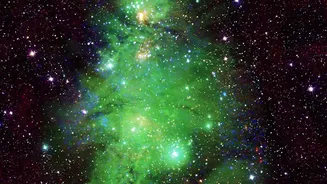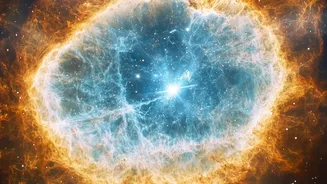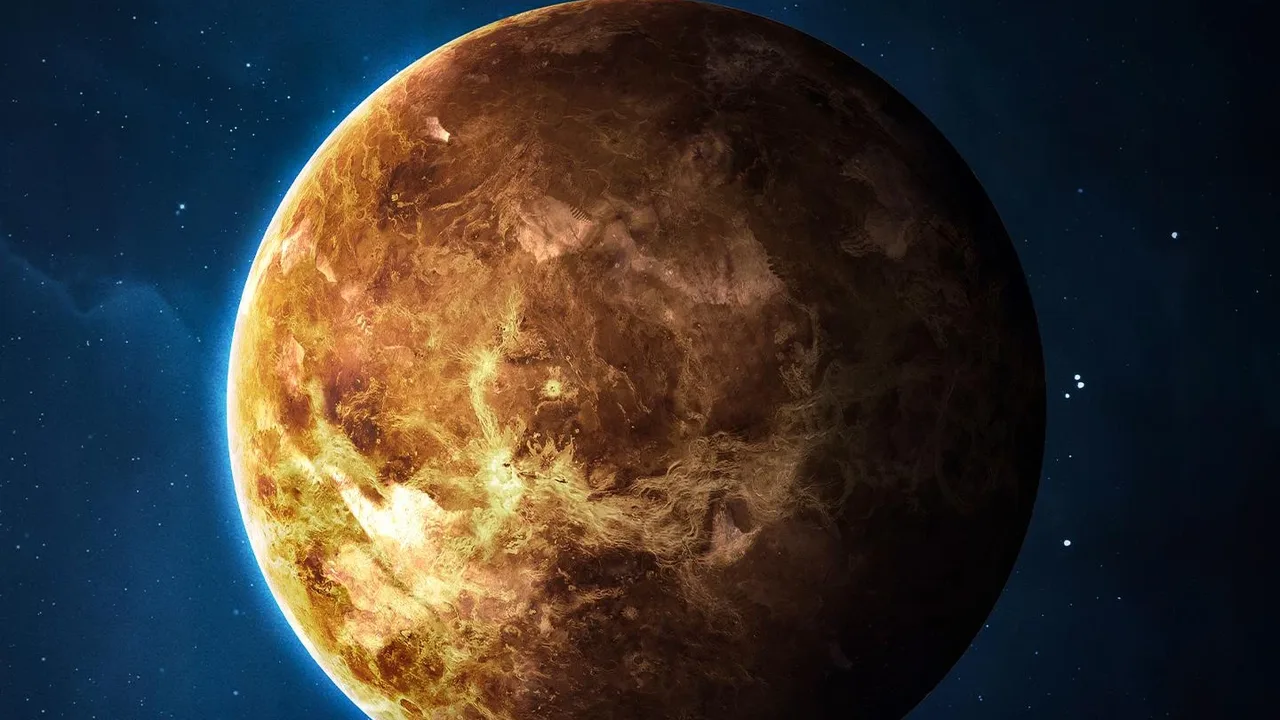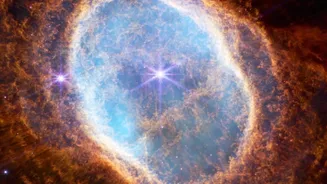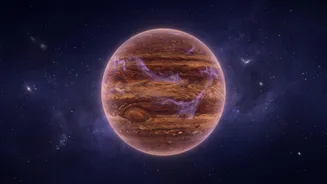




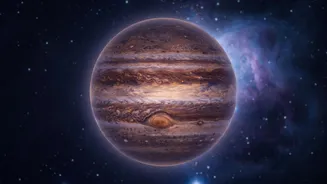

Scattered throughout the cosmos are enigmatic objects too small to be stars but too massive to be planets. These 'failed stars', or brown dwarfs, are now giving up their secrets thanks to NASA's SPHEREx telescope, which is revealing their complex, cloudy
worlds.
Meet the Universe's Failed Stars
Imagine a star that never quite made it. That’s a brown dwarf. These celestial objects form from collapsing clouds of gas and dust, just like stars do. However, they never accumulate enough mass to kickstart the nuclear fusion of hydrogen in their cores, the process that makes stars like our Sun shine brightly for billions of years. With masses somewhere between 13 and 80 times that of Jupiter, they are stuck in a cosmic middle ground. They aren't planets, but they aren't quite stars either. Instead of being powered by sustained fusion, they glow faintly from the residual heat of their formation, slowly cooling and fading over time. This unique status makes them fascinating laboratories for understanding the boundaries between planetary and stellar evolution.
A New Eye on the Cosmos
To study these dim and distant objects, astronomers need special tools. Enter NASA's SPHEREx space telescope, whose full name is the Spectro-Photometer for the History of the Universe, Epoch of Reionization, and Ices Explorer. Launched in 2025, its primary mission is to map the entire sky in near-infrared light, which is invisible to the human eye but perfect for spotting faint, warm objects like brown dwarfs. SPHEREx creates a unique map of the sky in 102 different colours of infrared light. This technique, called spectroscopy, allows scientists to break down the light from an object and identify the chemical fingerprints of different molecules in its atmosphere. While SPHEREx has grand goals of studying the early universe, it's also proving to be an exceptional brown dwarf hunter.
Uncovering a Menagerie of Cloudy Worlds
In a recent study published in The Astrophysical Journal, scientists used SPHEREx to analyse 37 nearby brown dwarfs, spanning a massive temperature range from a scorching 2,200 degrees Celsius down to a frigid minus 20 degrees Celsius. The findings revealed that these worlds have incredibly diverse and chemically rich atmospheres. The telescope detected molecules like water, methane, carbon monoxide, and carbon dioxide. The key discovery is how these atmospheres change with temperature. At the hotter end, brown dwarfs can have clouds made of silicates—the stuff of rocks on Earth. As they cool, these mineral clouds sink, and the atmospheric chemistry shifts dramatically. Researchers observed that as the objects cool, the signatures of carbon monoxide and dioxide weaken while methane becomes more prominent. This transition phase, where the clouds thin out, proved particularly interesting.
Why This Discovery Matters
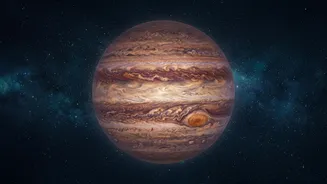
The study highlights a significant challenge for existing scientific models. While current models could predict the general chemical trends, they struggled to accurately replicate the data from brown dwarfs in the middle of their cloudy transition. The lead author of the study, Zafar Rustamkulov of Caltech, noted that 'No two brown dwarfs are alike. Even at the same temperature, their spectra look quite distinct'. This suggests there are complex processes at play, perhaps related to weather and atmospheric circulation, that are not yet fully understood. By studying these 'accidental meteorologists', as one scientist put it, researchers can refine their models of atmospheric physics. This knowledge doesn't just apply to failed stars; it provides crucial insights into the atmospheres of the gas giant planets in our own solar system and the countless exoplanets being discovered around other stars.