



First, What Is Bioastronautics?
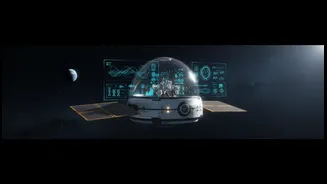
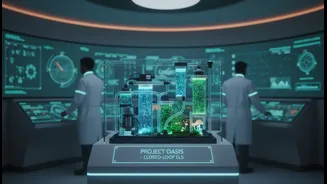
Bioastronautics is an interdisciplinary science that studies how living organisms, from humans down to single cells, adapt to the space environment. It's a broad field that covers everything from designing life support systems to understanding the medical
challenges astronauts face on long missions. At its core, it seeks to answer a fundamental question: What happens to life when you remove gravity, one of its most constant influences? For Indian science, this is a burgeoning area of interest. Recent collaborations, like the one between ISRO's Human Space Flight Centre (HSFC) and the Sree Chitra Tirunal Institute for Medical Sciences and Technology (SCTIMST), are creating formal pathways for this research, including India's first postdoctoral fellowship in bioastronautics.
The Microgravity Cellular Puzzle
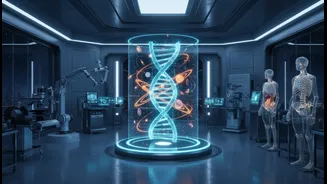
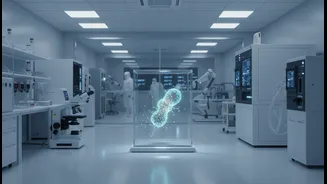
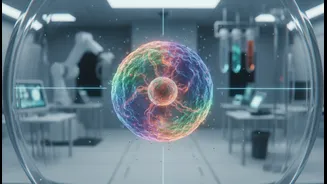
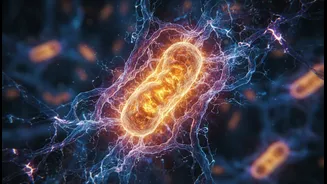
On Earth, gravity is an ever-present force that shapes how our bodies function. In the microgravity environment of space, however, the rulebook changes dramatically. Astronauts experience well-documented issues like bone density loss and muscle atrophy. Researchers have found that these large-scale effects begin at the cellular level. When removed from gravity's pull, cells undergo significant 'shifts'—they change their shape, how they stick together, and how they communicate. This unique environment acts as an accelerator for certain biological processes, mimicking aspects of aging and diseases like osteoporosis and even some cancers. By studying these shifts, scientists can gain unprecedented insights into disease progression that would be impossible to observe on Earth.
India's Tech and Data Advantage
This is where India's renowned tech prowess comes into play. Modern bioastronautics isn't just about putting cells in a petri dish in space; it's a data-intensive science. Understanding cellular shifts requires sophisticated imaging, genomics, and computational biology to analyse thousands of data points. Indian researchers, with their strong foundation in software, data analytics, and biotechnology, are uniquely positioned to excel. The convergence of these skills allows them to build complex models that predict how cells will behave and interpret the vast amounts of information generated from microgravity experiments. The Indian government has recognised this synergy, with the Department of Biotechnology (DBT) identifying space biotechnology as a priority sector and signing agreements with ISRO to formalise this integration.
New Platforms for a New Science
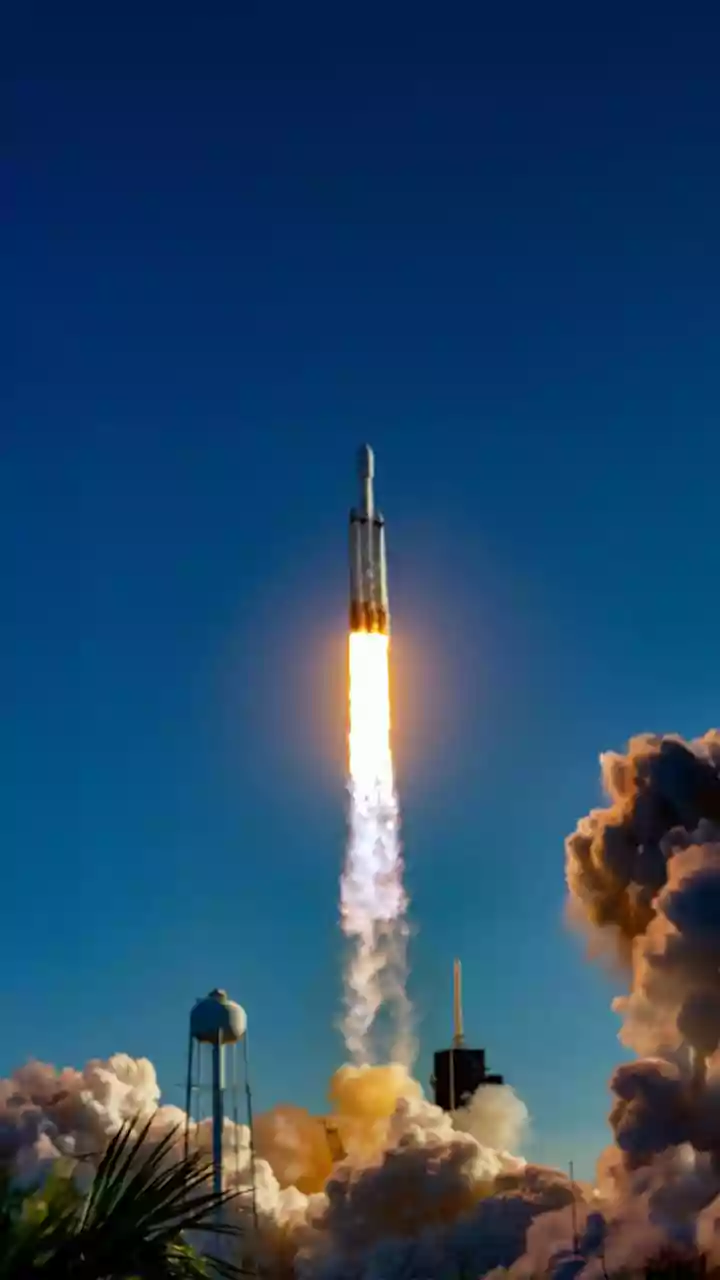
Studying microgravity is no longer limited to the few experiments that can be sent to the International Space Station. Researchers now have a growing number of 'options'. These include ground-based microgravity simulators like clinostats and random positioning machines, which replicate the effects of weightlessness on a smaller scale. More importantly, India is developing its own national platforms. ISRO's Gaganyaan mission, India's first human spaceflight program, is a major catalyst. The mission will not only send astronauts into orbit but also provide a platform for scientific experiments in a true microgravity environment. This indigenous capability, coupled with international collaborations, gives Indian scientists the tools they need to conduct cutting-edge research without relying solely on foreign space agencies.
From Space Research to Earthly Solutions
The ultimate goal of studying cellular shifts in space isn't just to make space travel safer. The research has profound implications for healthcare on Earth. By understanding how cancer cells behave in microgravity—where they sometimes form 3D structures that more closely mimic tumours in the body—scientists can develop more effective drug testing models. Similarly, insights into accelerated bone loss can lead to new treatments for osteoporosis. Some studies have even shown that certain cancer cells can become less malignant in microgravity, opening up entirely new avenues for therapy. This research transforms the final frontier of space into a unique laboratory for solving some of our most pressing terrestrial health problems, turning an out-of-this-world environment into a source of down-to-earth solutions.