




A Mission That Keeps Giving
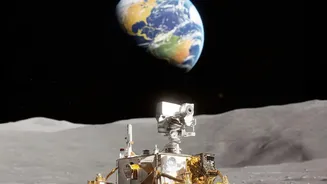
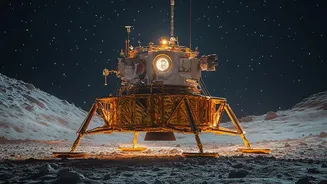
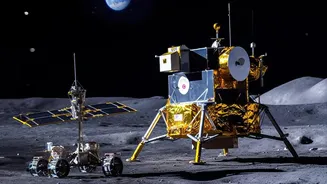
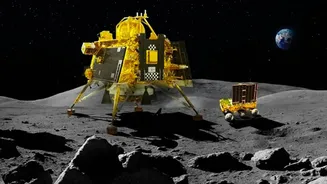
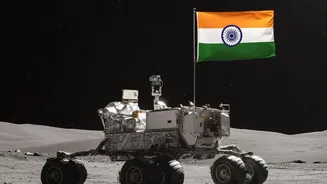
Since its historic landing near the lunar south pole on August 23, 2023, the Chandrayaan-3 mission has been a source of immense national pride and invaluable scientific data. While the Vikram lander and Pragyan rover completed their primary mission within
one lunar day, the analysis of the data they collected continues to yield groundbreaking discoveries. Scientists from the Indian Space Research Organisation (ISRO) and the Physical Research Laboratory (PRL) are peeling back layers of lunar history, and their latest findings challenge long-held beliefs about the very ground beneath a future astronaut's feet.
More Than Just Dust
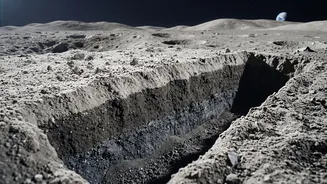
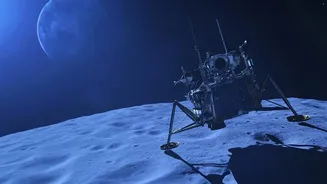
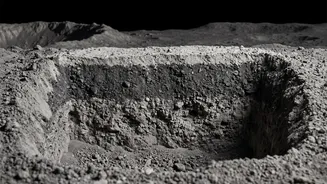
For years, the lunar surface was pictured as being covered in a relatively consistent layer of fine dust and broken rock, known as regolith. However, a new study based on data from the Vikram lander's 'hop' manoeuvre has shown this isn't the case. During this experiment, the lander's engines fired briefly, lifting it about 40 centimetres and moving it to a new spot. This short blast of engine exhaust acted like a blower, stripping away the top few centimetres of the very loose surface dust. What it revealed was a surprisingly different layer underneath—one that was more dense and tightly packed.
A Two-Layer 'Cake'
ISRO has described the finding as a distinct two-layer 'cake-like' structure in the top few centimetres of the lunar soil. Analysis from the Chandra's Surface Thermophysical Experiment (ChaSTE) showed that while the very top layer is light and fluffy, almost like dry flour, the material just 6.5 centimetres deeper is twice as dense and five times more cohesive. This deeper layer behaves more like damp, stiff clay. Further studies from the original landing site have even identified a potential three-layer structure within the top 10 centimetres, each with different densities and thermal properties. This layering is believed to be the result of constant bombardment by tiny meteoroids over billions of years, which has hammered and crushed the surface.
A Chemical Mix
The non-uniformity isn't just physical. The Pragyan rover's Alpha Particle X-ray Spectrometer (APXS) has also detected significant variations in the chemical composition of the regolith. While a wide area around the Shiv Shakti landing point was found to be chemically uniform and primarily composed of a rock type called ferroan anorthosite, supporting the theory that the Moon was once a magma ocean, there were also some surprises. The APXS detected higher-than-expected levels of magnesium, suggesting that material from the Moon's deeper layers was mixed in. Scientists believe this deeper material was likely excavated and thrown across the surface during the massive impact that formed the South Pole-Aitken basin billions of years ago.
Why This Matters for the Future
These findings are not just academic. Understanding the complex and varied nature of the lunar regolith is critical for all future lunar missions. For anyone planning to build a permanent scientific base, knowing that the ground changes from soft flour to stiff clay in just a few centimetres is crucial for construction and surface operations. The abrasive, jagged nature of lunar dust is already a known hazard for equipment and astronaut health. Furthermore, the chemical makeup of the soil has direct implications for in-situ resource utilisation (ISRU)—the idea of using local resources, like minerals and potential water ice, to support a lunar outpost. The discoveries from Chandrayaan-3 provide essential 'ground truth' that will help shape the next generation of lunar exploration, ensuring safer and more effective missions.