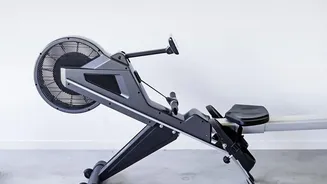






Many cardio workouts are a battle of starting and stopping, killing your momentum. But what if one exercise could offer smooth, continuous effort from start to finish? The seated rower does just that, providing a uniquely effective aerobic workout.
The Rhythmic Heart of the Workout
Unlike
the jarring impact of running, the seated rowing stroke is a fluid, cyclical motion. This rhythm is the key to its effectiveness. The movement is broken down into four parts: the catch, the drive, the finish, and the recovery. The drive is the power phase, where you push with your legs, and the recovery is a controlled return to the starting position. This seamless transition between phases eliminates the harsh stops and starts that can disrupt your heart rate and break your focus. It allows you to settle into a rhythm, maintaining a consistently elevated heart rate that is crucial for aerobic conditioning. This smooth cycle keeps your body working without the punishing joint stress of high-impact exercises.
A Full-Body Symphony of Effort
One of the most significant advantages of rowing is that it's a true full-body workout. It’s a common misconception that rowing is all about the arms. In reality, a proper stroke engages an estimated 86% of your body's muscles. The primary force comes from your legs during the drive phase. As you push off, your quadriceps, glutes, and calves are all firing. Your core then engages to transfer that power through your torso to your upper body, where your back, shoulders, and arms complete the stroke. Because the effort is distributed across so many muscle groups, no single area becomes exhausted too quickly. This prevents localised fatigue that often forces you to stop, allowing for longer, more sustained workout sessions.
The Low-Impact Advantage
High-impact cardio like running can be tough on the body, especially the knees, ankles, and hips. This stress can lead to discomfort or injury, forcing breaks that interrupt aerobic momentum. Seated rowing, however, is celebrated for being a low-impact exercise. Since you are seated and the motion is controlled, you can achieve a high-intensity cardiovascular workout without the jarring forces on your joints. This makes it an excellent option for people of all fitness levels, including those recovering from injuries or managing joint concerns. The absence of impact-related pain or fatigue means you can maintain your effort continuously, keeping your heart rate in the optimal aerobic zone for longer periods.
Mastering Your Aerobic Zone
The ultimate goal of a cardio session is to improve heart and lung health, and this happens most effectively when you work within your target aerobic heart rate zone. The continuous, full_body nature of rowing makes it exceptionally good at this. Whether you're doing a long, steady_state row for 30 minutes or engaging in high_intensity interval training (HIIT), the machine allows for precise control over your effort. Steady_state rowing, where you maintain a consistent pace, builds a strong aerobic base and cardiovascular endurance. HIIT workouts, which involve short bursts of intense effort followed by recovery, can significantly boost your heart function and calorie burn. In both cases, the fluid mechanics of rowing help you sustain the necessary intensity to reap maximum cardiovascular benefits.