



From Government Monopoly to Private Boom
For decades, India's journey to the stars was piloted almost exclusively by the Indian Space Research Organisation (ISRO). While ISRO achieved monumental success, the ecosystem was largely closed. That changed dramatically in 2020, when the government
opened the sector to private companies. To facilitate this, it established the Indian National Space Promotion and Authorisation Centre (IN-SPACe) as a single-window agency to promote, authorise, and supervise private space activities. The goal was to let ISRO focus on research and development, while private firms handle manufacturing and commercial services. This policy shift has unleashed a wave of innovation, with over 400 private space enterprises active in India as of 2024, a massive jump from just 54 in 2020. The sector is now projected to grow into a nearly US$44 billion industry by 2033.
Building the Highway to Space
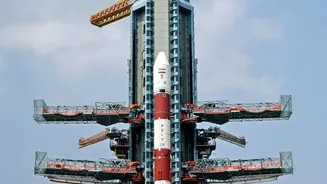
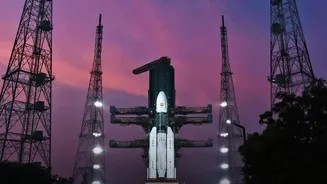
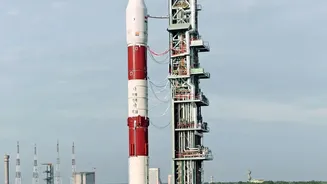
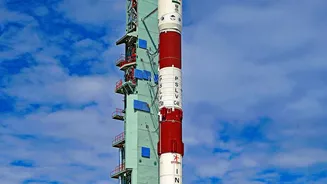
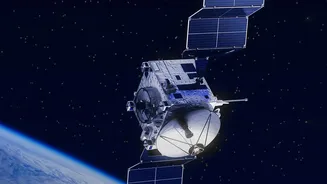
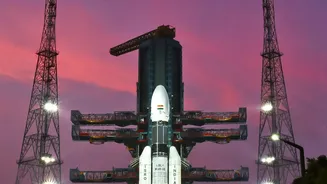
The most visible part of the new space race is the hardware: rockets and satellites. Startups are now building everything from launch vehicles to satellite constellations. Companies like Skyroot Aerospace and Agnikul Cosmos are developing their own rockets, such as Vikram-1 and Agnibaan, to provide cost-effective launch services. This creates a demand for aerospace, mechanical, and propulsion engineers to design, build, and test these complex machines. Simultaneously, firms like Dhruva Space are focusing on satellite manufacturing. This isn't just about large, multi-tonne satellites anymore. The future lies in constellations of smaller satellites, which require skills in electronics, systems engineering, and payload design to build at scale. These hardware-focused roles are critical for building the fundamental infrastructure of the new space economy.
The Downstream Data Gold Rush
While rockets capture the imagination, many experts believe the largest volume of jobs will come from using the data collected from space. This is the 'downstream' market. Bengaluru-based startup Pixxel, for example, is building a constellation of hyperspectral imaging satellites. These satellites see the Earth in hundreds of colours, providing data that can be used for precision agriculture, environmental monitoring, and detecting illegal mining. This has created a surge in demand for data scientists, GIS analysts, software developers, and AI/ML engineers who can build platforms to turn raw satellite imagery into actionable intelligence for clients in various industries. Companies like SatSure are focused entirely on this space, providing data analytics services that impact everything from insurance to defence. This part of the industry blends deep tech with practical, real-world applications.
Beyond the Obvious: New Frontiers
The burgeoning space sector is also creating roles in highly specialised, future-focused domains. Bengaluru's Digantara is tackling the problem of space traffic management, building a surveillance system to track satellites and debris in orbit, a critical function for a crowded space environment. Others, like Manastu Space, are developing 'green' propulsion systems for satellites to make in-orbit manoeuvres safer and more sustainable. Beyond these, there are growing opportunities in fields like space law and policy, as a new regulatory framework is built. Even roles like marketing, finance, and human resources are now in demand, but with a specific focus on the unique challenges of the space industry. As the sector matures, it will require a diverse ecosystem of skills well beyond traditional engineering.
Skills for Liftoff: What Do You Need?
Entry into this exciting field requires a strong foundation in STEM, but the needs are diverse. A bachelor's degree in aerospace, mechanical, electronics, or computer science is a common starting point. However, private companies are actively hiring for roles that didn't exist a decade ago. Strong programming skills in Python, C++, and MATLAB are highly sought after for flight software and data analysis. Experience with data literacy, embedded systems, robotics, and AI/machine learning can make a candidate stand out. Beyond technical qualifications, companies are looking for systems thinking—the ability to understand how complex parts of a mission fit together—and a passion for problem-solving. With startups like Skyroot, Agnikul, and Pixxel now well-funded and hiring actively, a career in space is a serious and viable option for talented individuals across the country.