





Meet Kokedama: The 'Moss Ball' Art
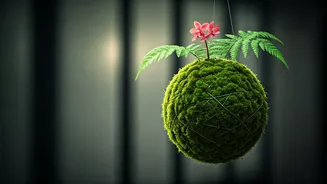
Forget traditional pots. The trend taking over indoor gardens is Kokedama, a beautiful and minimalist form of Japanese garden art. The name literally translates to 'moss ball' (koke = moss, dama = ball), and that’s exactly what it is: a plant whose root
system is wrapped in a ball of soil, covered in a blanket of green moss, and secured with string. These stunning, self-contained living sculptures can be hung from the ceiling, creating a 'string garden,' or placed elegantly on a decorative dish. It’s a wonderfully organic and sculptural way to display plants, breaking free from the confines of plastic or ceramic containers and putting the focus squarely on the plant itself.
The Perfect Rainy Day Project
So, why is this ancient art form the perfect trend for the Indian monsoon? Firstly, it’s a fantastic indoor activity for those long, rainy afternoons when you’re stuck at home. The process is mindful, tactile, and deeply satisfying. Secondly, the high humidity of the monsoon season is a blessing for Kokedama. The moss covering the soil ball thrives in moist air, staying lush and green with minimal effort. This natural humidity helps the plant itself retain moisture, reducing the risk of it drying out. It's a way to work with the season’s climate, not against it, creating a pocket of thriving nature that brightens up any room and helps beat the monsoon blues.
Your Kokedama Starter Kit
Ready to make your own? The materials are surprisingly simple and readily available at local nurseries or online gardening stores. You will need a suitable plant (more on that below), a soil mixture, sheet moss, and some string. For the soil, a traditional mix combines peat soil and a heavy clay-like soil called Akadama, which helps hold the ball's shape. However, a simple mix of red soil, cocopeat, and a little compost works just as well. You’ll also want sphagnum moss to wrap around the plant’s roots to retain moisture, and sheet moss for the outer layer. Finally, grab some jute twine, cotton thread, or fishing line to bind it all together.
Crafting Your Living Sculpture
The creation process is part science, part art. Start by gently removing your chosen plant from its nursery pot and shaking off the excess soil, being careful not to damage the roots. If you’re using sphagnum moss, soak it and wrap it around the root ball. Next, take your soil mixture, add water slowly until it has a clay-like consistency, and form it into a firm ball around the moss-covered roots. Now, take your pre-soaked sheets of green moss and carefully press them around the soil ball until it’s completely covered. The final step is to secure everything. Wrap your string or twine around the ball multiple times, crisscrossing in different directions until the moss is held firmly in place. Tie it off, leaving a long piece if you plan to hang it.
Best Plants for Your Moss Ball
Not all plants are suited for Kokedama life. The best candidates are those that tolerate moist conditions and don't have an overly aggressive root system. Luckily, many popular Indian houseplants fit the bill perfectly. Money plants (Pothos) are an excellent, hardy choice for beginners. Other great options include Syngonium (Arrowhead Plant), Spider Plants, and most types of ferns, like the Boston Fern or Bird's Nest Fern, which love humidity. For a flowering option, a small Peace Lily or an Anthurium can look spectacular. Avoid succulents or cacti, as they prefer dry conditions and are likely to suffer from root rot in the consistently moist environment of a moss ball.
Kokedama Care and Display
Caring for your Kokedama is simple. The key is knowing when to water it. Don't water on a schedule; instead, feel the weight of the ball. When it feels light, it's time for a drink. To water, submerge the entire moss ball in a bucket of room-temperature water for about 10-15 minutes, until it’s fully saturated and stops releasing air bubbles. Then, lift it out, give it a gentle squeeze to remove excess water, and let it drip for a bit before returning it to its spot. Most Kokedama plants prefer bright, indirect light, so a spot near a window but away from the harsh direct sun is ideal. You can display them on a slate tile, a shallow ceramic dish, or hang a few at different heights for a stunning floating garden effect.