






More Than Just a Splashdown
For most of us, a space mission ends when the astronauts are safely back on Earth. The splashdown of NASA's Orion capsule, carrying the Artemis II crew, seemed like a perfect finale to a nearly 10-day journey. But in reality, this is where another mission begins:
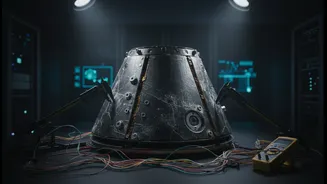
a painstaking, detail-oriented inspection of the spacecraft. Once the crew is safely extracted by Navy teams, the capsule is carefully winched aboard a recovery ship. It is then transported back to NASA's Kennedy Space Center for a complete teardown. Every component, from the giant heat shield to the smallest avionics chip, is scrutinised. This isn't just about checking for damage; it's about gathering data that will make the next flight, Artemis III, even safer.
The Fiery Return and the Heat Shield
The single most critical component under review is the heat shield. The Orion capsule re-entered Earth's atmosphere at a blistering 35 times the speed of sound, generating immense heat. The heat shield is what prevents the capsule and its occupants from burning up. After the uncrewed Artemis I mission, engineers noticed unexpected erosion of the heat shield material. For Artemis II, NASA modified the re-entry path to lessen the stress on the shield. Initial inspections aboard the recovery ship showed the charred but intact shield performed beautifully, with much less erosion observed. Technicians will now spend months taking samples and running x-rays on the shield to understand its performance at a microscopic level, providing invaluable data on material science under extreme conditions.
The Crucial Lessons for Gaganyaan
This obsession with post-flight analysis is the key takeaway for India and the Indian Space Research Organisation (ISRO). As ISRO prepares for its own historic Gaganyaan mission, which aims to send three astronauts into orbit, the final phase of bringing them back safely is paramount. The challenges are immense: developing a human-rated launch vehicle, a life support system, and, crucially, a reliable re-entry and recovery system. Just like Orion, the Gaganyaan crew module has a thermal protection system designed to withstand re-entry, and its performance must be flawless. Seeing how NASA diagnoses and improves its systems flight-after-flight provides a real-world template for ISRO's own iterative testing process.
ISRO's Path of Rigorous Testing
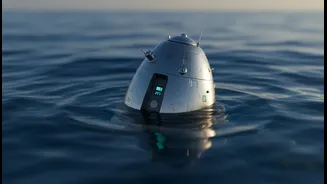
ISRO is already deep into this phase of meticulous testing. The organisation has been conducting a series of Integrated Main Parachute Airdrop Tests (IMAT) to ensure the capsule's deceleration system works perfectly. The Gaganyaan module uses a complex sequence of 10 parachutes to slow its descent from hypersonic speeds to a gentle splashdown. Recent tests in July 2026 validated the main parachute's design under maximum load conditions. Furthermore, ISRO, in collaboration with the Indian Navy, has been conducting recovery trials using a mockup of the crew module in a specialised facility in Kochi, simulating various sea conditions to perfect the recovery standard operating procedures. Every successful test builds confidence in the systems that will protect India's first Vyomanauts.
Building a Sustainable Future in Space
The Artemis program is designed for sustainability; key components from the Artemis I and II capsules are being reused in future missions to reduce costs and improve efficiency. This long-term vision is another important lesson. Human spaceflight is not a one-off achievement but a continuous endeavour. For Gaganyaan to evolve into a sustained program—perhaps leading to an Indian space station—ISRO must also master the art of post-flight analysis, refurbishment, and reuse. The data gathered from the first uncrewed and crewed Gaganyaan flights will be the foundation upon which India's entire future in human space exploration is built. The success of Artemis II's post-flight checks reinforces that the mission isn't truly over until its lessons are learned and applied to the next one.