





The Astronaut with a Doctor's Touch
Anil Menon is uniquely qualified for a mission focused on the human element of spaceflight. Born in Minnesota to Indian and Ukrainian immigrants, he is a physician with specializations in emergency, wilderness, and aerospace medicine. Before becoming
an astronaut, Menon was a first responder at disasters in Haiti and Nepal, served as a flight surgeon in the U.S. Air Force, and was SpaceX's first-ever flight surgeon, helping to launch the company's inaugural human spaceflight mission. His career has been dedicated to keeping people safe in extreme environments, from remote mountains to the front lines of space travel. This extensive medical background is not just a part of his resume; it is central to his role on the ISS, where a key focus is understanding and mitigating the harsh effects of space on the human body.
A Laboratory 400 Kilometres Up
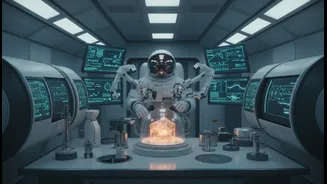
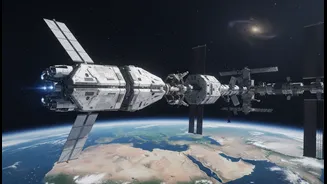
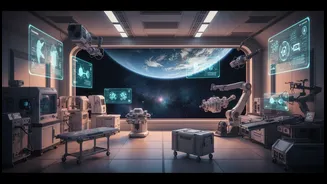
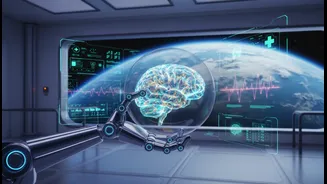
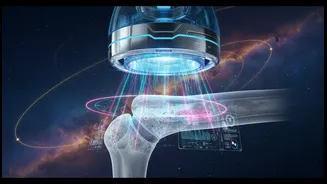
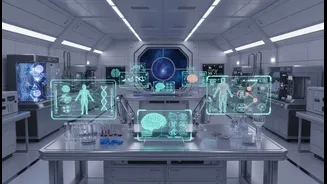
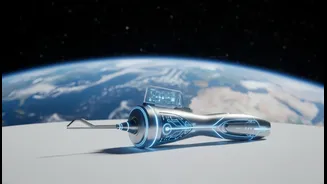
The International Space Station has been continuously inhabited for over two decades, serving as a premier laboratory for microgravity research. For astronauts like Menon, a long-duration stay of around eight months provides the perfect opportunity to study the physiological and psychological strains that future deep-space explorers will face. Trips to Mars, for example, could take years. Missions on the ISS are crucial for understanding how the body adapts to weightlessness over extended periods. Astronauts experience bone density loss, muscle atrophy, and shifts in cardiovascular function. Menon will be both a researcher and a test subject, participating in studies on how blood circulates in weightlessness and testing new medical technologies like an ultrasound device guided by artificial intelligence, designed to increase astronaut autonomy on missions far from Earth.
The Human Challenge of Deep Space
Beyond the physical toll, the psychological challenges of deep space are immense. Isolation, confinement, and the stress of a high-stakes environment can impact crew performance and mental health. Long-duration missions on the ISS, which orbits the Earth every 90 minutes, provide a controlled environment to study these effects and test coping strategies. While ISS crews can communicate regularly with family and support teams on the ground, this connection will be severely delayed on a Mars mission. Menon's eight-month stay, alongside his crewmates, helps NASA gather vital data on crew dynamics, fatigue, and the effectiveness of support systems designed to keep astronauts healthy and productive. It’s a crucial step in preparing for the psychological resilience needed when Earth is no longer a comforting blue marble in the window, but a distant, pale dot.
Testing Tomorrow's Technology Today
Menon's mission is not just about human health; it's also about validating the technologies needed to survive far from our home planet. The ISS is a testbed for advanced life support systems, water recycling, and radiation shielding. During his expedition, Menon will be involved in experiments ranging from bioprinting vascular tissues to improving the manufacturing of semiconductor crystals in microgravity. These experiments have dual purposes: they can lead to breakthroughs with applications on Earth, but more importantly, they are refining the tools and techniques that will be essential for building self-sufficient habitats on the Moon and Mars. Every experiment, from producing IV fluids from potable water to testing new materials, is a piece of the puzzle for establishing a sustained human presence beyond low-Earth orbit.