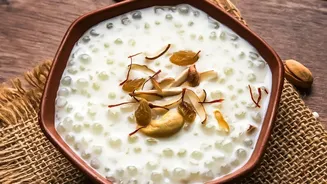





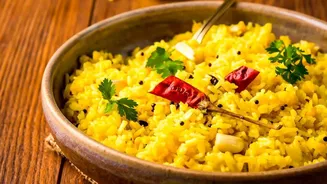

Sabudana Khichdi for Sustained Power
A staple in almost every household during fasting season, Sabudana Khichdi is a beloved dish for good reason. Made from tapioca pearls, this savoury preparation is both light on the stomach and a fantastic source of energy. Sabudana is primarily composed
of carbohydrates, which the body efficiently converts into glucose, providing a quick yet sustained energy boost to combat fatigue. This makes it an ideal meal to keep you going through long days of fasting and festive activities. When paired with peanuts, it becomes a more balanced meal, as the nuts add protein and healthy fats that promote satiety. To prepare a perfect, non-sticky khichdi, rinse one cup of sabudana until the water runs clear, then soak it in just enough water to cover (about a 1:1 ratio) for at least 4-5 hours or overnight. Heat two tablespoons of ghee in a pan, add cumin seeds, chopped green chillies, and curry leaves. Sauté for a minute before adding one cubed boiled potato and cooking until lightly golden. Drain any excess water from the soaked sabudana, add it to the pan along with coarsely crushed roasted peanuts, sendha namak (rock salt) to taste, and an optional teaspoon of sugar. Stir well and cook on a medium-high flame for 2-3 minutes until the pearls turn translucent. Finish with a squeeze of lemon juice and a garnish of fresh coriander.
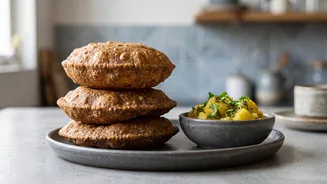
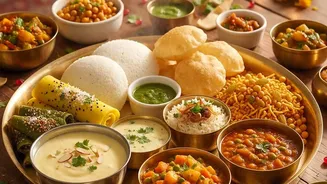
Energising Kuttu Puris
Kuttu ka atta, or buckwheat flour, is a powerhouse of nutrients and a popular choice for Navratri meals. Despite its name, buckwheat is not a type of wheat but a gluten-free seed, making it easy to digest. It is packed with high-quality plant-based protein, dietary fibre, and essential minerals like magnesium. This impressive nutritional profile, particularly its combination of complex carbohydrates and protein, ensures a slow and steady release of energy, preventing the sluggishness that can sometimes accompany fasting. The warmth it generates in the body is often balanced by serving it with cooling yoghurt. To make soft Kuttu Puris, combine one cup of buckwheat flour with one large boiled and mashed potato, which acts as a binding agent. Add sendha namak and a pinch of black pepper powder to the bowl. Mix these ingredients well with your fingertips. Gradually add warm water to knead a medium-soft dough. Let it rest for about 15 minutes. Divide the dough into small balls, flatten them, and roll them into small circles. Deep fry in hot ghee or oil until they puff up and turn golden-brown on both sides. Serve these crisp puris hot with a side of vrat-friendly aloo sabzi or plain curd.
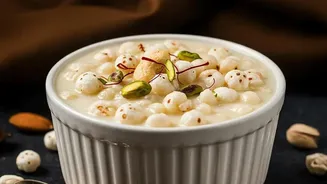
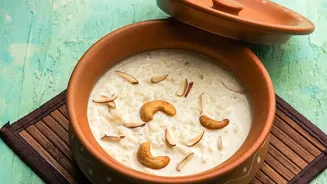
Makhana Kheer for a Sweet Boost
No festive meal is complete without dessert, and Makhana Kheer is a perfect guilt-free indulgence during Navratri. Makhana, or fox nuts, are low in calories and fat but rich in protein, carbohydrates, and minerals like calcium and magnesium. This makes them a nutritious choice that provides energy without causing spikes in blood sugar levels. A bowl of this creamy kheer can serve as a comforting snack or a light meal, replenishing energy stores and satisfying sweet cravings in a healthy way. For a delicious Makhana Kheer, start by heating a teaspoon of ghee in a pan and roasting one cup of makhana until they become crisp. Set them aside. In the same pan, bring two cups of whole milk to a boil. Coarsely crush about three-quarters of the roasted makhana and add the powder to the simmering milk, stirring to prevent lumps. Add sugar to taste, a pinch of saffron, and powdered cardamom. Let it simmer for 10-15 minutes until the kheer thickens. Finally, add the remaining whole roasted makhana and some sliced nuts like almonds and cashews. Cook for another few minutes before serving warm or chilled.