



A Rare Celestial Meeting
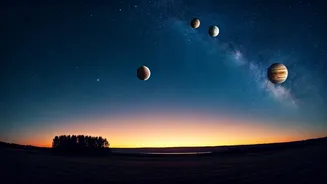
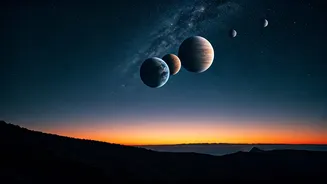
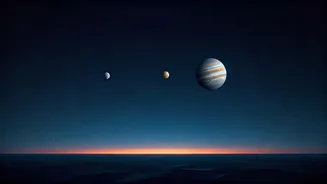
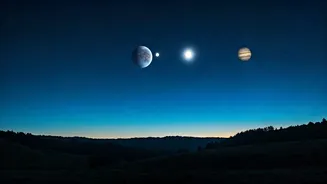
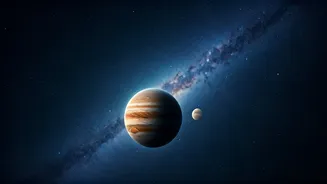
It’s not a party in the traditional sense, but it’s just as exciting for anyone who loves looking at the stars. Several planets in our solar system are aligning in the same small patch of sky from our vantage point on Earth. This event, known as a planetary
conjunction, makes it seem as if they are right next to each other. While Mercury, Venus, and Jupiter are millions of kilometres apart in space, their orbits are bringing them into the same line of sight. These events don't happen every day, and seeing three planets clustered together is a treat. While some of these alignments can be challenging to view, the thrill of the hunt is part of the fun of amateur astronomy.
What Exactly Is a 'Planetary Parade'?
The term ‘planetary parade’ sounds grand, but it's important to understand what it means. It’s not a straight line of planets stacked up in space. Instead, it refers to a phenomenon where several planets are visible in a small section of the sky at the same time. This happens because all the planets in our solar system orbit the Sun on a relatively flat plane called the ecliptic. From our perspective on Earth, as these planets travel their paths, they sometimes appear to bunch together. The recent alignment in early June, for example, included not just Mercury, Venus, and Jupiter, but also Mars, Saturn, and Uranus. However, catching them all is often a test of patience and skill, as some planets may be too close to the sun's glare to be visible.
When and Where to Look From India
The key to spotting this trio is timing and location. For most planetary conjunctions involving Mercury, the best time to look is just before sunrise. You’ll need to be looking towards the eastern horizon in the pre-dawn twilight, roughly 45 to 60 minutes before the sun comes up. This is a narrow window. Look too early, and the planets will be below the horizon; look too late, and the rising sun’s brightness will wash them out completely. You will need an absolutely clear, unobstructed view of the eastern horizon, free from trees, buildings, or hills. The ongoing monsoon season in many parts of India can make finding a clear sky a significant challenge, so be sure to check your local weather forecast before you head out.
Your Guide to a Perfect Viewing Experience
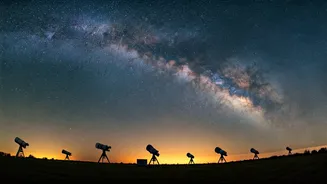
You don't need a professional telescope, but a few tips can make a huge difference. First, get away from city lights. The light pollution in cities like Mumbai, Delhi, or Bengaluru can obscure faint celestial objects. Even a short drive to a darker, more rural area can dramatically improve your view. Second, give your eyes time to adjust. It takes about 20-30 minutes for your eyes to become fully adapted to the dark, so avoid looking at your phone screen. Use a stargazing app like Stellarium or SkyView on your phone (with a red-light filter if possible) to help you locate the planets. A good pair of binoculars can also be a great help, making it easier to distinguish the planets from nearby stars.
Meet the Shining Trio
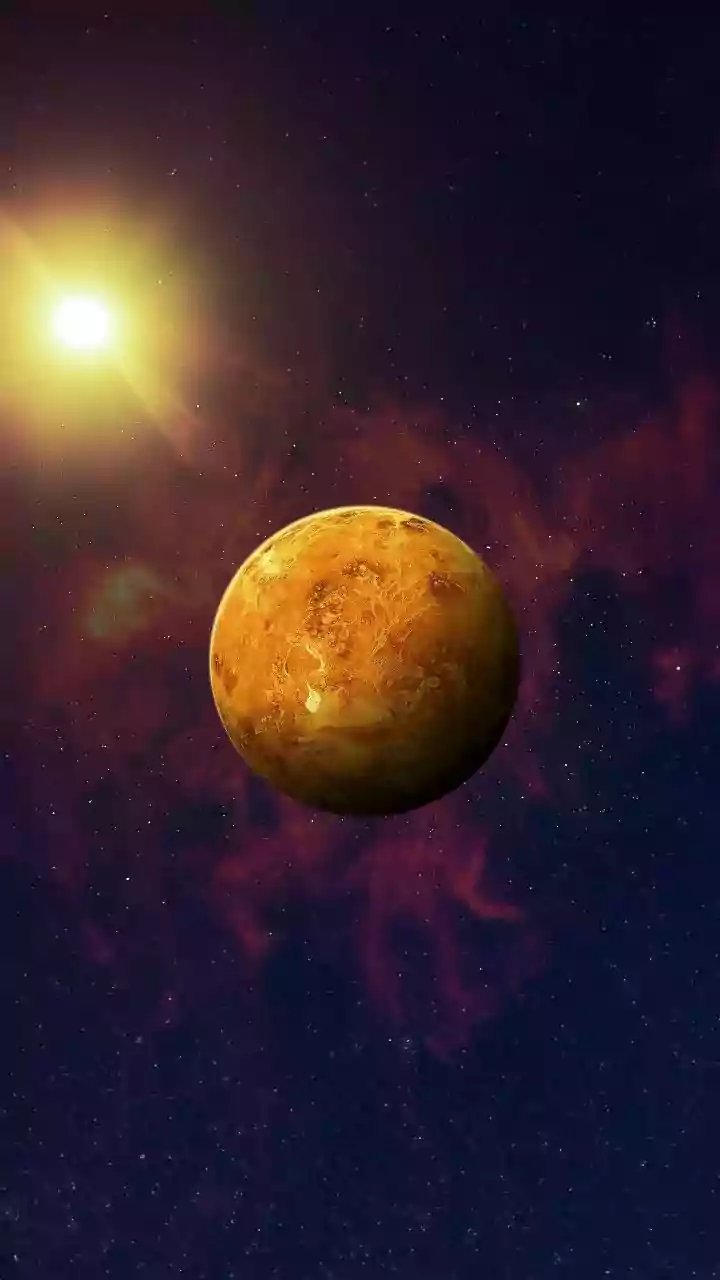
Knowing who you're looking for makes the experience more rewarding. Venus, often called the 'Morning Star' or 'Evening Star', is the brightest of the three and typically the easiest to spot. It shines with a brilliant, steady, silvery light. Jupiter, the largest planet in our solar system, will appear as a very bright, non-twinkling star. It’s second only to Venus in brightness. Mercury is the trickiest of the bunch. As the innermost planet, it’s always close to the sun in our sky, making it visible only for brief periods during twilight. It will look like a small, star-like point of light, often with a slightly pinkish hue.