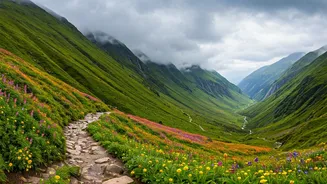



Valley of Flowers, Uttarakhand
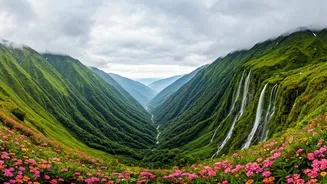
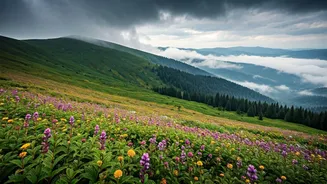
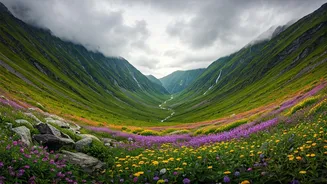
This is the trek that defines monsoon magic. A UNESCO World Heritage Site, the Valley of Flowers only reveals its true splendour from July to September. As the rains kiss the Garhwal Himalayas, the entire valley explodes into a vibrant carpet of over
500 species of alpine flowers, including the elusive Brahma Kamal. The trail itself is a moderate journey, leading you alongside the gushing Pushpawati River, through misty rhododendron forests, and into a landscape so surreal it feels painted. The clouds hang low, parting occasionally to reveal snow-dusted peaks in the distance. It’s not just a trek; it’s a pilgrimage for nature lovers. The air is crisp, filled with the scent of damp earth and blooming flora, making every step a sensory delight. **Difficulty:** Moderate **Best Monsoon Months:** July to early September
Rajmachi Fort, Maharashtra
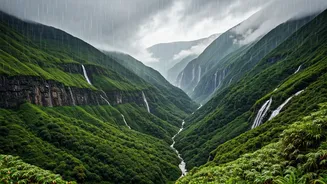
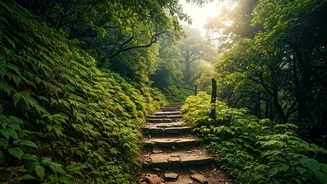
Nestled in the Sahyadri mountains, the Rajmachi Fort trek is a rite of passage for monsoon adventurers in Western India. The journey is as beautiful as the destination. You can choose between two base villages, Udhewadi or Karjat, but both routes offer a spectacle of nature at its most generous. The trail winds through dense forests where fireflies often put on a dazzling show post-dusk. During the day, you’ll walk past countless impromptu waterfalls cascading down emerald-green hills. The fort itself, comprising two citadels, stands like a silent guardian shrouded in thick fog, offering panoramic views of the surrounding valleys when the mist clears. The experience of standing on ancient ramparts, with clouds swirling at your feet and the world washed clean in shades of green, is truly unforgettable. **Difficulty:** Easy to Moderate **Best Monsoon Months:** June to September
Tadiandamol, Karnataka
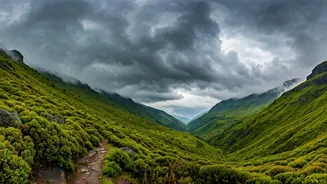
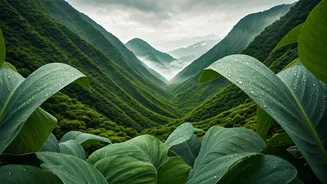
Escape to Coorg, the Scotland of India, and conquer its highest peak, Tadiandamol. The monsoon turns this already stunning region into a heavenly abode of rolling green hills and low-hanging clouds. The trek takes you through vast expanses of Shola forests, lush grasslands, and gurgling streams that come alive during the rainy season. The path can get slippery and is often populated by leeches—a small price to pay for the otherworldly beauty that surrounds you. As you ascend, you’ll find yourself literally walking through the clouds. The summit offers a 360-degree view of the verdant Western Ghats, a sea of green punctuated by mist and fog. It’s a trek that calms the soul, with the gentle pitter-patter of rain and the chorus of the forest providing the perfect soundtrack. **Difficulty:** Moderate **Best Monsoon Months:** August to September (post-heavy rains)
David Scott Trail, Meghalaya
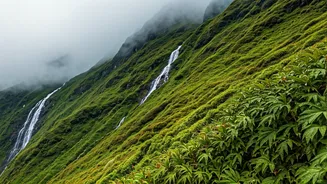
In the ‘Abode of Clouds’, a monsoon trek is an essential experience. The David Scott Trail is a historic 16-kilometre path that offers a gentle yet profoundly beautiful introduction to the Khasi hills. Named after a British administrator, this trail connects the villages of Mawphlang and Ladmawphlang. The walk is relatively easy, taking you across sprawling meadows, through sacred groves, and over charming, moss-covered stone bridges. You’ll be accompanied by the sound of the Umiam River flowing through the valley below. The monsoon drenches the landscape in a thousand shades of green, making the ancient trail feel like a secret pathway to another world. With dramatic cloudscapes and the fresh, rain-washed air, this trek is a poetic journey through the heart of Meghalaya’s natural and cultural heritage. **Difficulty:** Easy to Moderate **Best Monsoon Months:** June to October