




From Data Collectors to In-Orbit Brains
For decades, satellites have acted as powerful eyes in the sky, collecting enormous volumes of data and beaming it back to Earth for processing. This model has served India well, but it has a bottleneck: time. The sheer volume of raw data—terabytes daily—requires
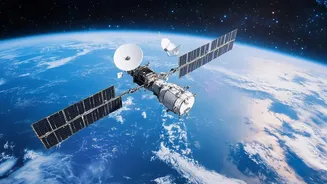
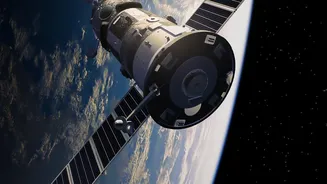
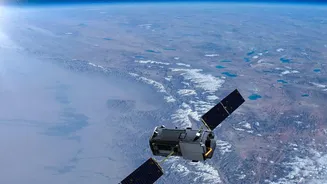
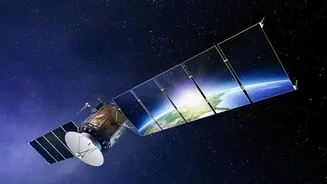
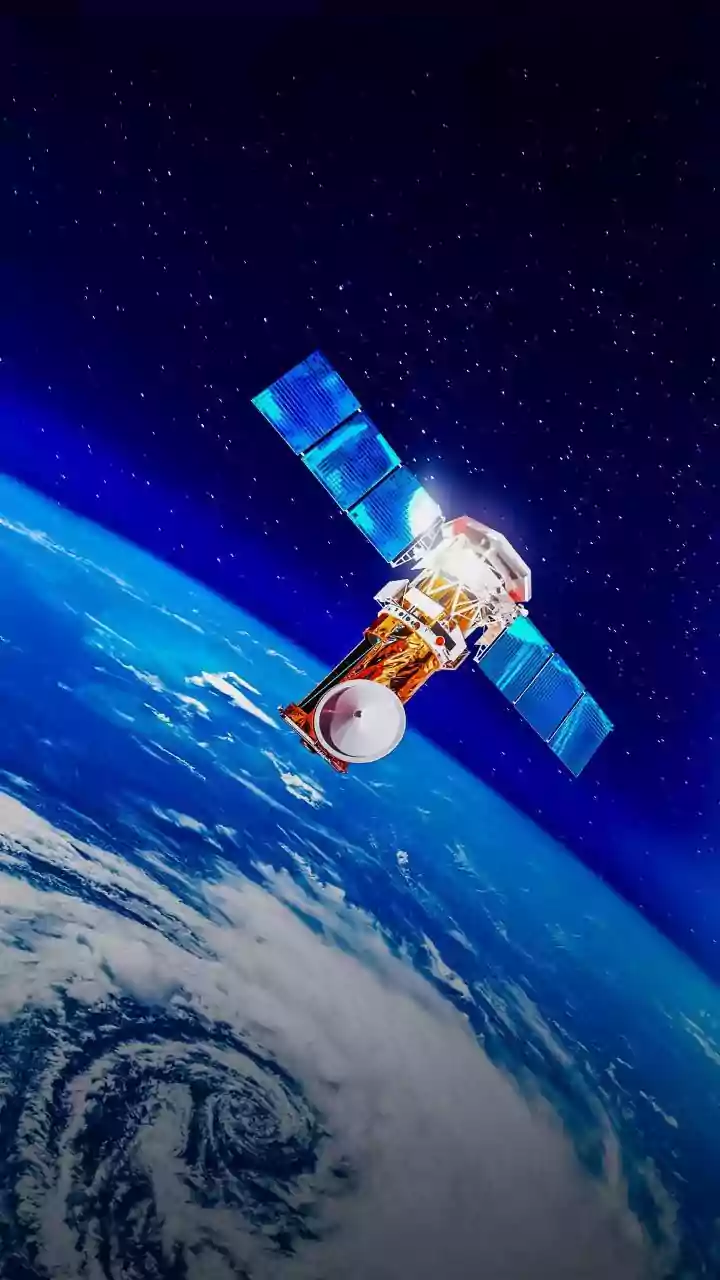
significant time and infrastructure to download and analyse. By integrating Artificial Intelligence (AI) and Machine Learning (ML) directly into the satellites, India is moving towards a new paradigm: on-board or 'edge' processing. Instead of just collecting images, future satellites will be able to analyse them in orbit, identifying crucial information and sending back only the finished insights. This fundamental change transforms a satellite from a simple camera into an intelligent, analytical node in space.
Faster Insights for a Safer Nation
The most immediate benefit of on-board AI is speed, which is critical for national security and disaster management. Imagine a flood or a cyclone developing. An AI-equipped satellite can spot the early signs, process the imagery in real-time without waiting for a ground station link, and transmit an immediate alert. This could cut down warning times from hours to minutes, enabling faster evacuations and saving lives. The same applies to national security. AI can autonomously detect and flag unusual activity in sensitive border areas or maritime zones, providing security forces with real-time intelligence. This reduces reliance on foreign data sources and strengthens India's strategic autonomy, a key goal for the nation's defence and space sectors.
Smarter Farming and Resource Management
Beyond security, AI-powered satellites promise to revolutionize India's civilian life, particularly in agriculture. By analysing hyperspectral imagery, AI algorithms can monitor crop health, detect pest infestations, and assess soil moisture levels with incredible precision. This information can be relayed directly to farmers and policymakers, enabling 'precision agriculture' that optimizes water usage, fertilizer application, and predicts crop yields more accurately. Similarly, these smart satellites can monitor forest cover to detect illegal deforestation, track urban expansion, and manage precious water resources, helping in long-term planning and environmental conservation. ISRO's National Remote Sensing Centre (NRSC) is already leveraging AI to improve the frequency and resolution of its reports on forest cover changes.
Autonomous Operations and Mission Longevity
Satellites are complex machines operating in a harsh environment, constantly at risk from space debris. AI is becoming essential for Space Situational Awareness (SSA), helping to track millions of debris objects and predict potential collisions. AI systems can perform autonomous manoeuvres to avoid threats, reducing the need for constant human intervention from ground control. This not only protects valuable assets but also extends their operational lifespan. AI can also monitor the health of the satellite itself, predicting system failures before they happen and optimising power consumption. This leads to more robust, resilient, and long-lasting missions, from the Gaganyaan human spaceflight programme to future interplanetary explorations.
Fueling India's Private Space Ecosystem
The push for AI in space is not limited to ISRO. It is also igniting India's burgeoning private space industry. Startups like Digantara, Pixxel, and Sarvam AI are at the forefront, developing everything from AI-powered surveillance networks to orbital data centres. Digantara's MOSAIC network, for instance, uses AI-powered optical sensors for real-time tracking of objects in orbit. This synergy between the national space agency and private innovators is creating a vibrant ecosystem. ISRO's focus on AI applications creates opportunities for startups to build specialised solutions, attracting investment and fostering a new generation of space-tech talent in India.