




The Search for a Middle Path
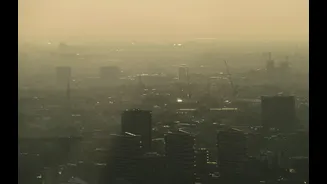
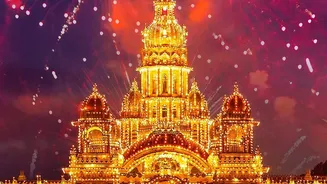
For years, the unrestricted use of traditional firecrackers during festivals like Diwali has been linked to severe spikes in air and noise pollution, leading to public health emergencies, especially in urban centres. This prompted the Supreme Court of India
to intervene. In 2018, the Court banned conventional crackers and mandated the use of improved, lower-emission 'green crackers' to strike a balance between festive traditions and the fundamental right to clean air. Recent rulings in October 2026 have reaffirmed this balanced approach, ruling out both a complete ban and unrestricted use, instead favouring a regulated system with specified timings and cracker types.
What Makes a Cracker 'Green'?
Green crackers are not pollution-free, but they are designed to be significantly less harmful than their conventional counterparts. Developed by the Council of Scientific and Industrial Research-National Environmental Engineering Research Institute (CSIR-NEERI), these crackers have a modified chemical composition. Key changes include the elimination of prohibited toxic compounds like barium nitrate, arsenic, and lead. They are formulated to reduce particulate matter (PM) emissions by at least 30-40% and use additives that release water vapour or act as dust suppressants. CSIR has developed different types, such as SWAS (Safe Water Releaser), STAR (Safe Thermite Cracker), and SAFAL (Safe Minimal Aluminium), each designed to curb pollution in specific ways.
How to Identify Genuine Green Crackers
With counterfeit products flooding the market, identifying authentic green crackers is crucial for consumers. There are two primary checks. First, look for the official CSIR-NEERI green logo on the box. Second, the packaging must feature a QR code. When scanned with a smartphone, this code should lead to a page verifying the cracker's manufacturing details and its certification. A QR code that is unscannable, leads to an unrelated website, or just shows an image is a major red flag. Consumers should be wary of loose crackers or those with 'green' stickers pasted over old packaging.
The Rulebook: Permitted Timings and Types
The Supreme Court has consistently imposed a time window for bursting crackers, typically between 8 PM and 10 PM on major festival days like Diwali. However, these rules can vary by state. Many states and union territories issue their own specific guidelines, with some opting for stricter timings or even complete bans depending on local air quality levels. For instance, the Bombay High Court has banned bursting crackers on all public roads and streets throughout the year. As of October 2026, the Supreme Court has also permitted the use of certain next-generation joined crackers, or 'laris', provided they meet the stringent green cracker norms for formulation, noise, and emissions.
Enforcement and Penalties for Violations
Enforcing these regulations is a multi-agency effort involving local police, District Magistrates, and Pollution Control Boards. The Petroleum and Explosives Safety Organisation (PESO) is responsible for licensing manufacturers and ensuring they adhere to the approved chemical formulations. Penalties for violations can be severe. Selling non-compliant or unlicensed crackers can lead to the suspension of licenses and legal action. Individuals found bursting crackers outside the permitted time window or using banned conventional types can also face penalties under provisions like Section 188 of the Indian Penal Code, for disobedience to an order duly promulgated by a public servant.