




What Exactly Is on the Table?
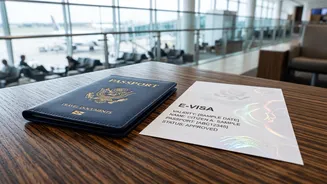
The recent buzz stems from a proposal made by Indian Prime Minister Narendra Modi at the 23rd India-ASEAN Summit in Manila on November 17, 2026. The pitch is straightforward: to provide free electronic tourist visas to citizens from all 11 member countries
of the Association of Southeast Asian Nations (ASEAN). The nations that stand to benefit are Brunei, Cambodia, Indonesia, Laos, Malaysia, Myanmar, the Philippines, Singapore, Thailand, Timor-Leste, and Vietnam. It is important to note that this is an initiative from India for inbound tourists, not a unified ASEAN visa for entry into India. While some ASEAN member states like Indonesia, Malaysia, and Thailand already enjoy a free 30-day e-visa facility, this proposal aims to extend the benefit to all member nations, making travel to India more accessible and affordable across the entire bloc. However, officials have clarified that this is currently a proposal, and an official implementation date has not yet been announced.
The Strategy Behind the Open Invitation
This move is a cornerstone of India's 'Act East Policy', a diplomatic initiative aimed at strengthening relationships with Southeast Asian nations. By removing the visa fee, India hopes to significantly increase tourist arrivals from a region that is both geographically close and culturally connected. The timing is also strategic, as India and ASEAN are set to celebrate 35 years of their partnership in 2027. The proposal is expected to provide a major fillip to inbound tourism, particularly for the Buddhist circuit, which holds immense appeal for travellers from countries like Thailand, Cambodia, Vietnam, and Myanmar. Beyond tourism, the initiative is about fostering deeper people-to-people connections, which are seen as the foundation for a stronger, comprehensive strategic partnership.
Potential Boost for Travel and Trade
For India's travel and hospitality sectors, the proposal is welcome news. Easier and cheaper access is a powerful incentive for attracting new visitor segments, from short-haul holidaymakers to cultural tourists and business travellers. With direct flights already connecting India to nine of the eleven ASEAN countries, the logistical framework to support a surge in tourism is largely in place. An increase in visitors from the ASEAN region would ripple through the economy, benefiting airlines, hotels, tour operators, and local artisans. It aligns with a broader vision of shared growth, where cooperation, rather than competition, shapes the future for a region representing nearly a quarter of the world's population.
The Separate Dream of an 'ASEAN Schengen'
While India is making its own move to attract ASEAN tourists, the idea of a unified visa within Southeast Asia has been a long-standing ambition. For years, there has been discussion about creating a 'Schengen-style' common visa, which would allow international travellers to visit multiple ASEAN countries with a single application. A recent push, led by Thailand, focuses on creating such a visa for six nations: Thailand, Cambodia, Laos, Malaysia, Myanmar, and Vietnam. For Indian travellers, who are increasingly seeking multi-destination trips, such a unified visa would be a game-changer, dramatically cutting down on costs and paperwork.
Why a Truly Borderless ASEAN Is a Challenge
The vision of a single ASEAN visa, while appealing, faces significant hurdles. The primary challenges are concerns over national security and sovereignty. For a common visa to work, member states must agree on entry rules, harmonise security checks, and share vast amounts of data—a complex task for any group of nations. Issues like visa overstays, illegal work, and the potential for transnational crime require robust, integrated systems that are difficult and expensive to build. Furthermore, visa fees represent an important source of revenue for some countries, making them hesitant to give up that income. These long-standing challenges highlight why India's unilateral offer is a more direct and immediately achievable step toward simplifying regional travel.