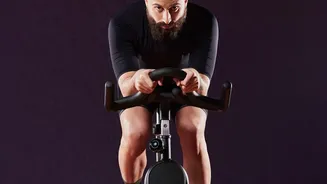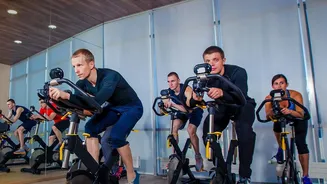






Choosing between a bike and a pair of skates for your workout? Both are excellent, low-impact ways to build strength, but they are not the same. How you use resistance and master your technique is what truly defines the results you get.
The Core Muscle Battle
When it comes to
building strength, the first question is always: which muscles are you working? Cycling is a powerhouse for the lower body. The repetitive pedalling motion intensely targets the quadriceps, hamstrings, glutes, and calves. While your core is engaged to maintain posture, the primary focus remains on your legs. Skating, on the other hand, offers a more comprehensive workout. It heavily recruits the leg muscles, but with a crucial difference. The side-to-side pushing motion specifically targets the inner and outer thigh muscles (adductors and abductors) and the gluteus medius, muscles often neglected in the linear motion of cycling. Furthermore, the constant need to balance on a thin blade or wheels means your core—including abs, obliques, and lower back—is continuously engaged to keep you stable. This makes skating a more holistic strength-building exercise from the ground up.
Dialing Up the Resistance
Resistance is what turns a casual ride or skate into a serious strength-training session. In cycling, resistance is straightforward and measurable. Whether you're using a stationary bike or a geared bicycle, you can increase resistance to simulate climbing a hill. This forces your leg muscles to work harder, building power and mass with every pedal stroke. You can consciously choose to do a high-resistance, low-pace workout specifically designed for strength. Skating resistance is more variable and dependent on your environment and effort. Pushing off harder, skating uphill, or even skating against the wind naturally increases resistance. While you can't simply turn a dial, the a study at St. Cloud State University found that, anaerobically, inline skating can be more beneficial than cycling because it naturally builds muscles in the hips and thighs, including the hamstrings, which cycling can sometimes neglect. The intensity is controlled by your own power output and technique.
Why Your Technique Matters
How you move is just as important as how much resistance you use. In cycling, proper form—like maintaining a straight back and a smooth pedal stroke—ensures you're efficiently transferring power and preventing injury. However, the movement itself is relatively fixed. In skating, technique is paramount and dramatically alters the workout. Simply staying upright requires constant micro-adjustments and core control. Mastering proper skating posture, with knees bent and a low center of gravity, is a workout in itself. Advanced techniques like crossovers and power pulls engage more muscles and require greater coordination and balance, turning a simple glide into a dynamic, full-body exercise. The lateral, gliding motion is also a low-impact activity, which is gentler on the joints compared to high-impact exercises.
Cardio, Calories, and Coordination
While both activities are fantastic for cardiovascular health, their effectiveness can vary. Cycling allows for long, sustained periods of effort, making it excellent for building aerobic endurance. Skating, especially with interval efforts (alternating between hard and easy skating), can lead to a significant calorie burn, sometimes exceeding that of steady cycling. Some studies suggest interval skating can burn up to 450 calories in 30 minutes. Beyond strength and cardio, skating offers a unique benefit: improved balance, agility, and coordination. The dynamic balancing required to skate enhances your body's awareness and control in a way that the stable platform of a bicycle simply cannot match.
Which Is Right for Your Goals?
So, which should you choose? Your decision should align with your fitness objectives. If your primary goal is to build raw power and strength specifically in your legs, cycling is an incredibly effective and focused tool. The ability to systematically increase resistance allows for targeted muscle building. If you're looking for a more well-rounded workout that builds functional strength, improves balance, engages your core, and offers a high calorie burn, skating is the superior option. It strengthens muscles that cycling misses and provides a full-body challenge that improves agility and stability. Ultimately, both are excellent low-impact exercises that can boost your fitness. The best workout is the one you enjoy and can stick with, so why not incorporate both into your routine for a balanced approach to strength training?