



A Sweet Discovery in a Cosmic Cloud
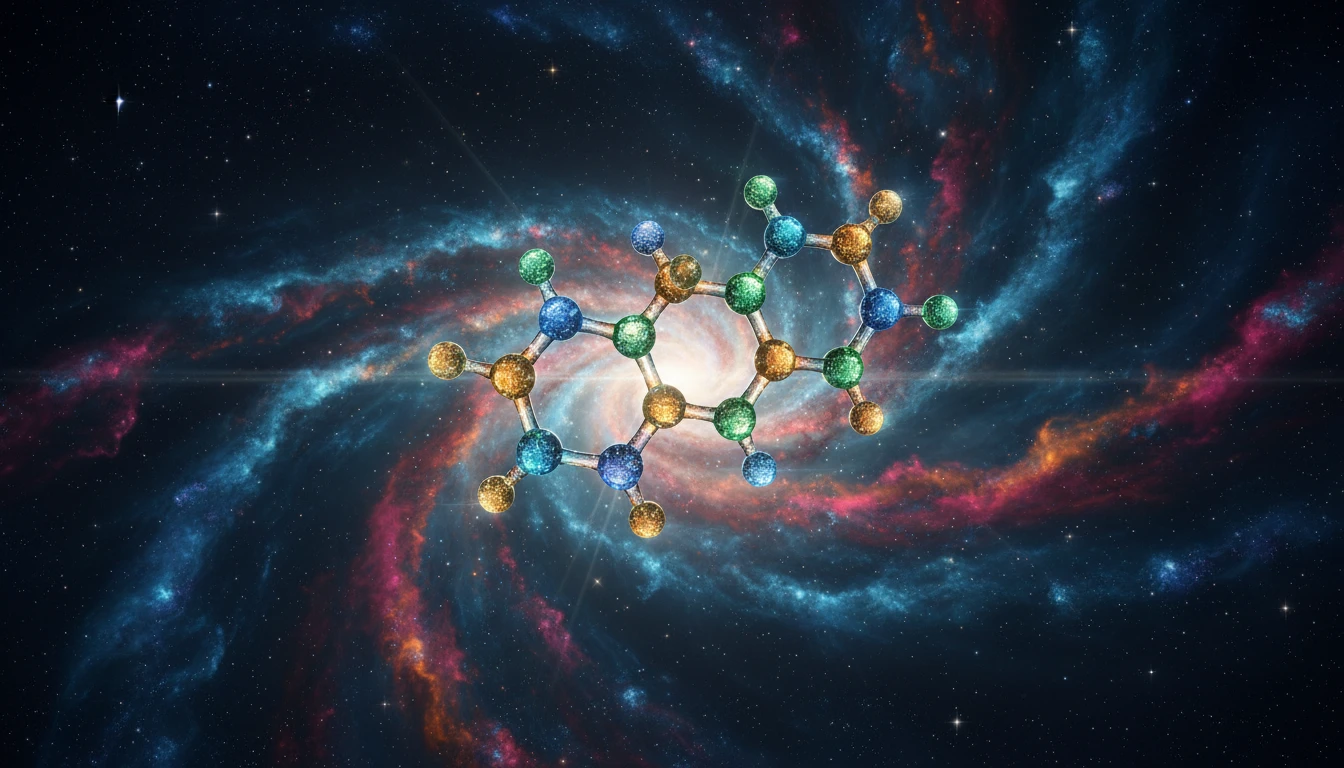
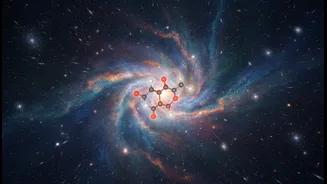
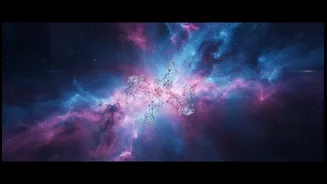
Astronomers, using powerful radio telescopes, have identified the chemical fingerprint of erythrulose in a massive, dense cloud of gas and dust known as G+0.693−0.027. This region, located near the galactic centre, is a known stellar nursery and one of the most
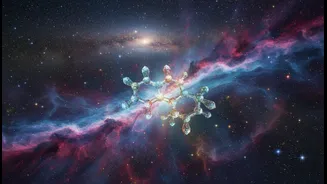
chemically rich environments in the Milky Way. Finding molecules in these frigid, diffuse clouds is a challenge, but it's where the story of stars and planets begins. The detection of erythrulose, a relatively complex four-carbon sugar, is significant because it's the first true sugar molecule identified in interstellar space, confirming that such compounds can form naturally in the cosmos.
More Than Just a Simple Sugar
On Earth, erythrulose is a natural sugar found in fruits like raspberries and is used in some cosmetics. But in the context of space, its identity is far more profound. It isn't just any sugar; it's a potential precursor to even more vital molecules. Sugars form the backbone of the nucleic acids RNA and DNA, which carry the genetic instructions for all known life. While erythrulose itself isn't a direct part of DNA, its presence is a crucial proof of concept. It demonstrates that the universe's chemistry is capable of producing complex sugars that could act as the feedstock for the building blocks of life, like ribose, the sugar in RNA.
A Clue for the 'RNA World'
This discovery lends support to the 'RNA World' hypothesis, a leading theory about the origin of life. This theory suggests that before DNA and proteins dominated biology, life was based on RNA. RNA is a remarkable molecule because it can both store genetic information (like DNA) and catalyze chemical reactions (like proteins). A major puzzle, however, has been how the building blocks of RNA, particularly the sugar ribose, could have formed on early Earth. Finding a potential precursor like erythrulose floating in interstellar space suggests an alternative delivery method. These essential ingredients might not have needed to form in a 'primordial soup' on Earth; they could have been delivered from space.
From Stardust to Seeded Planets
Molecular clouds like the one where erythrulose was found are the birthplaces of stars and their planetary systems. As the cloud collapses under its own gravity, the dust and gas, including any organic molecules within it, get swept up into a rotating disk around the newborn star. From this disk, planets, comets, and asteroids form. The theory is that comets and asteroids, enriched with molecules like erythrulose from the parent cloud, could have then bombarded young planets like Earth billions of years ago. This cosmic delivery service could have seeded the planet's surface with the complex organic compounds necessary to kick-start life, bypassing the difficulty of forming them from scratch in a harsh planetary environment.
What This Means for the Search for Life
The detection of erythrulose doesn't mean we've found alien life, but it significantly bolsters the idea that the ingredients for life are common throughout the galaxy. If the chemical pathways that produce complex sugars can operate in the cold, harsh environment of interstellar space, it suggests that countless nascent planetary systems could be receiving the same starter kit of prebiotic molecules. This finding transforms our understanding of astrobiology. The search for life elsewhere is not just a search for Earth-like planets with water, but also a study of the chemical inventory of the cosmos. Discovering these building blocks in the wild suggests that the potential for life is woven into the very fabric of the galaxy.